
Archive
Everything we have published, filed by year
A hundred pieces on ranges, variance and the parts of poker that happen away from the table.
 Theory
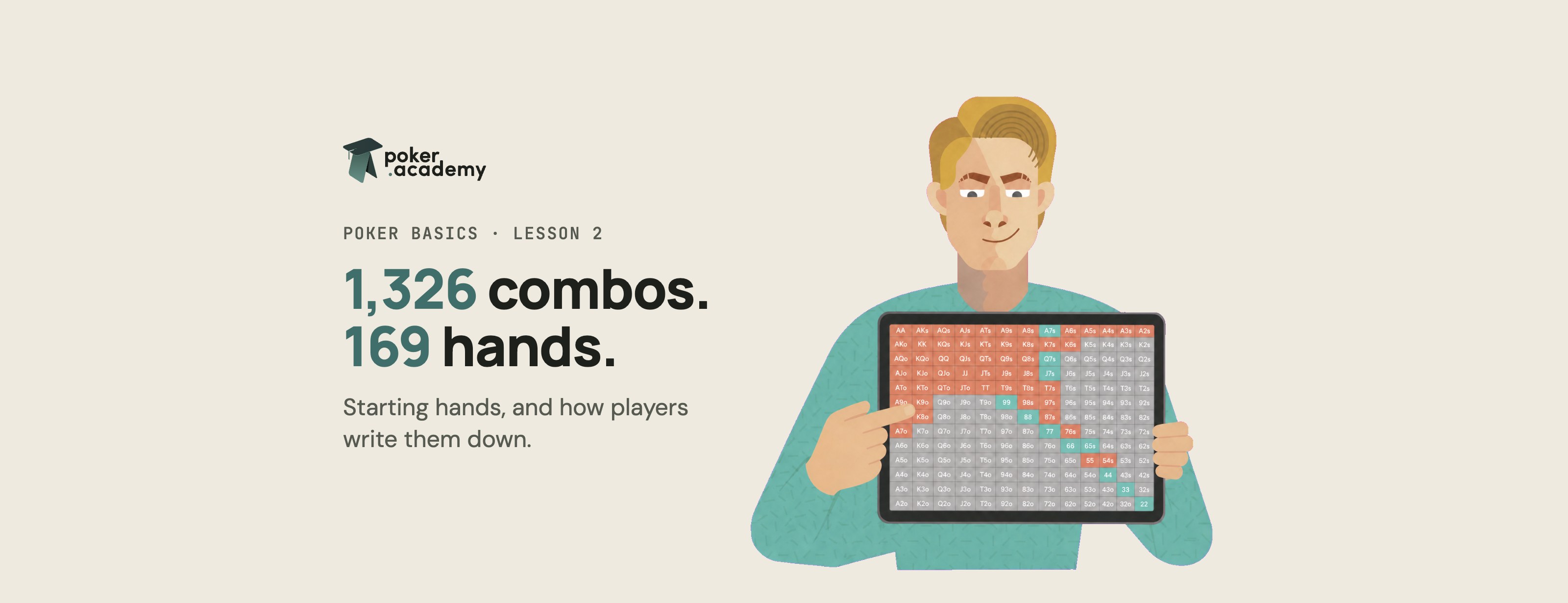
Poker starting hands: 1,326 combos, 169 hands, and how to write them down
Why there are 1,326 starting combos but only 169 hands, where 4 suited and 12 offsuit come from, and the notation players use: AKs, AKo, AhKs, QQ+.
 15 SEP 2026
 Update
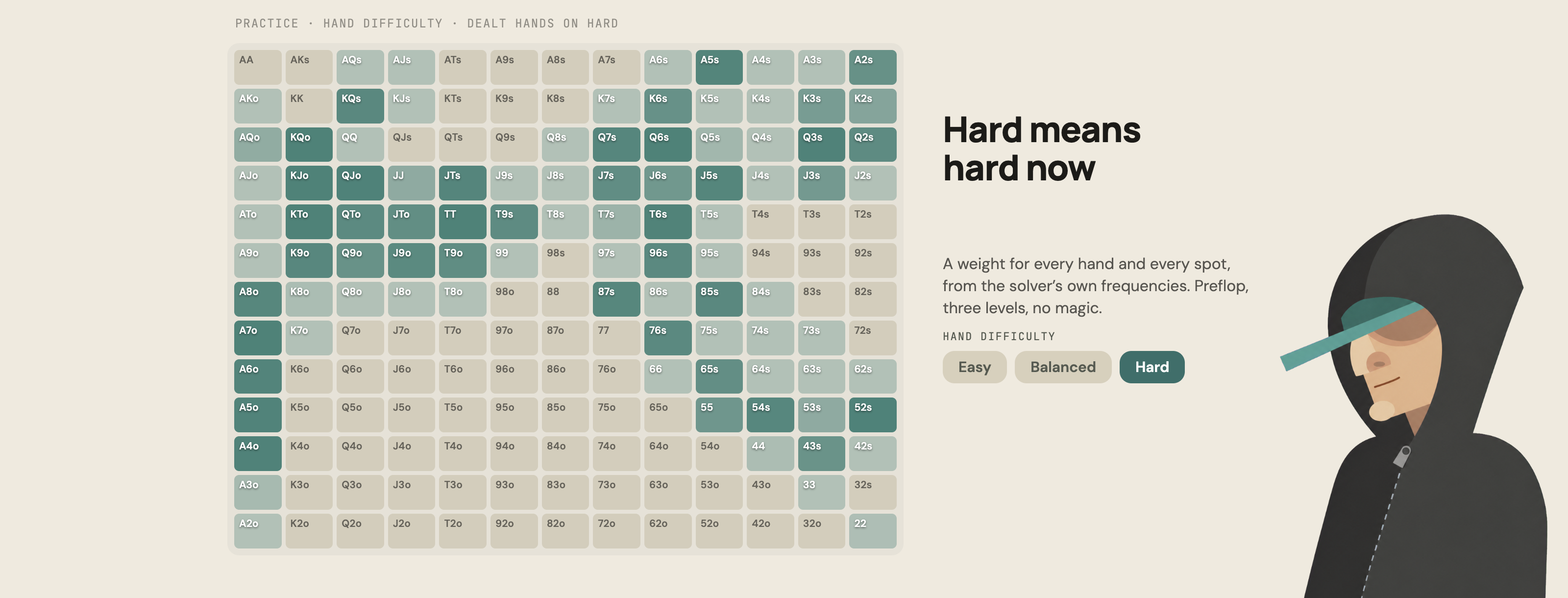
Hard means hard now: the new hand difficulty selector
A customer said Practice deals easy hands. He was right. Here is the selector we built, the weighting behind Easy, Balanced and Hard, and what it does on four real spots.
12 SEP 2026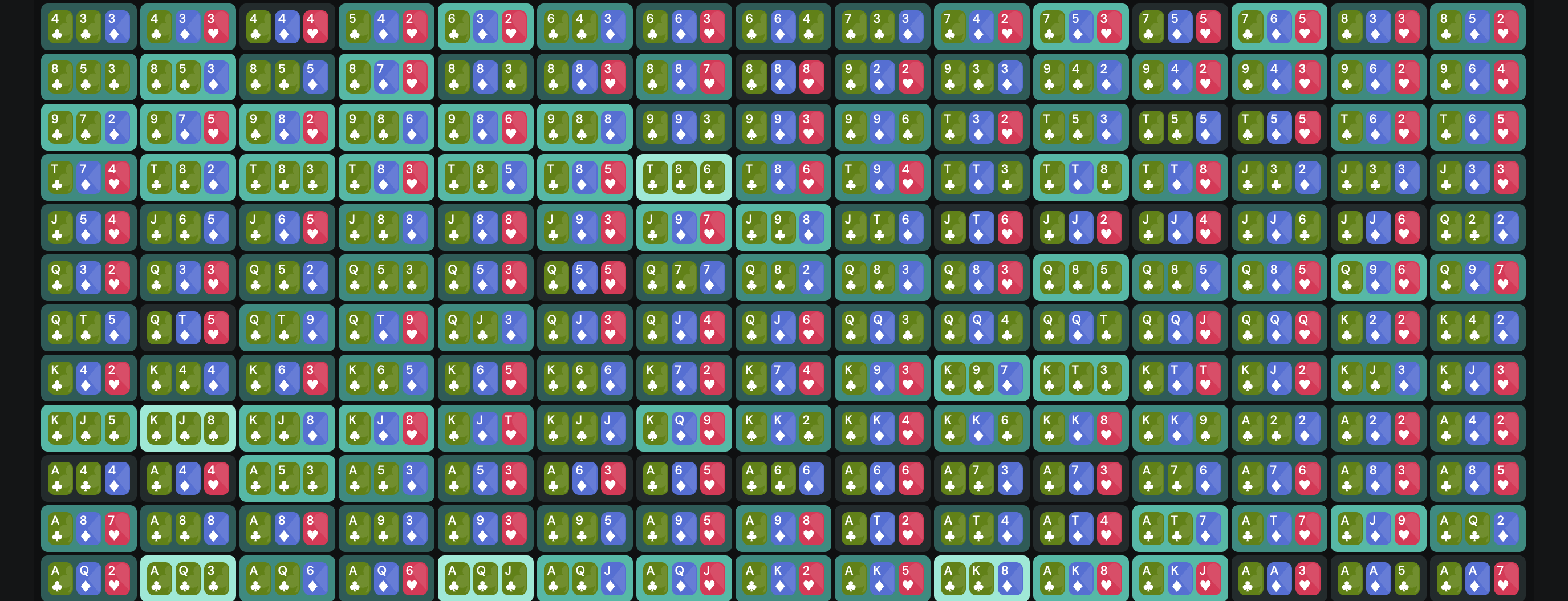 Update
Aggregated Reports: Stop studying one flop at a time
One preflop spot solved on 184 flops at once: the table, the tree walk, filters, lenses, Simplify, turn runouts and report diffs.
10 SEP 2026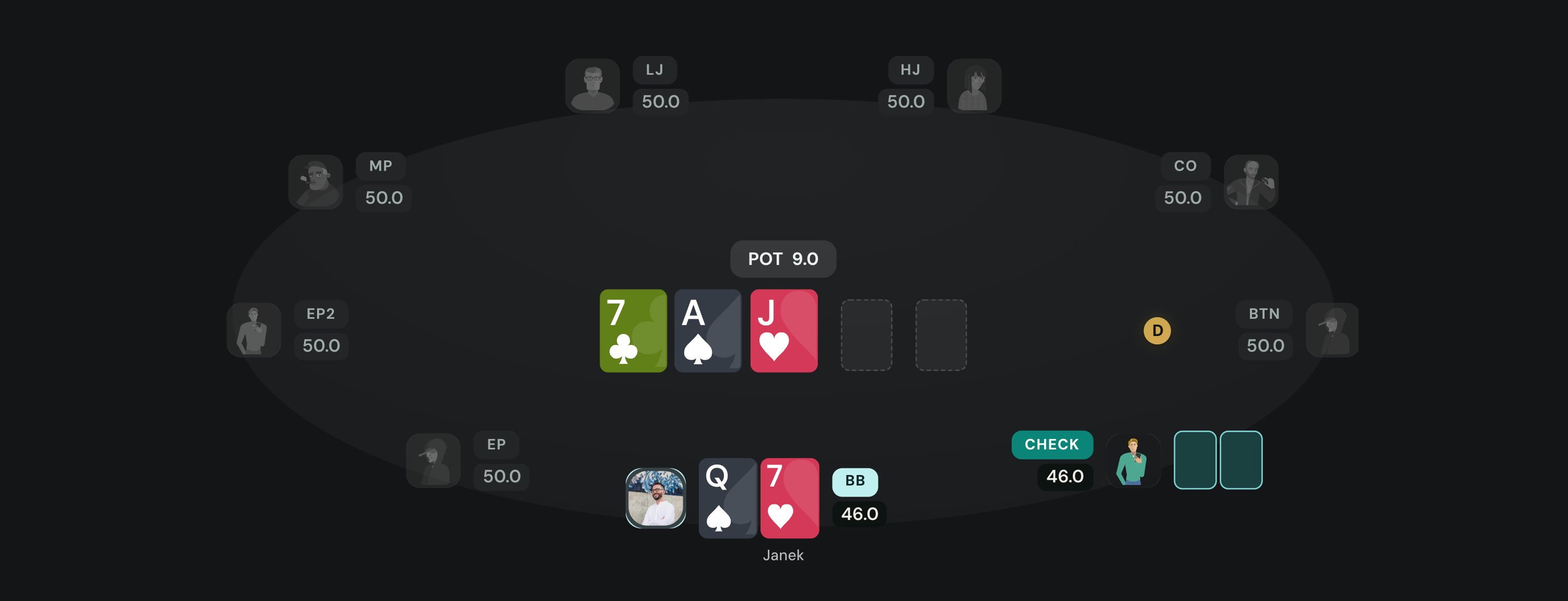 Update
Practice: Know what your mistakes actually cost
Every player can tell you their worst hand of the year. Nobody can tell you what it cost them – an actual number. That is why Practice exists: you play the whole hand against solver strategy, and it tells you the price of every decision.
10 SEP 2026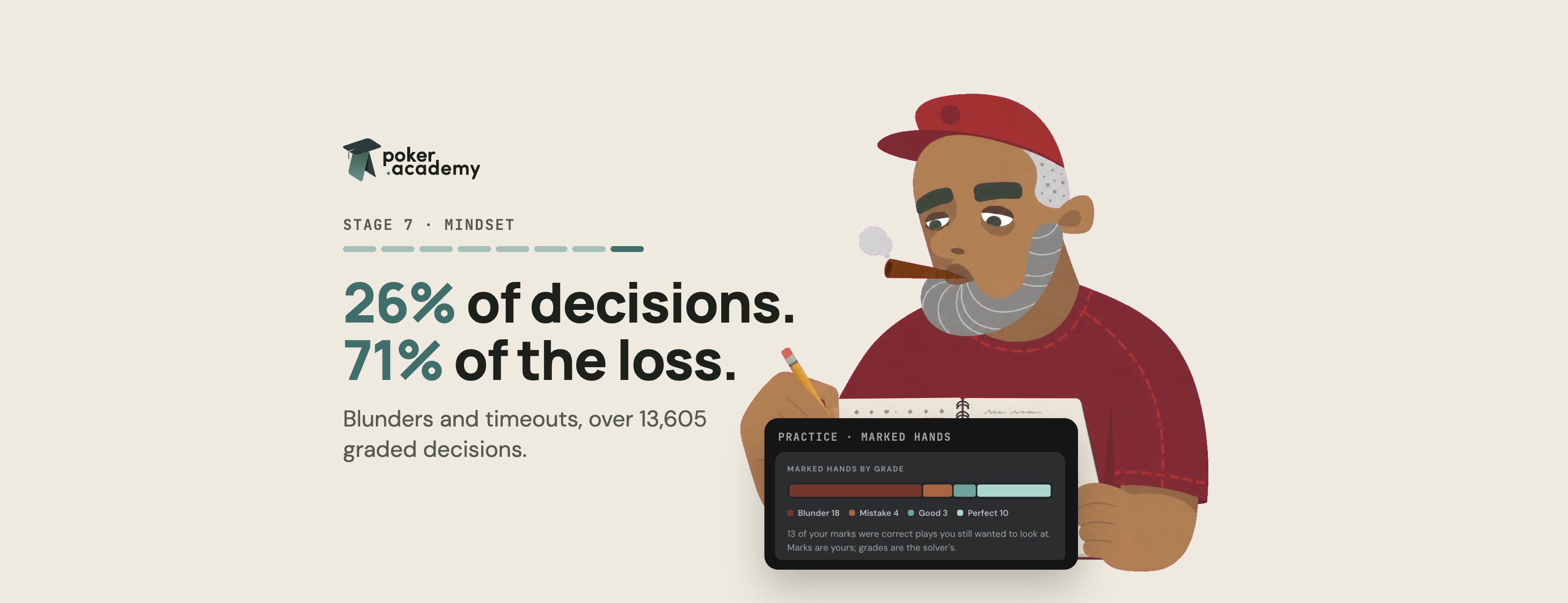 Theory
A poker study routine that survives tilt: review your own hands, repeat the spots, set a stopping rule
How to run a study routine you will actually keep: mark hands while you play, read the session where the EV went, let the scheduler bring back the spots you keep failing, and set a stopping rule before you sit. With what a blunder measurably costs.
17 SEP 2026 · pub. 2026Updated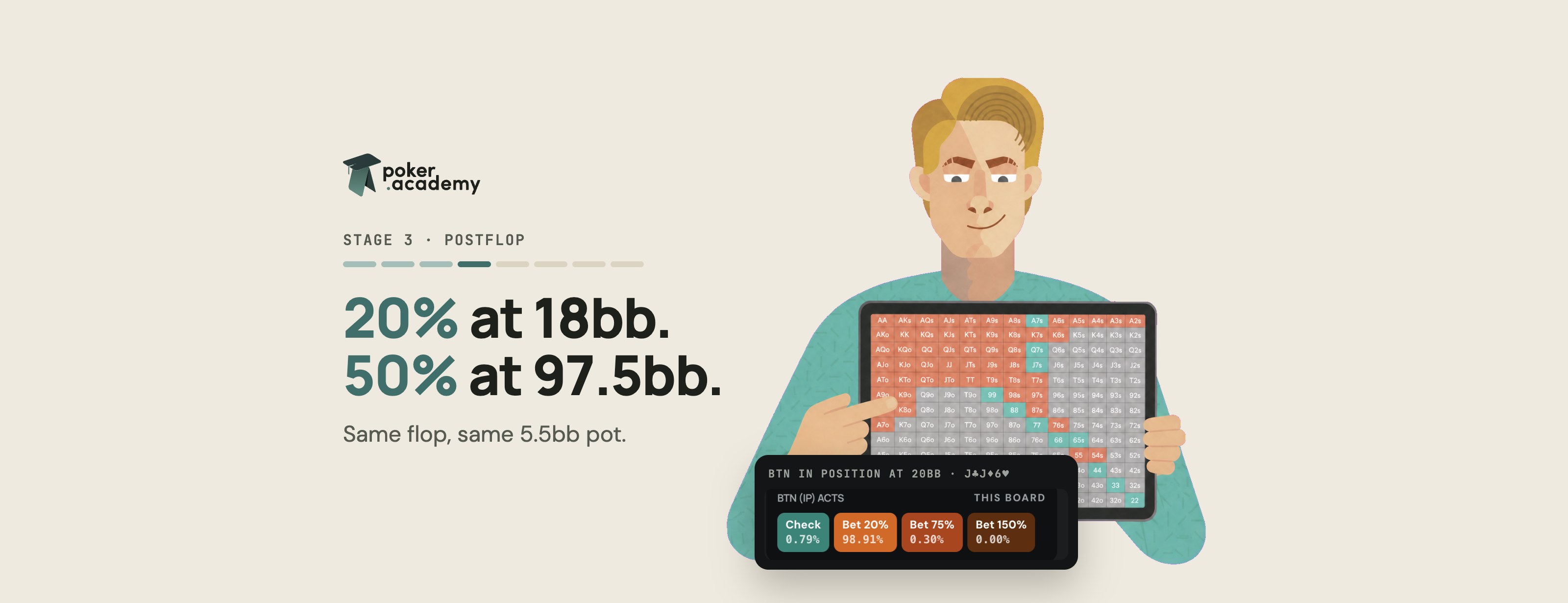 Theory
Bet sizing and SPR: why the size belongs to the spot
Stack-to-pot ratio explained with worked examples from four solved flop reports, and what small, medium, large and overbet sizes actually buy. The same 25 flops solved at 18bb and at 97.5bb behind, with the break-even maths for every size.
17 SEP 2026 · pub. 2026Updated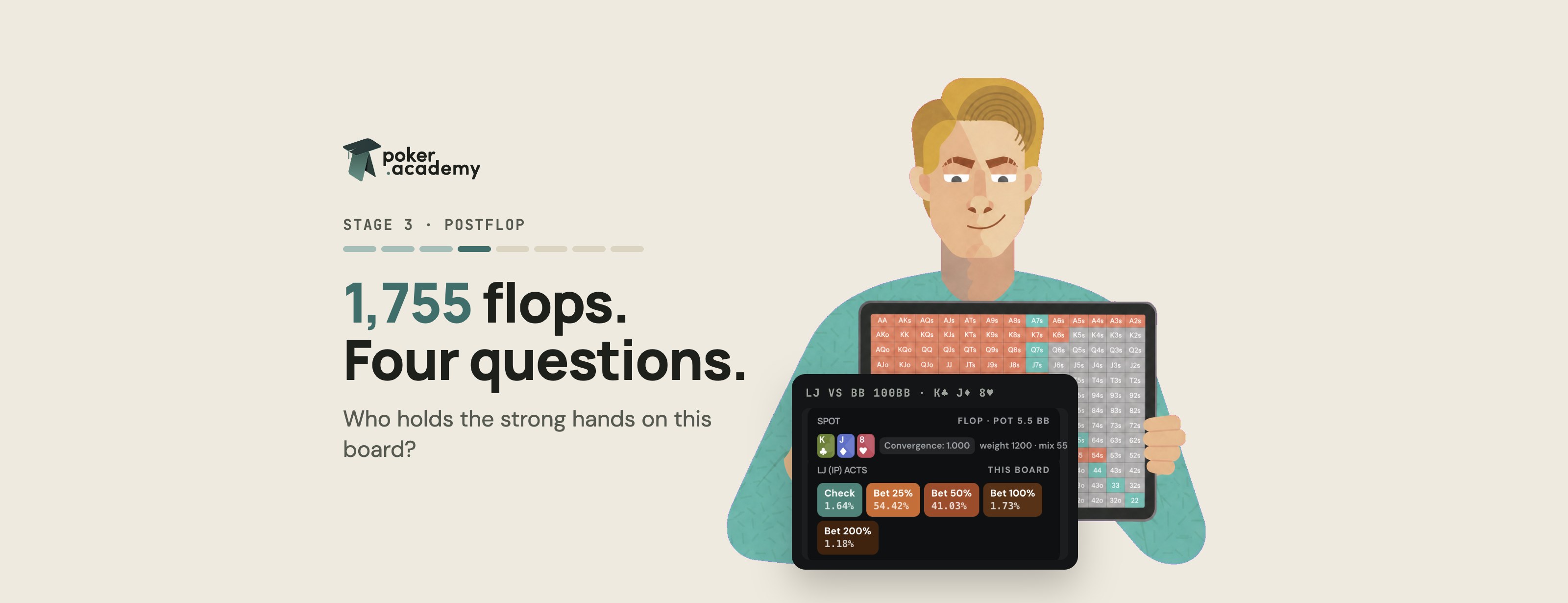 Theory
Board texture and range advantage: how to read a flop
How to read a flop: high card, pairing, connectedness and suits. What range advantage and nut advantage actually mean, counted combo by combo from the preflop charts, and how the solver’s flop strategy changes from board to board.
17 SEP 2026 · pub. 2026Updated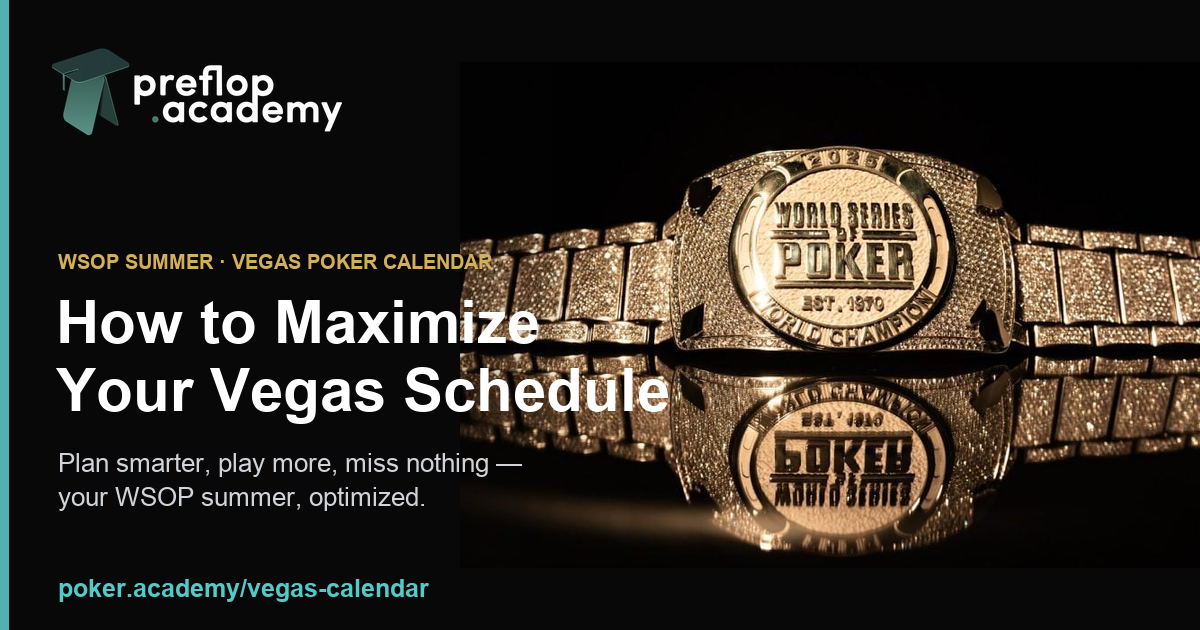
How to Maximize Your Vegas Poker Schedule
How to Maximize Your Vegas Poker Schedule If you have ever tried to plan a Vegas summer from a stack of venue PDFs, you know the pain. WSOP drops a 100-page structure sheet. Wynn posts a flyer. The Orleans buries late reg in a spreadsheet. You end up with twelve browser tabs and still miss […]
 17 SEP 2026 · pub. 2026Updated
 Theory
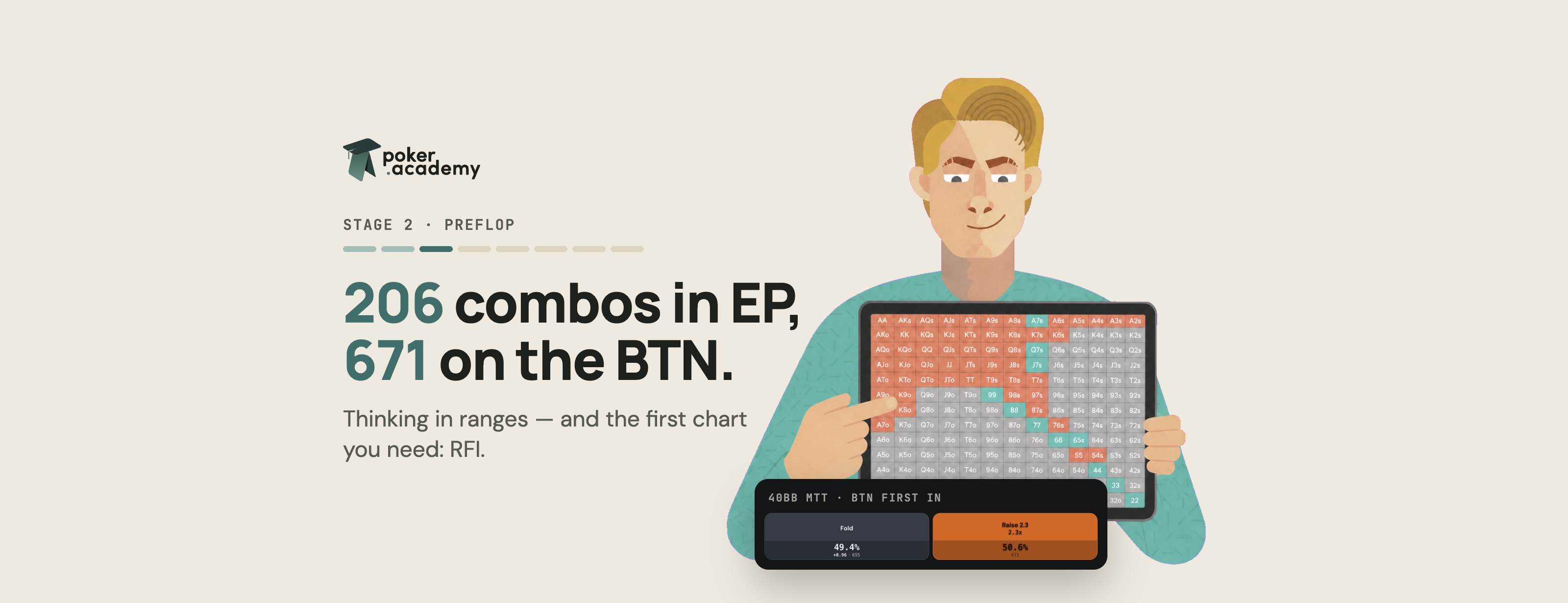
Poker ranges and RFI: how to open from every position
What a poker range is, how the 13×13 grid works, and the first chart every player needs: raise first in by position. Solver ranges for 6-max cash and 9-handed tournaments, with what stack depth and the ante do to them.
17 SEP 2026 · pub. 2026Updated Theory
Texas Hold’em rules and positions: how a hand actually works
How a hand of No-Limit Texas Hold’em works, from the blinds to showdown: the four betting rounds, every action you can take, the seat names EP to BB, and why acting last is worth so much.
17 SEP 2026 · pub. 2026Updated Update
From Open Raise to River – The Biggest Update in Poker Academy’s History
Hey! 🙂 A few years ago, after two months of sitting at my desk for fifteen-plus hours a day, I shipped the first version of Preflop Academy. I remember that post – I wrote that I’d managed to combine my two biggest passions: poker and programming. That nobody had built anything like this at this level. And that the app would keep evolving.
17 SEP 2026 · pub. 2026Updated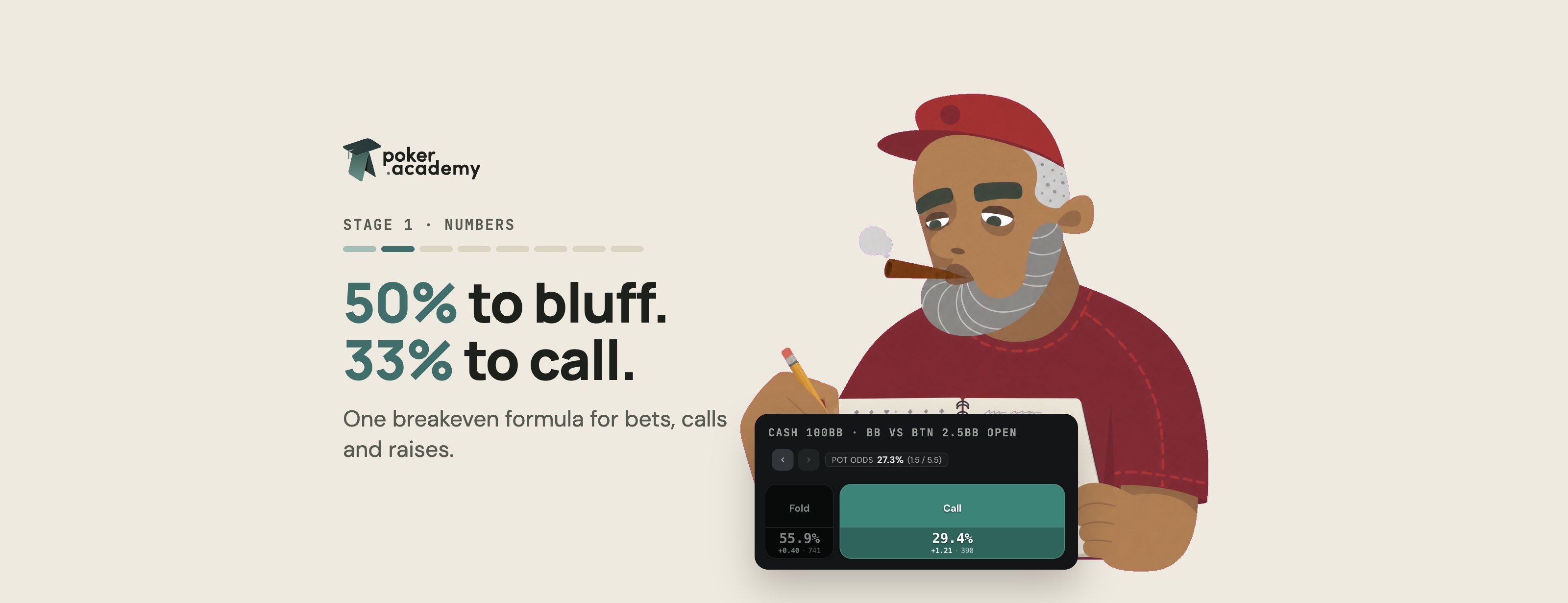 MindsetTheory
Risk / (risk + reward): the breakeven formula behind every bluff, call and raise
Breakeven = risk ÷ (risk + reward). How often a bluff, a call, a bluff-raise and a call against a raise have to work, why a raise costs more than a bet, and where the app shows the same price: POT ODDS on the table and EV on every action.
17 SEP 2026 · pub. 2026Updated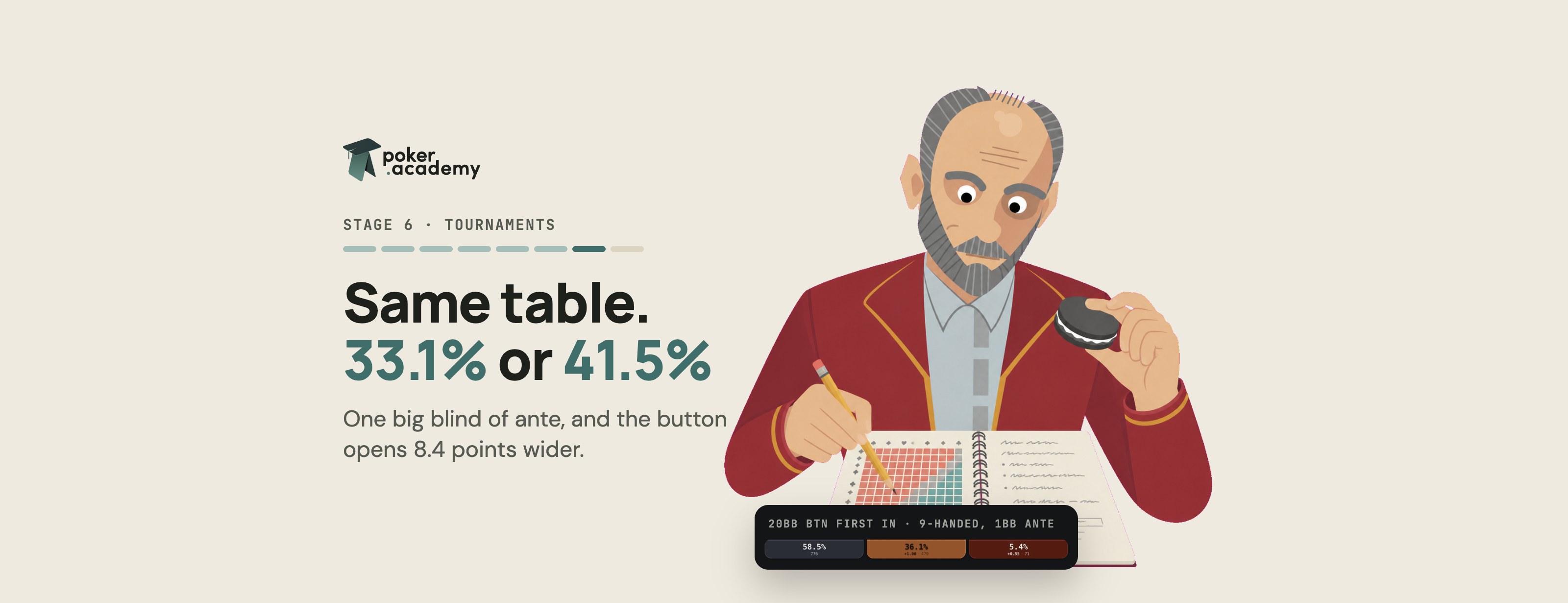 Live Game
BB Ante Explained: Why Your Preflop Sims Are Costing You Money
The big blind ante is always 1bb, whatever the table size, and a classic ante is 0.125bb a head. What that extra dead money does to preflop ranges, measured on two solver runs of the same 9-handed table that differ only in the ante, plus the short-stack and big-stack spots from the big blind ante final tables.
17 SEP 2026 · pub. 2026Updated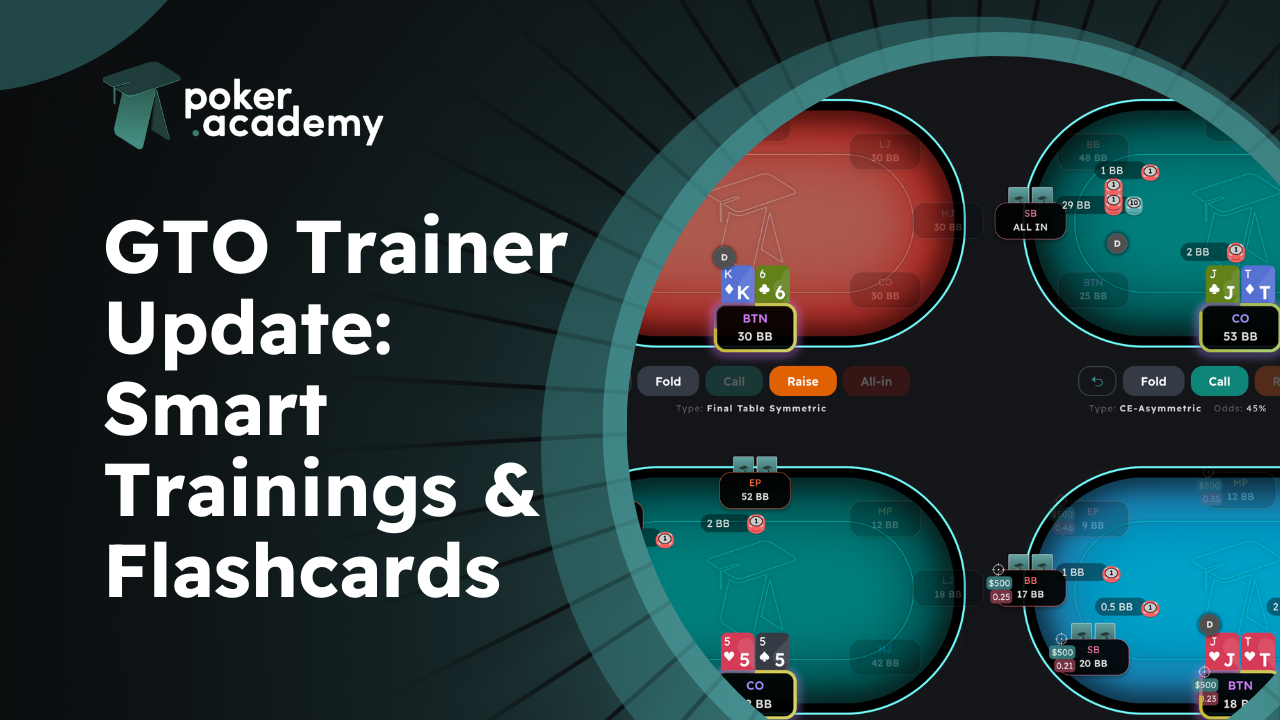 Update
GTO Trainer Update: Smart Trainings & Flashcards
Poker Academy’s GTO Trainer has been upgraded into a powerful learning system built around filters, 100-hand training packs, and intelligent flashcards.
Instead of grinding random hands, you now train in a way that maximizes learning speed and long-term retention.
17 SEP 2026 · pub. 2026UpdatedNothing has been paginated away — the rest is filed under the other years.