
 Theory
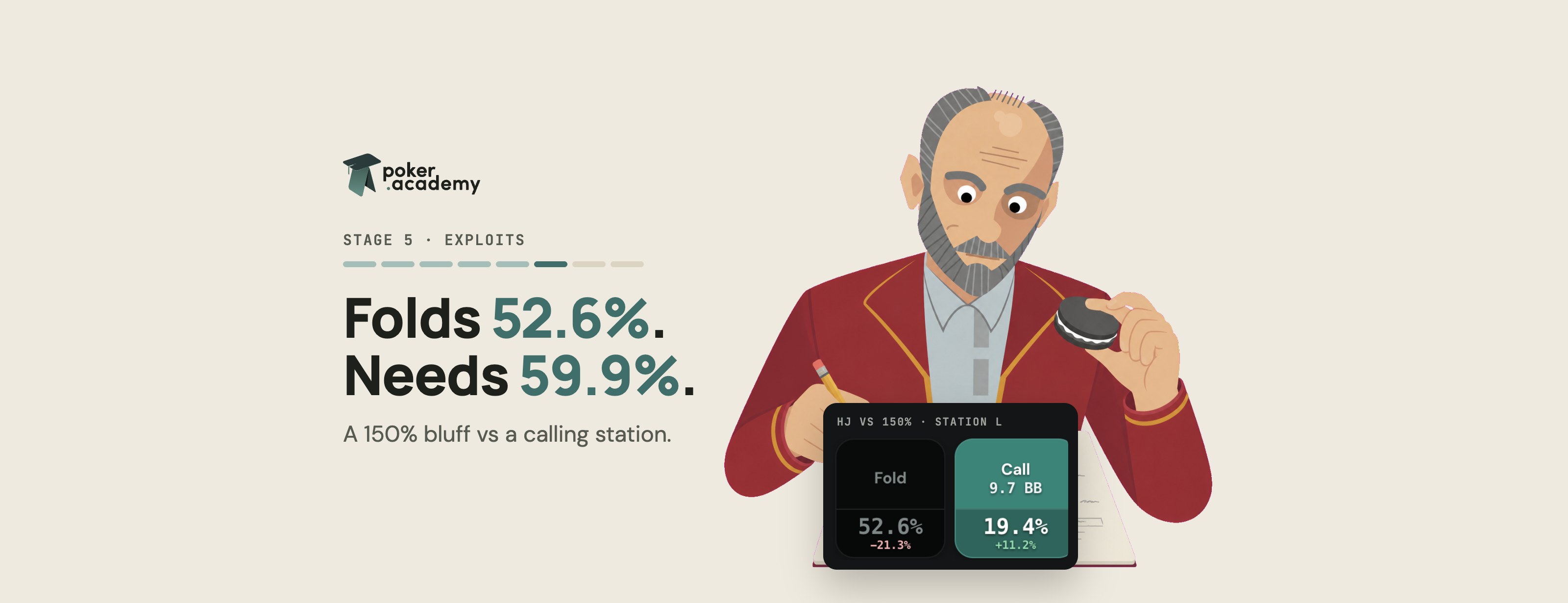
How to exploit calling stations: thinner value, fewer bluffs, bigger bets
A calling station folds too little, so bluffs need more folds than he gives and value bets get paid by worse. The break-even maths, a solver node locked as Calling Station L, and what changes in your sizing.
 17 SEP 2026 · pub. 2024Updated
 Theory
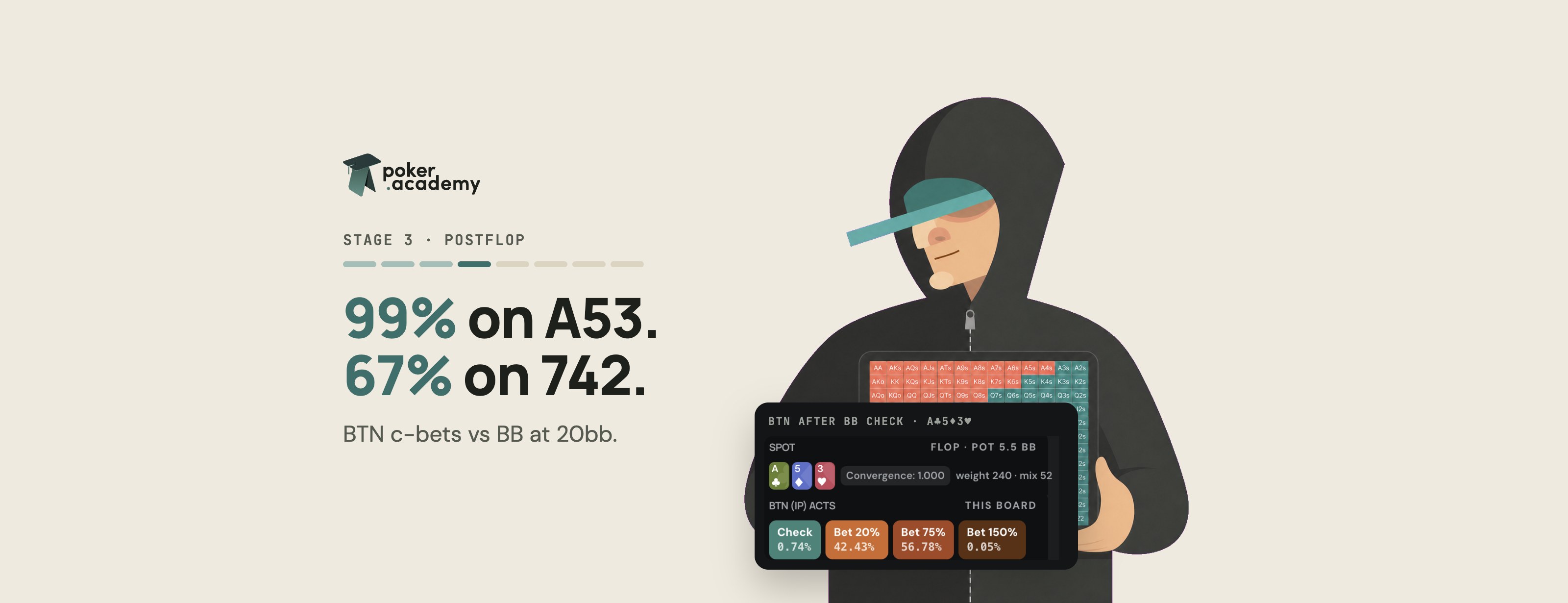
Continuation bets: how often and how big, by board texture
C-bet frequency and size from two flop reports, each solved with a single sizing menu: button vs big blind at 20bb (25 flops) and small blind vs big blind at 50bb (184 flops). High card, paired and monotone boards, and why range and nut advantage explain the numbers.
17 SEP 2026 · pub. 2024Updated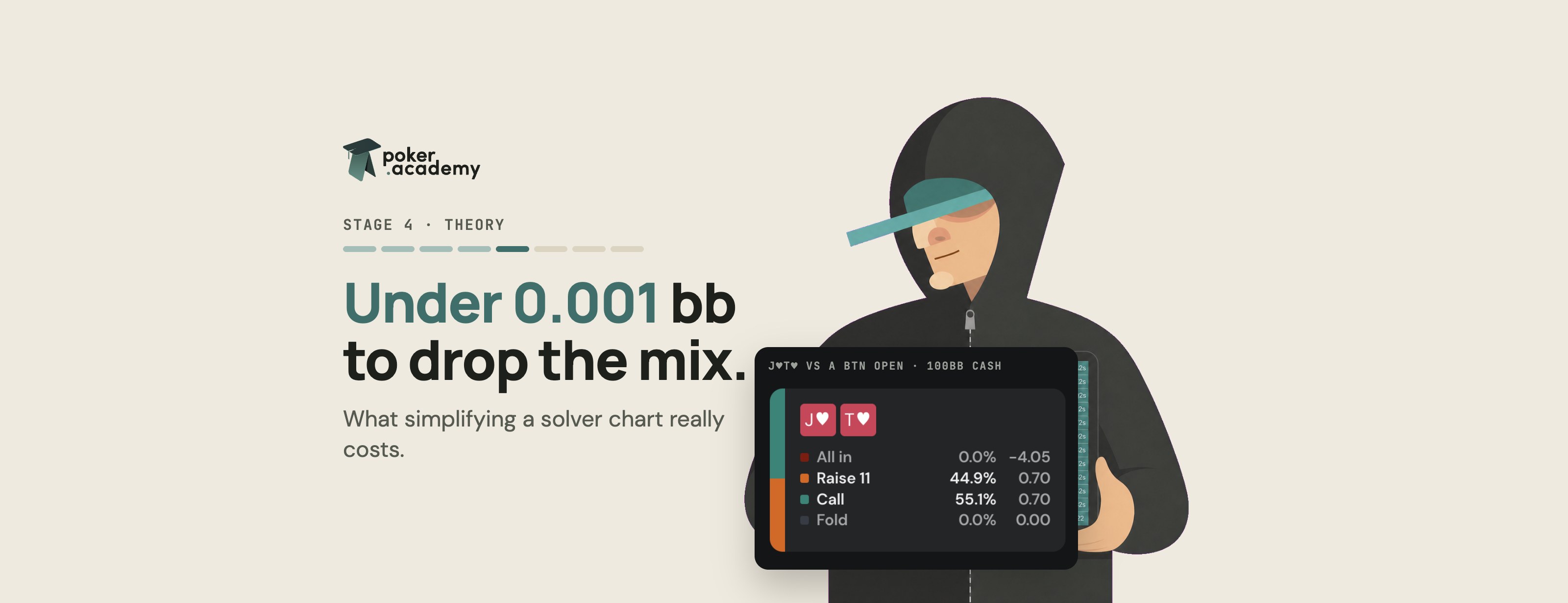 Theory
Is simplifying poker strategy the road to success? I measured the cost
Collapsing a solver’s mixed strategy costs under 0.001bb a hand: the solver only mixes between actions it prices the same. What does cost is carrying one chart into the wrong spot (0.04bb a hand) and forcing one bet size on every flop (up to 0.79bb). Measured on Poker Academy solutions.
17 SEP 2026 · pub. 2024Updated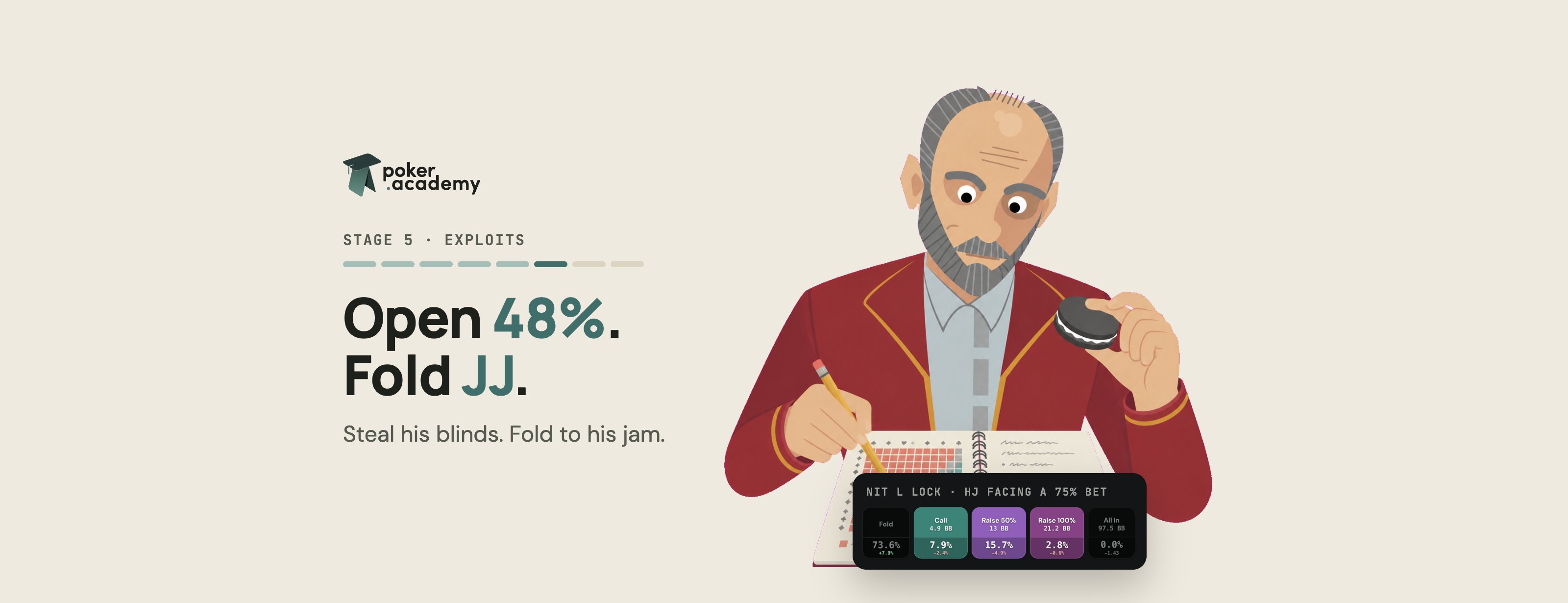 Theory
How to exploit nits: steal their blinds, fold to their raises, stop value-betting thin
A nit folds too much and bets only strong hands. Solver steal ranges at 30bb, the price of calling a nit’s 4-bet jam with JJ, and what the Nit profile does to a range facing a flop bet in the postflop solver.
17 SEP 2026 · pub. 2024Updated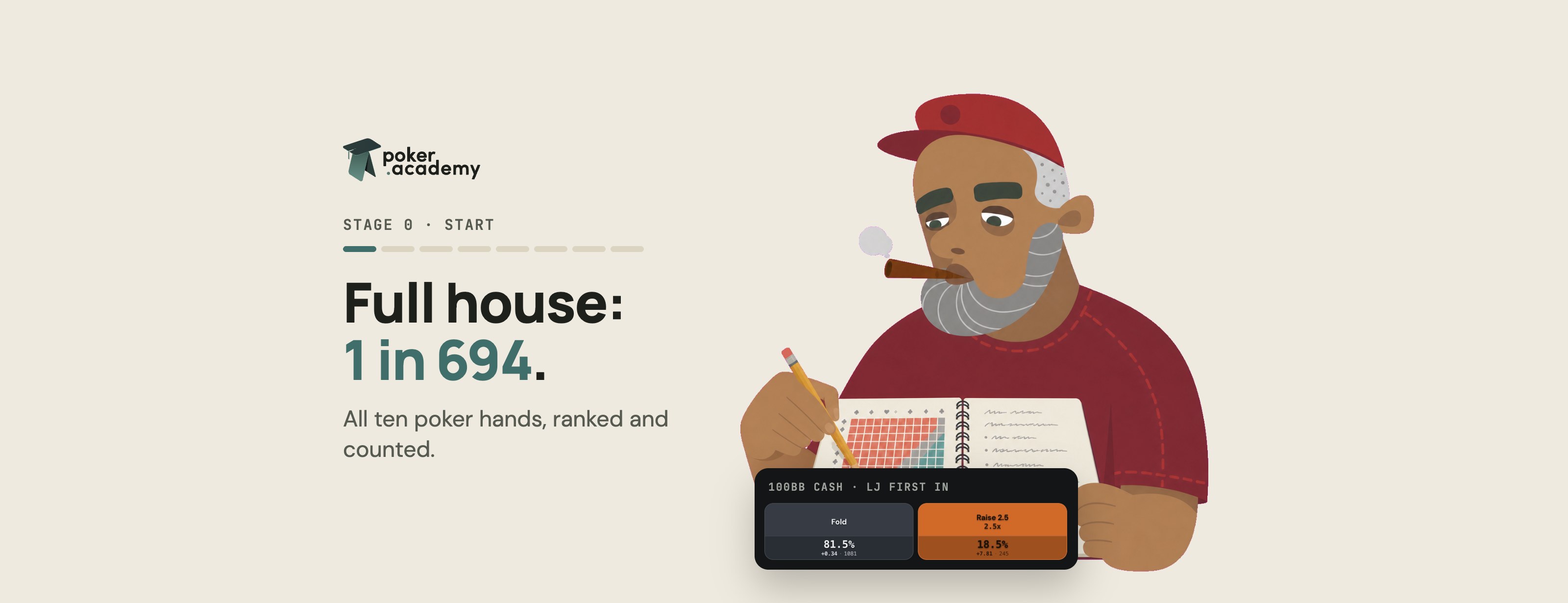 Theory
Poker hand rankings explained: every hand, how rare it is and why
Poker hand rankings from royal flush to high card, with example cards, exact odds out of 2,598,960 five-card hands, tie-breaks, split pots and the best starting hands by solver EV.
17 SEP 2026 · pub. 2024Updated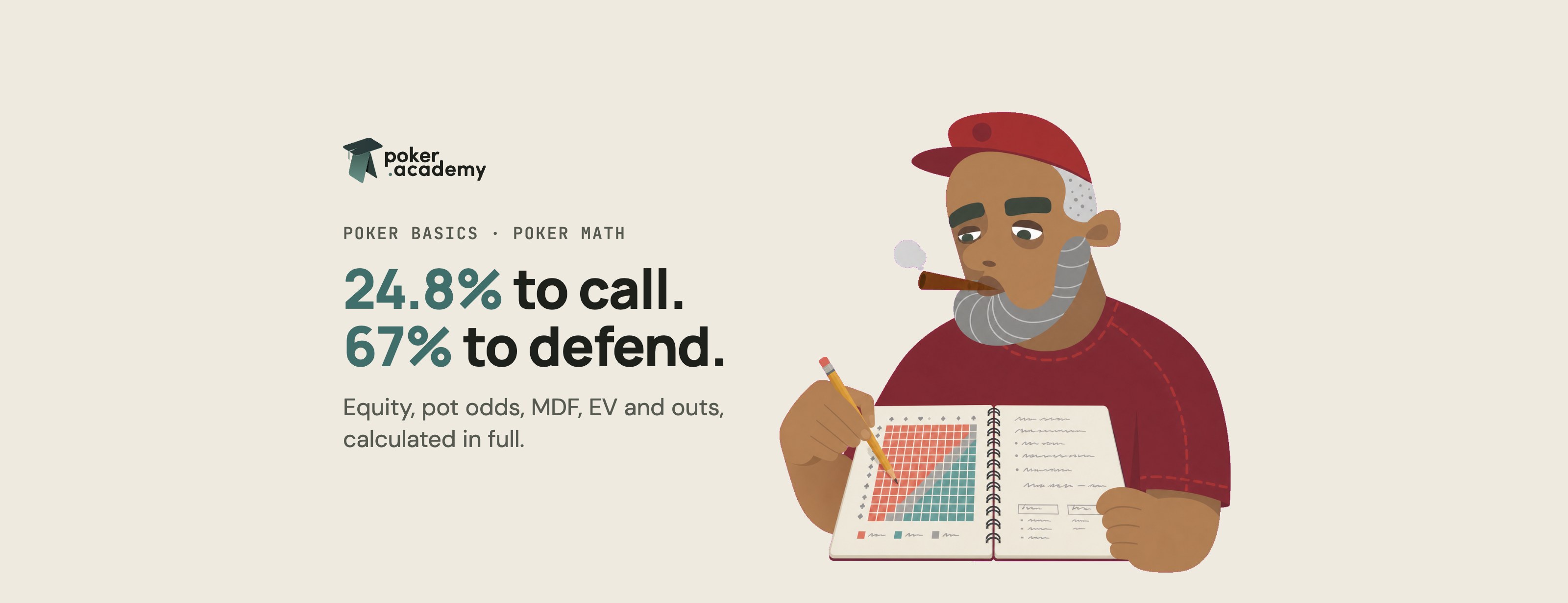 Theory
Introduction to Basic Poker Math
Poker terms like Pot Odds, Expected Value (EV), Alpha, and Minimum Defense Frequency (MDF) might seem daunting at first, but they’re vital tools that can dramatically improve your decision-making process.
17 SEP 2026 · pub. 2024Updated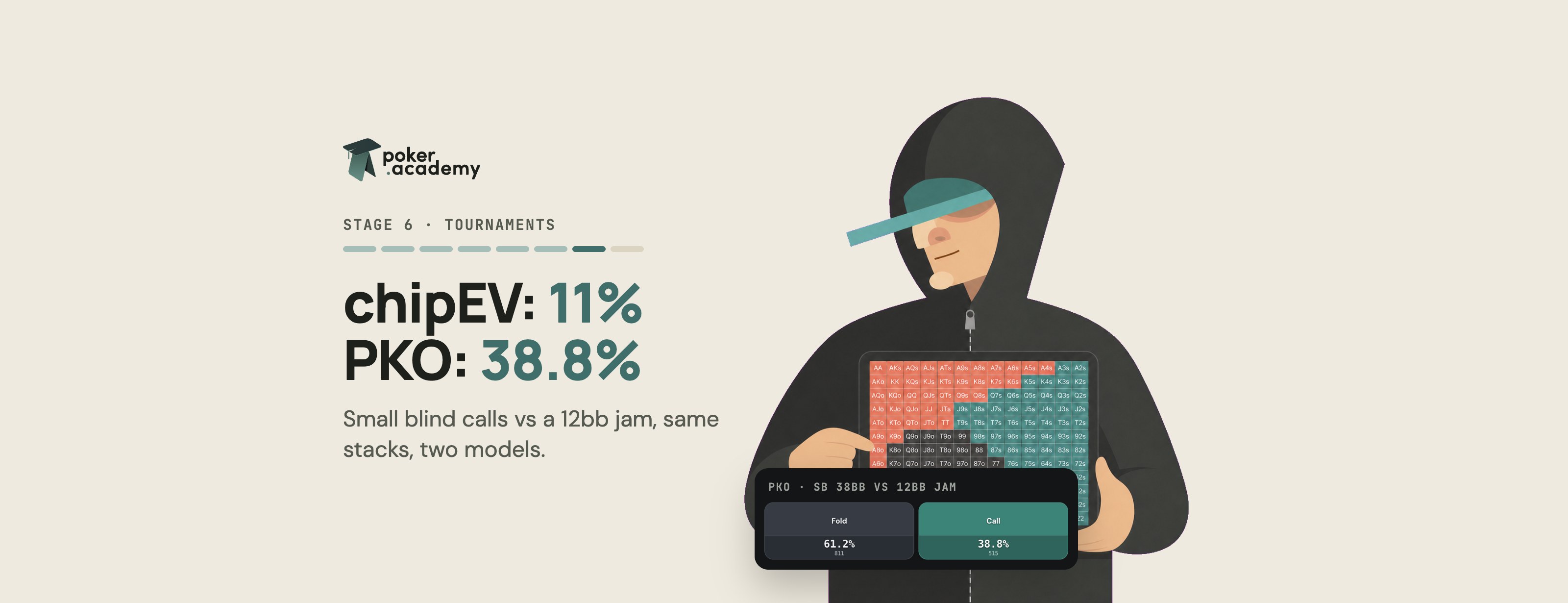 Theory
PKO strategy: how to turn bounties into chips and adjust your ranges
How to convert a PKO bounty into chips with a worked example, add it to your pot odds, and what the solver does differently in PKO than in chipEV with the same eight stacks.
17 SEP 2026 · pub. 2024Updated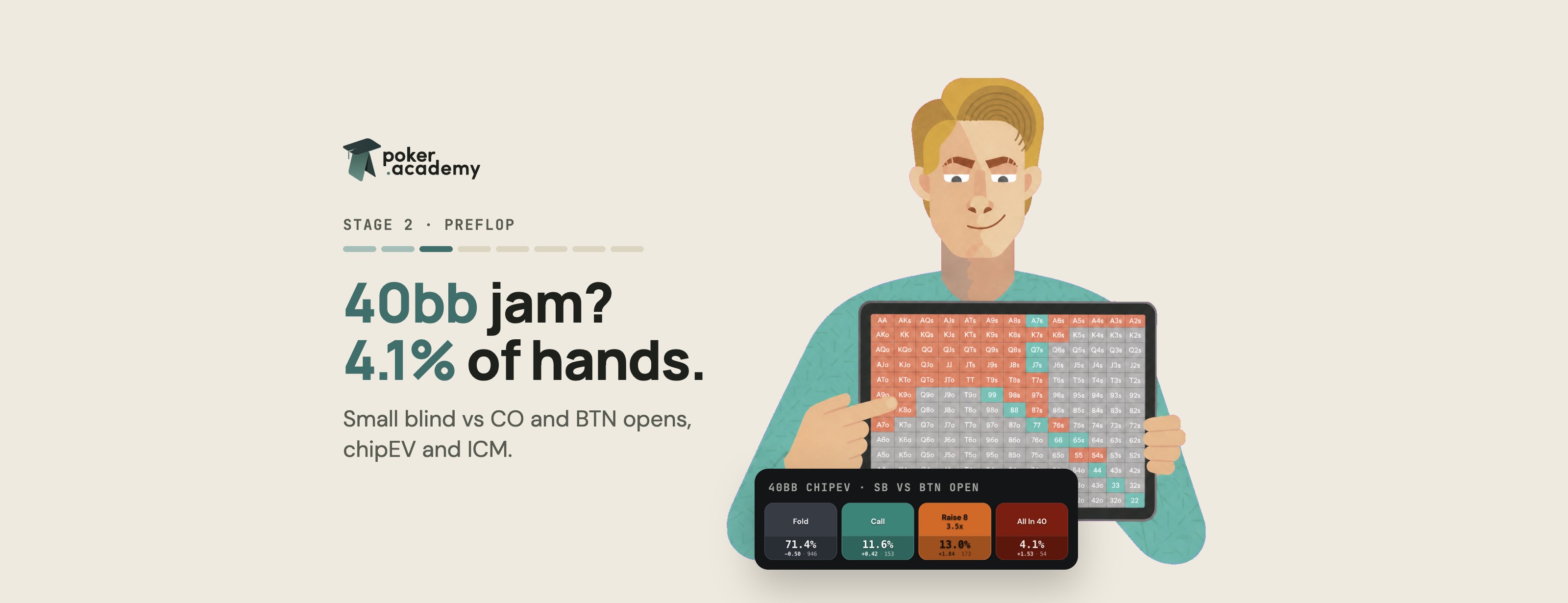 Theory
40bb 3-bet all-in from the small blind: chipEV vs ICM ranges
Is 40bb too deep to 3-bet jam? Solver ranges for the small blind against CO and BTN opens at 40bb, how the openers answer, and what changes under ICM with 100, 50 and 20 players left.
17 SEP 2026 · pub. 2024Updated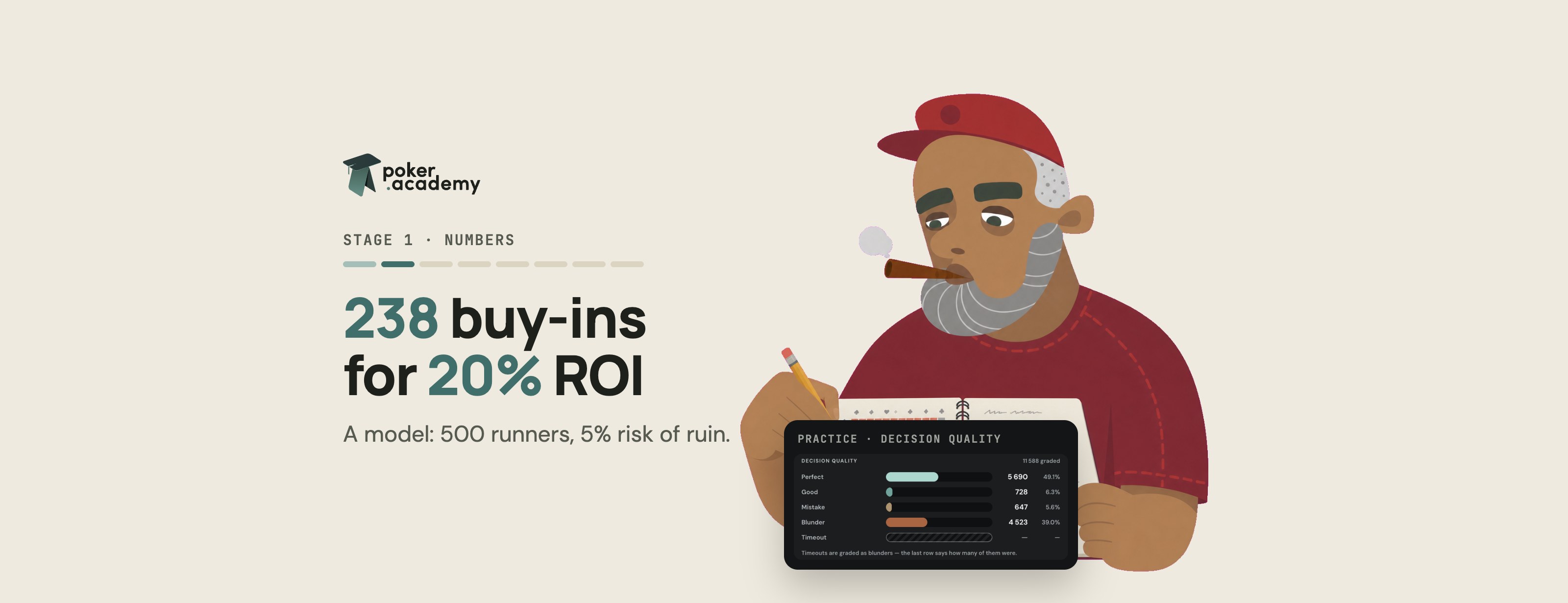 Theory
Poker variance in tournaments: downswings, breakeven stretches and the bankroll you actually need
A seeded variance model for MTTs: how deep downswings go at 100, 500 and 2,000 runners, why 30 buy-ins is not a tournament bankroll, how long a winner can run breakeven, and how to get through it.
 17 SEP 2026 · pub. 2024Updated
 Theory
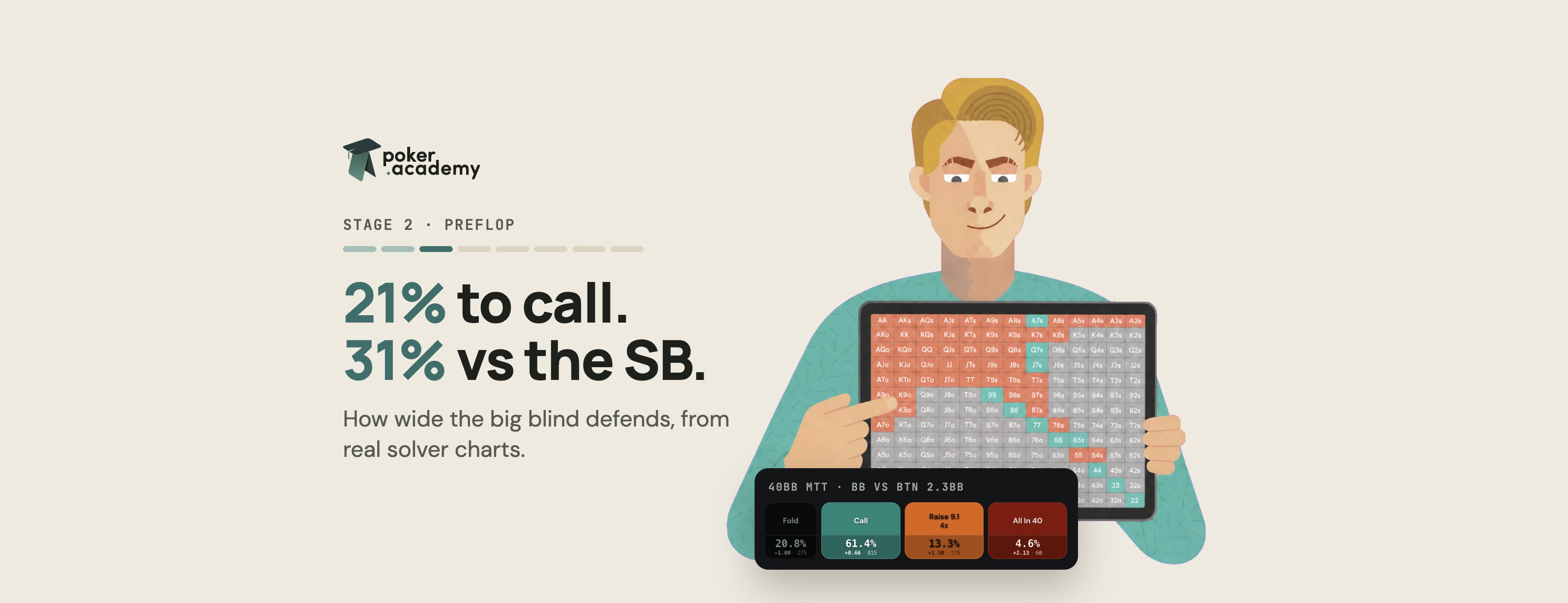
Big blind defence in poker: pot odds, blind vs blind and limped pots
How to defend the big blind: the price you get against different open sizes, how blind vs blind works when the small blind raises or limps, and how the big-blind ante changes it. Solver charts from a 40bb tournament and a 100bb cash game.
17 SEP 2026 · pub. 2024Updated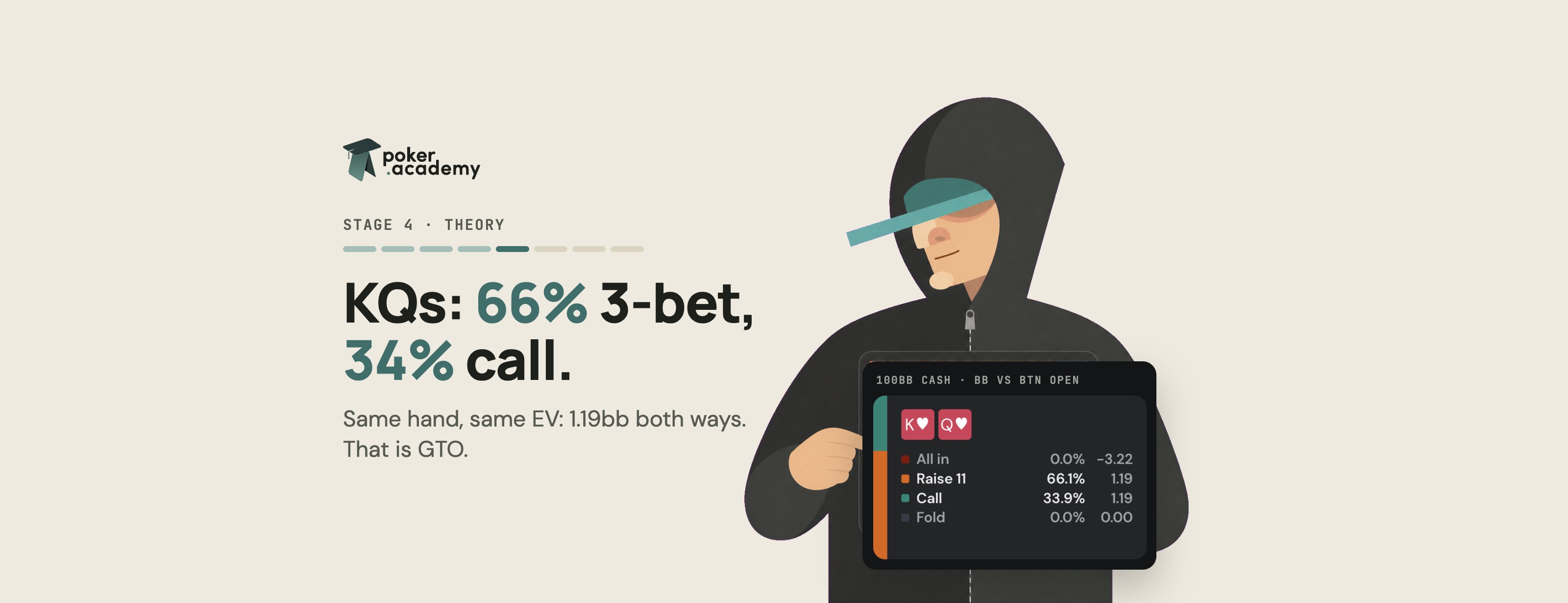 Theory
What is GTO in poker? Equilibrium, mixing and balance with real solver numbers
What GTO really means in poker: Nash equilibrium, ranges instead of hands, mixed strategies and balance, shown with real solver output from a 100bb 6-max cash game.
 17 SEP 2026 · pub. 2024Updated
Nothing is hidden on a second page. The rest is filed under the other years.