
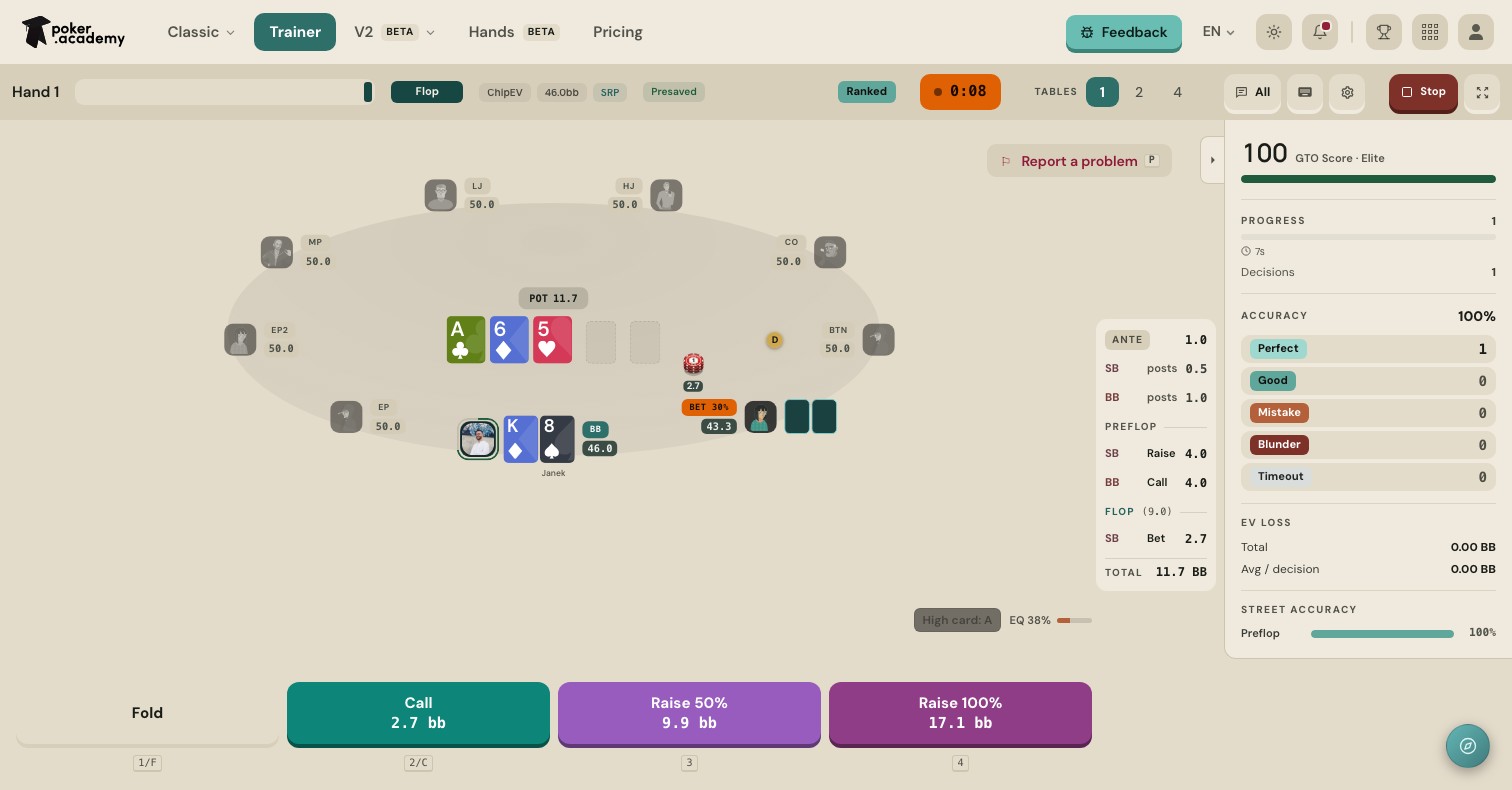
 وُزّع الفلوب، وراهن الخصم، والقرار الآن بيد البطل
لعبتَ وفق الاستراتيجية
قرارك هو ما يفعله السولفر عند هذه العقدة، وبالتكرار نفسه.
Full Hand Trainer
الجداول تعطيك الإجابة. أما المدرّب فيوزّع عليك الموقف، ويضعك أمام خصم يلعب استراتيجية السولفر، ويقيّم كل قرار تتخذه حتى نهاية اليد.
الشاشات في اللقطة من تصميم الفيلم، وليست من المنتج. ما يعرضه المنتج فعلًا تجده في لقطات الشاشة أدناه.
تلعب اليد كاملة
الخصم يلعب وفق استراتيجية السولفر، فتسير اليد كما تسير الأيدي الحقيقية. بعد الـ 3-بيت ترى الفلوب في بوت 3-بيت، وتلعبه بنطاق الأيدي الذي بنيته في ما قبل الفلوب.
كل جولة تُلعب حتى آخرها، وهذا ما لا تعلّمك إياه الجداول: ثمن المجاراة في ما قبل الفلوب يُدفع غالبًا بعد ثلاث جولات، ولا تشعر به إلا إن كنت ما زلت في اليد حين يحين.
وإن كنت تعمل على ما قبل الفلوب وحده، فبإمكانك قصر الجلسة عليه.
تختار بنفسك متى تُكشف أوراق الخصم: في البداية، أو في النهاية، أو عند كشف الأوراق فقط. وكل خيار يجعل من الموقف نفسه تمرينًا مختلفًا.
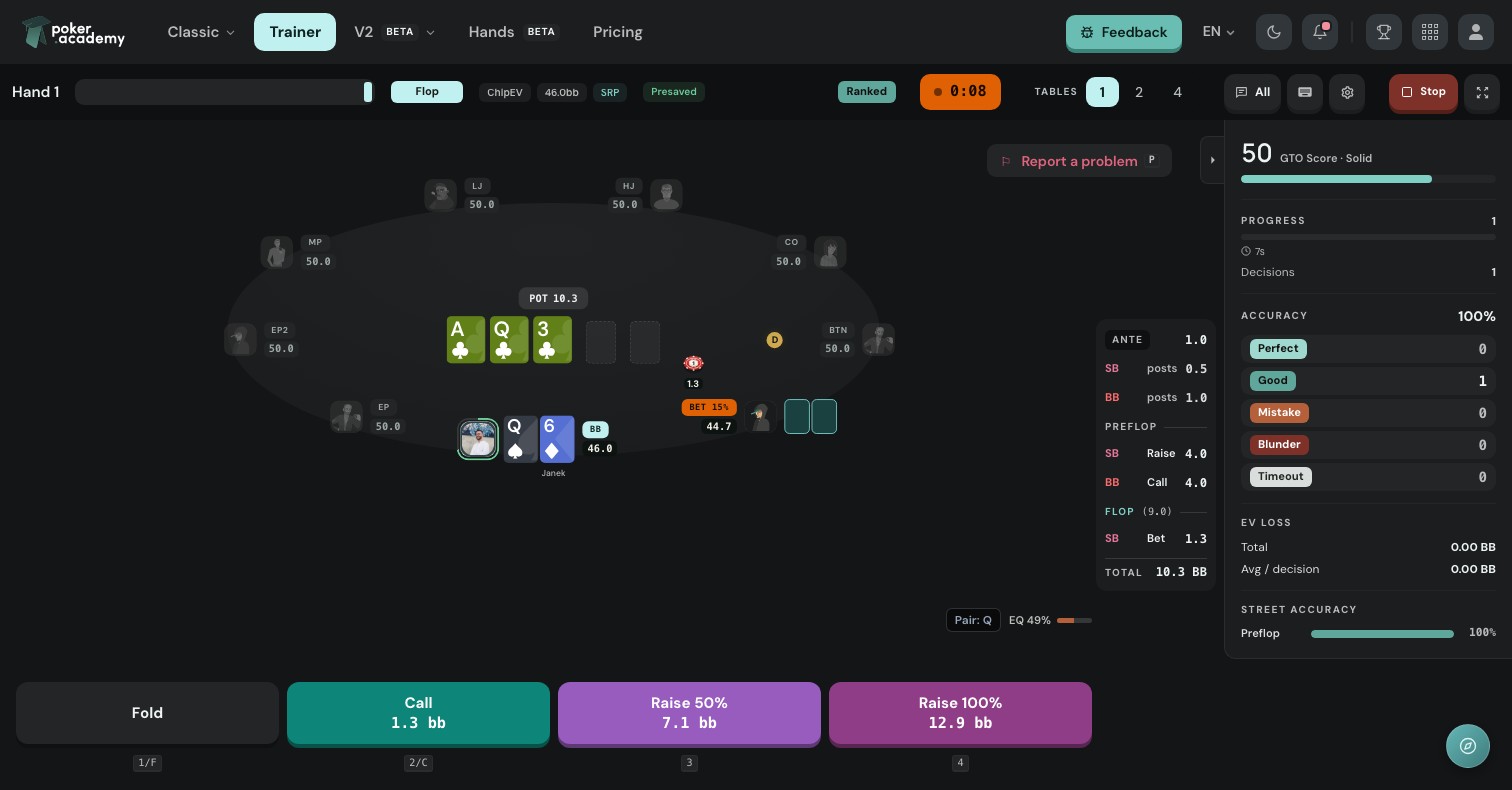 وُزّع الفلوب، وراهن الخصم، والقرار الآن بيد البطل
هنا قلب المدرّب
أربع درجات، وانتبه إلى الدرجتين في الوسط: القرار الجيد الذي ليس الأفضل يكلّفك قليلًا في كل مرة، وهذا القليل يتراكم على امتداد الجلسة.
قرارك هو ما يفعله السولفر عند هذه العقدة، وبالتكرار نفسه.
ضمن الاستراتيجية المختلطة، لكن ليس في الفرع الذي يحمل معظم وزنها. خسارته صغيرة، لكنها تتراكم.
خارج الاستراتيجية، وخسارة الـ EV مذكورة صراحةً بالـ bb، لا تلميحًا.
فصلناه عن الخطأ العادي عمدًا: الخطأ عادة، أما الخطأ الفادح فحادث عابر.
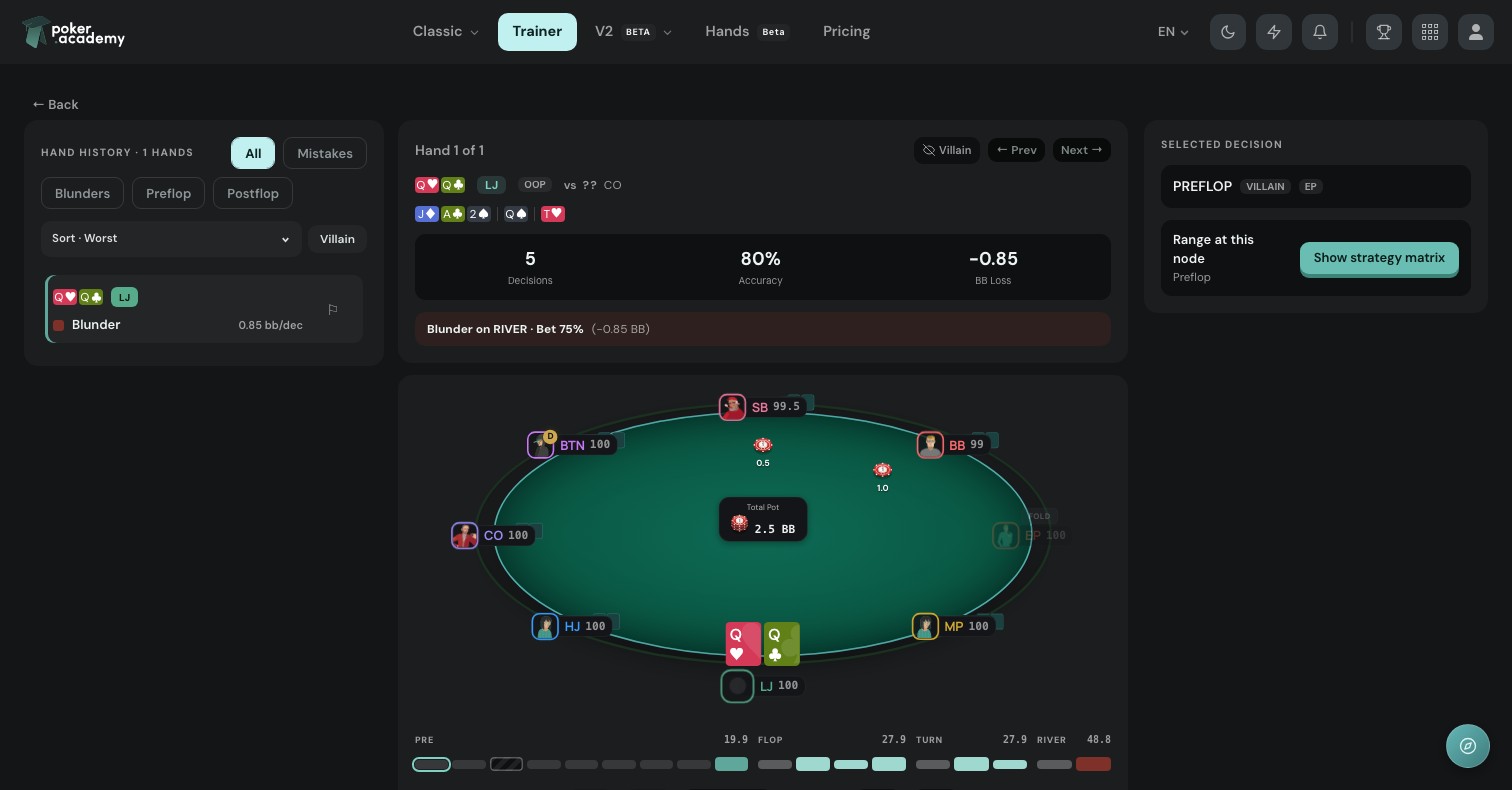 يد واحدة، قرارًا بقرار: تكرارات السولفر، وما فعلته، وما كلّفك
أنت تختار الموقف
كل إعدادات الجلسة في شاشة واحدة: الصيغة وعمق الستاك، ومن تواجه، وكم يكشف لك المدرّب ومتى. ثلاث مجموعات من هذه تقوم بمعظم العمل، ولذلك بنينا اللوحة حولها، لا حول قائمة إعدادات مرتبة أبجديًا.
موقف ما قبل الفلوب، ومقعدك، ومقعد الخصم، ولكلٍّ منها اختيار مستقل. اترك أيًّا منها فارغًا ليُختار عشوائيًا. الفئة التي لا يمكن توزيعها في السيناريو المختار تختفي من القائمة، ولا تبقى رمادية، ويتغيّر العدّاد فوق المجموعة معها.
الفئة 3 من 11
مقعد البطل فارغ = عشوائي
مقعد الخصم فارغ = عشوائي
القائمة تختلف من صيغة إلى أخرى: الكاش لا يضم مواقف وجهًا لوجه ولا مواقف ضد رفع العزل، وفي سبين آند غو تنحصر المقاعد في BTN وSB وBB، فهذه هي اللعبة أصلًا.
هذا هو الإعداد الوحيد الذي يغيّر طبيعةالجلسة نفسها. وقيمته الأولى بعد ، وهذا مقصود: وضع دراسة يعرض الجواب قبل أن تقرر، ولو بدأت به لتحوّلت جلساتك الأولى إلى نسخ للأجوبة بدل التدريب.
الملاحظات
مؤقت لكل قرار
يتوقف المؤقت ما دامت الملاحظات على وضع دراسة. قراءة نطاق الأيدي واللعب ضد الساعة تمرينان مختلفان، لذلك لا تسمح لك اللوحة بالجمع بينهما.
تبدأ بالصيغة، ثم يقتصر كل ما تحتها على ما تغطيه مصفوفات تلك الصيغة فعلًا.
أربع طرق لاختيار ما تتدرب عليه
احفظ أي إعداد تمرينًا له اسم، وأعد تشغيله متى شئت. هكذا تتكوّن عند معظم اللاعبين قائمتهم.
ثمانية أنواع، تُبنى كلها من جلساتك أنت، منها: أضعف موقف، ومراجعة مستحقة، والقرارات المتقاربة، وصائد الأخطاء الفادحة، وإعادة الأخطاء، والتحدي اليومي.
برنامج يومي مفصّل. تقرر مرة واحدة ما ستدرسه، وتتولى الخطة كل أمسية بعد ذلك.
مجموعة ثابتة من المواقف، تُرسَل إليك أو تفتحها من رابط، ومعها لوحة ترتيب. ولأن الأيدي متطابقة، فهذا هو المكان الوحيد في التطبيق الذي تُقارن فيه نتائجك مباشرة بنتائج غيرك من اللاعبين.
في كل صف الدقة وعدد المحاولات والأيدي ومنذ متى لُعب التمرين، فالتمرين الذي لم تلمسه منذ شهر يُظهر ذلك بوضوح. أما التمرين الذي لم يُلعب قط فيعرض شرطات مكان النتيجة، لأنه لم يحدث فيه شيء بعد.
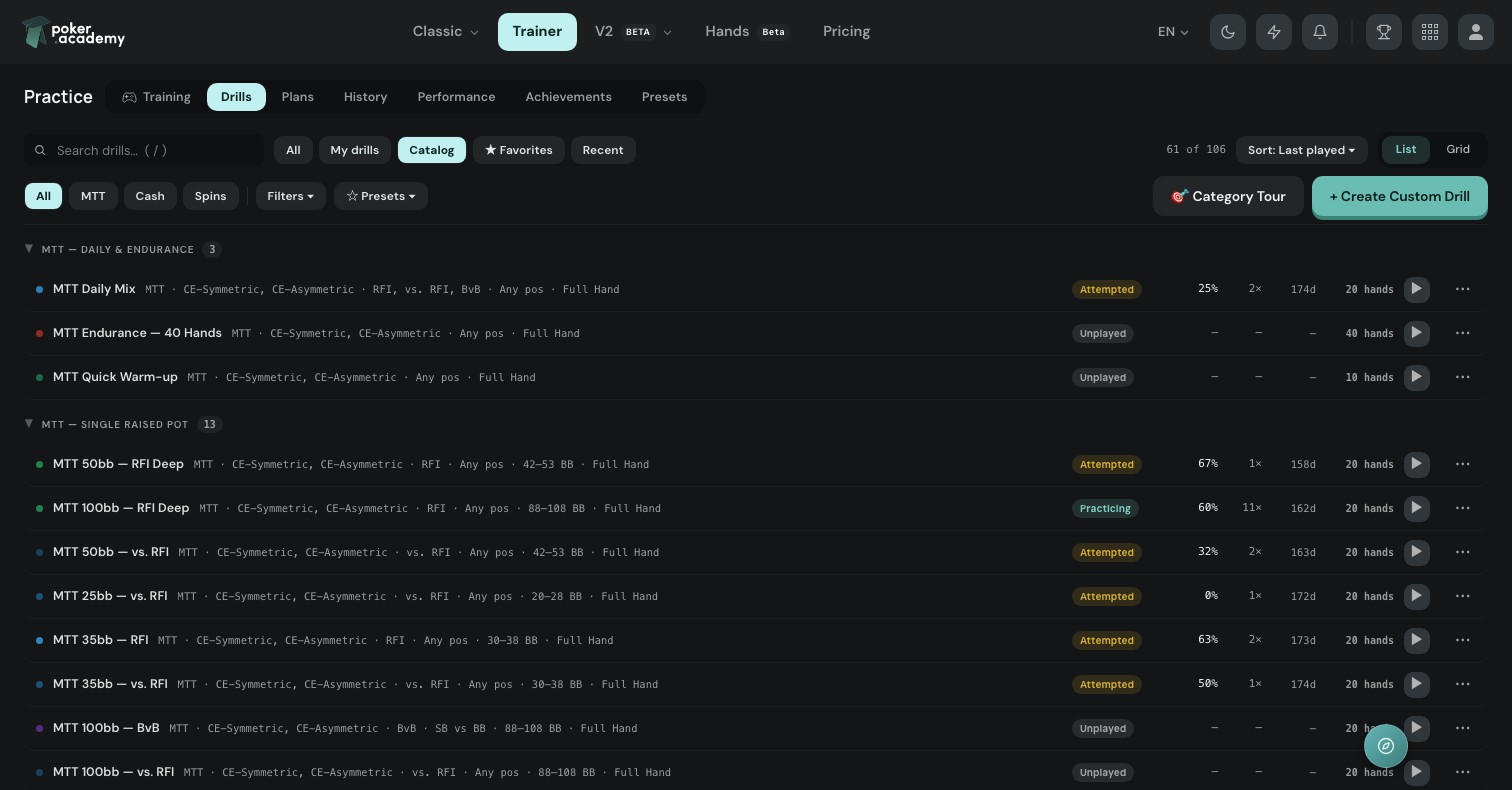 الكتالوج مجمّعًا حسب الموقف، وتمارينك الخاصة على بُعد زر واحد
الخطة سلسلة من التمارين لها هدف وتقويم. الخطة في هذا الحساب دورة بطولات مدتها أربعة أسابيع: ست جلسات في الأسبوع، ويوم راحة في آخر كل أسبوع.
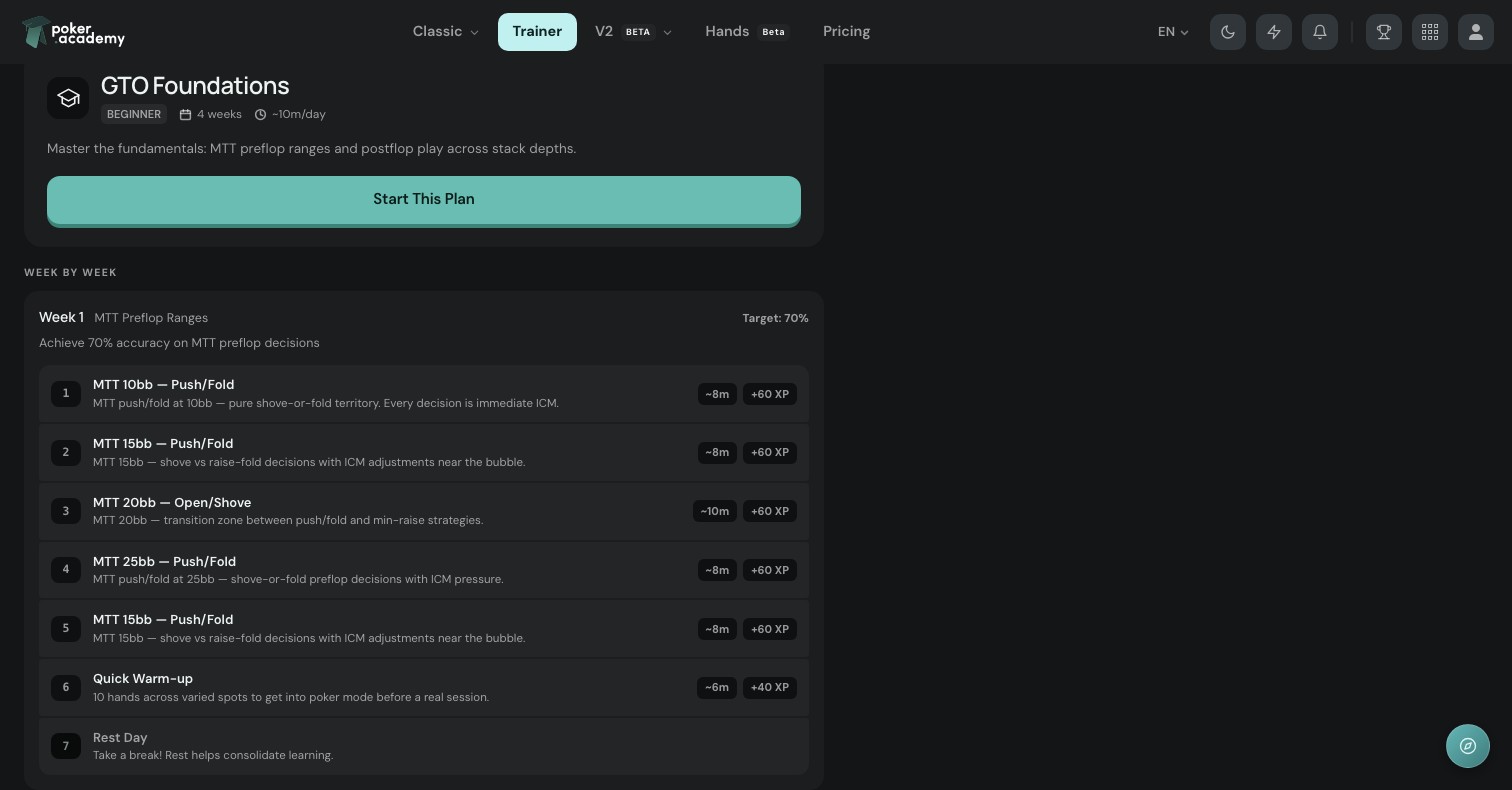 الأسبوع 1 من 4، وشريط الأيام، وهذا الأسبوع جلسةً جلسة
يقيس أداءك
يظهر الملخص لحظة انتهاء الجلسة: النتيجة، وتوزيع جودة القرارات، والدقة في كل جولة، وملاحظة مكتوبة واحدة عن الجلسة. وكل سطر فيه يأخذك إلى اليد التي جاء منها.
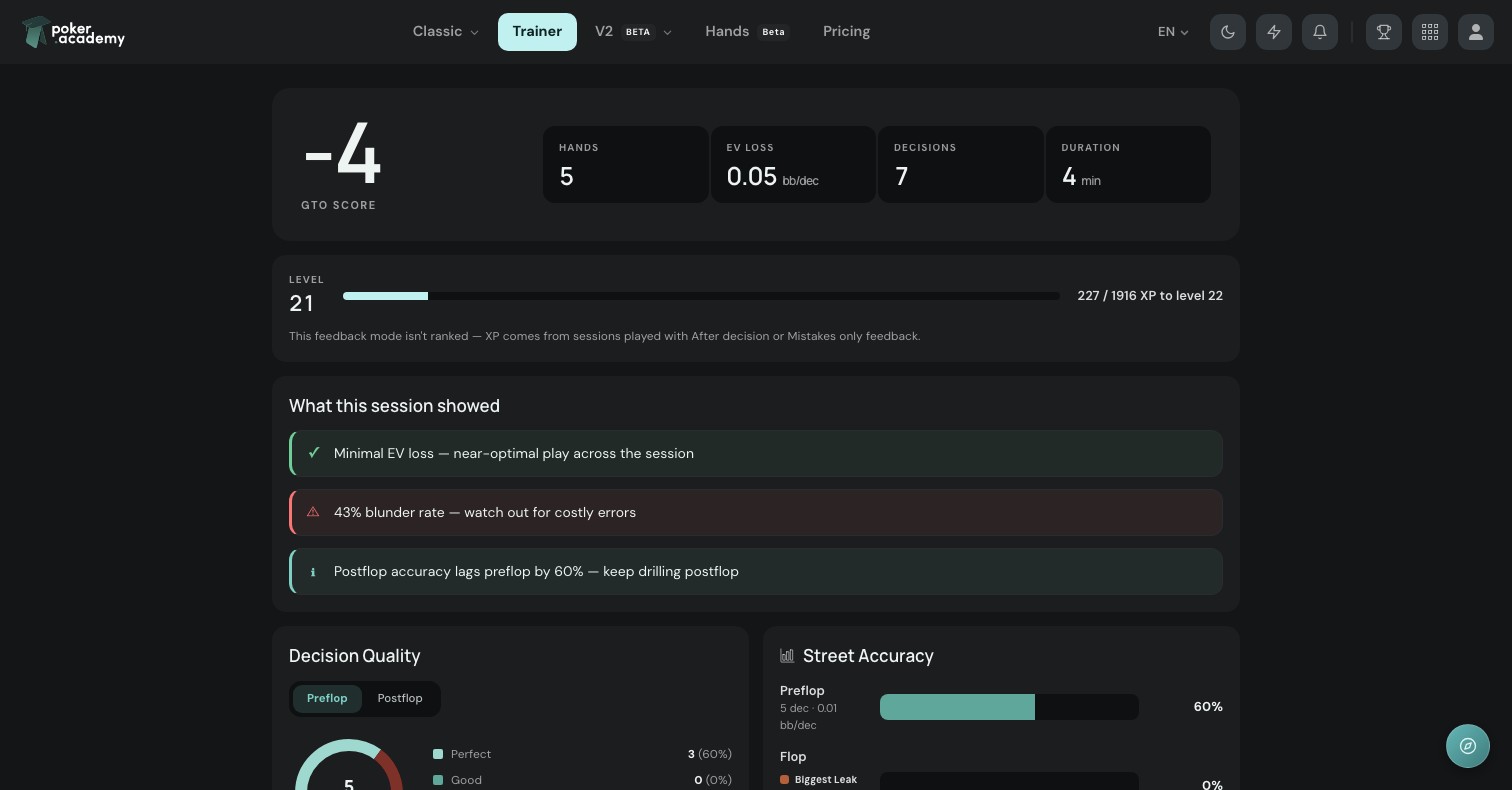 النتيجة، والأيدي، والـ bb لكل قرار، والتوزيع على الجولات
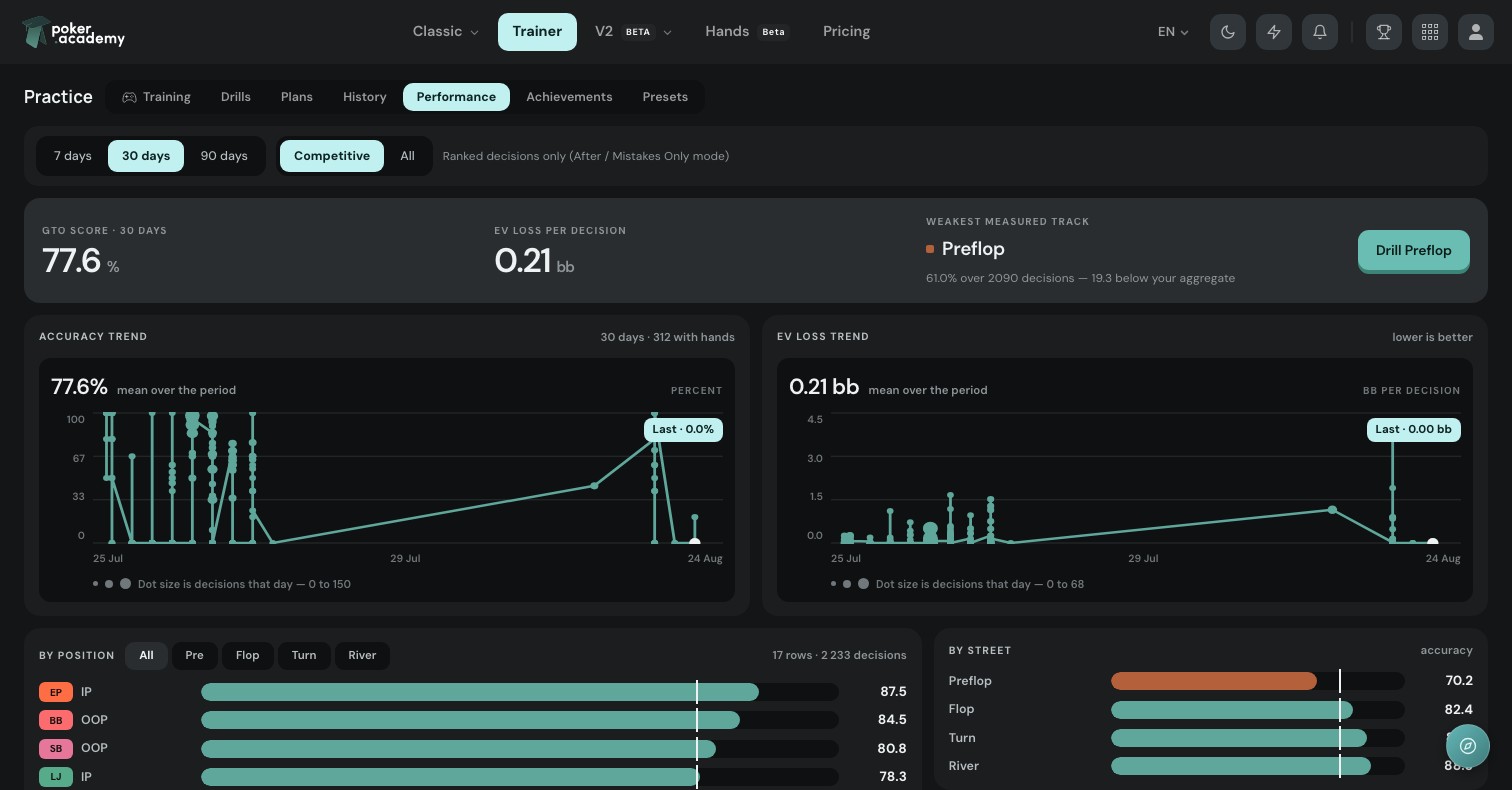 المنحنيات، والتفصيل حسب المركز، والدقة في كل جولة
الدقة وخسارة الـ EV عبر الزمن، ثم الأرقام نفسها مقسّمة حسب المركز والجولة وجودة القرار. من هذه الشاشة تعرف أي تمرين تبنيه بعد ذلك، ومن الأرقام نفسها تُبنى التمارين التلقائية.
كل رقم هنا محسوب من جلساتك أنت، فلا توقعات فيه ولا تقييمات.
لا يضيع شيء
لا تنتهي صلاحية الجلسات، ولا تُختزل في ملخص يحلّ محلها. افتح أي جلسة، واختر أي قرار، فيظهر لك نطاق الأيدي عند تلك العقدة في الشبكة كاملة. وهو ناتج السولفر نفسه الذي تعتمد عليه بقية أجزاء المنتج.
الدقة، والـ bb لكل قرار، ومدة كل جلسة، مع شريط تقويم يُظهر الأسابيع التي درست فيها فعلًا.
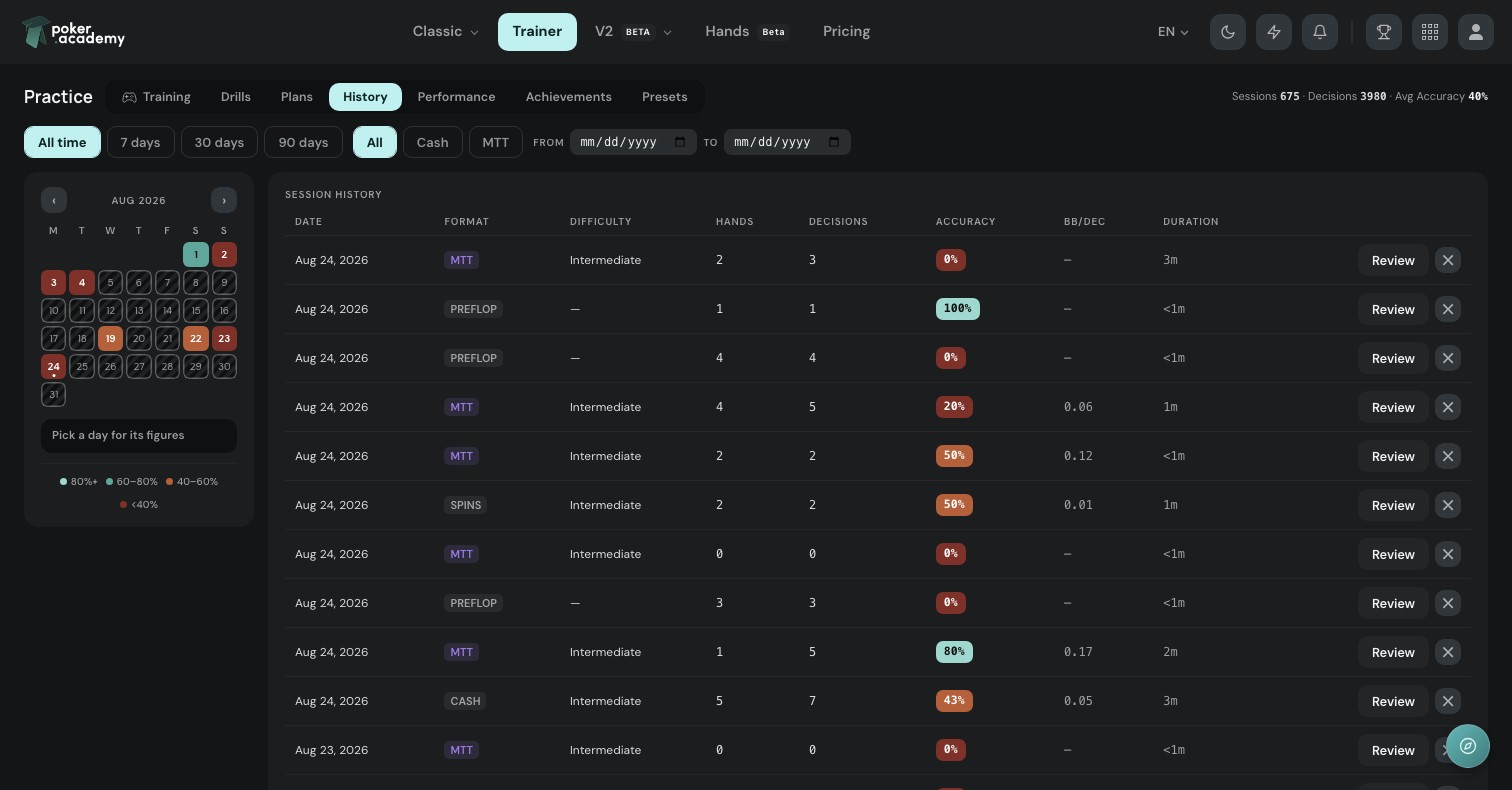 سجل الجلسات، بعمق آلاف الجلسات
شبكة 13×13 كاملة لما يفعله السولفر عند تلك العقدة، بكل تركيبة في النطاق، بجانب القرار الذي اتخذته. وهي على بُعد نقرة واحدة من يد أخطأت فيها قبل ستة أسابيع.
 المصفوفة عند القرار المختار
التقدّم
تكسب نقاط الخبرة من الجلسات، وتفتح ثلاثين إنجازًا مع تقدّمك. لا شيء من ذلك يقيس مستواك في اللعب؛ إنه يسجّل الساعات التي قضيتها في الدراسة، وهي الجزء الوحيد من البوكر الذي تتحكم فيه بالكامل.
وهو كذلك الجزء من المدرّب الذي لا يدور حول يد بعينها، وما يعيد اللاعبين إليه في الأمسيات التي لا رغبة لهم فيها بالدراسة.
من الفيلم الترويجي، 2023.
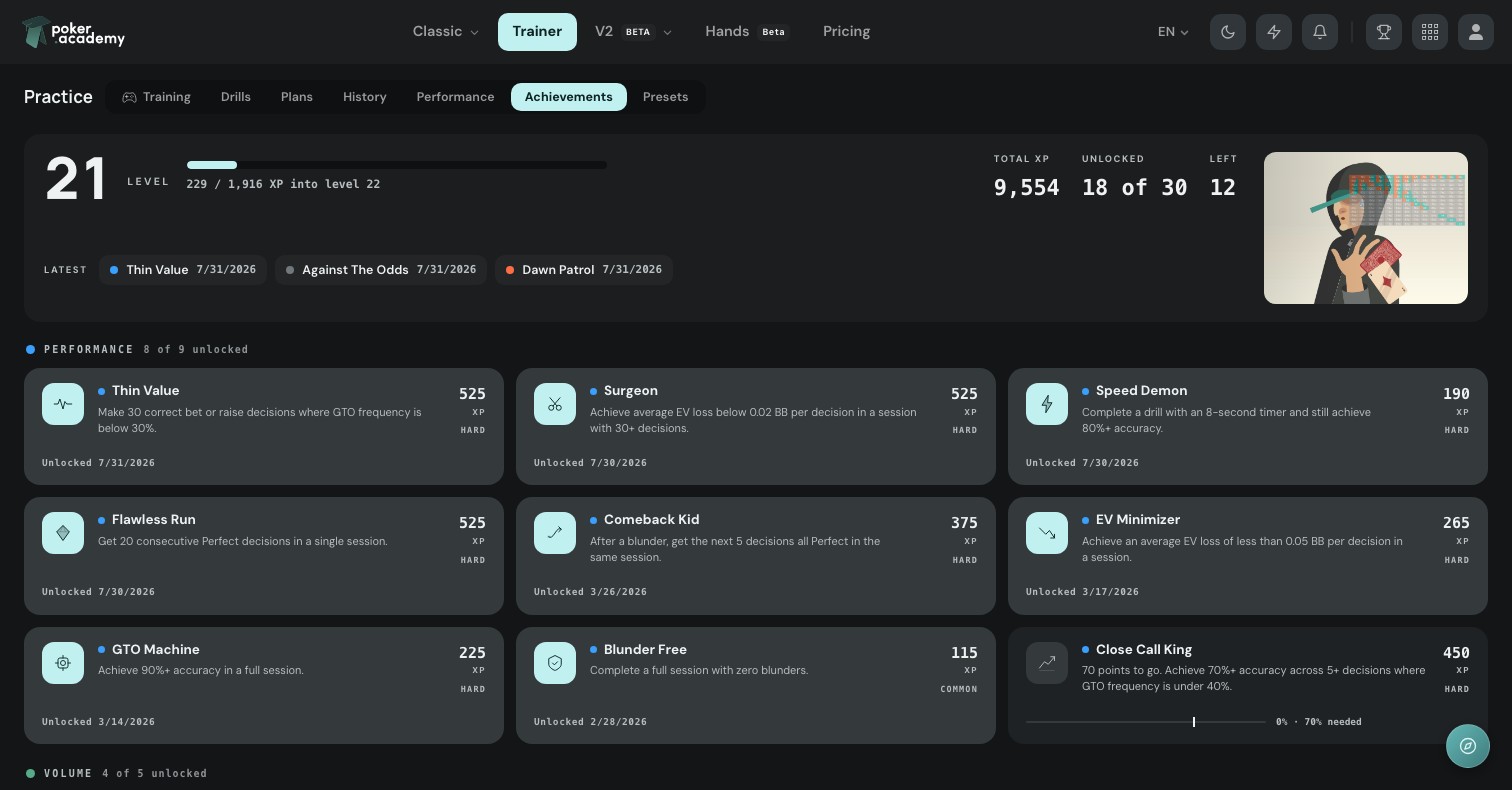 المستوى ونقاط الخبرة في الأعلى، وثلاثون إنجازًا في الأسفل، فُتح منها أربعة وعشرون في هذا الحساب
Full Hand Trainer
اختر صيغة، واضبط العمق، والعب الأيدي حتى النهاية، ثم اقرأ المراجعة. هذه هي الدورة كلها، وتستغرق نحو خمس عشرة دقيقة.
ابدأ التجربة المجانيةألغِ بـ 2 نقرة، بلا رسوم.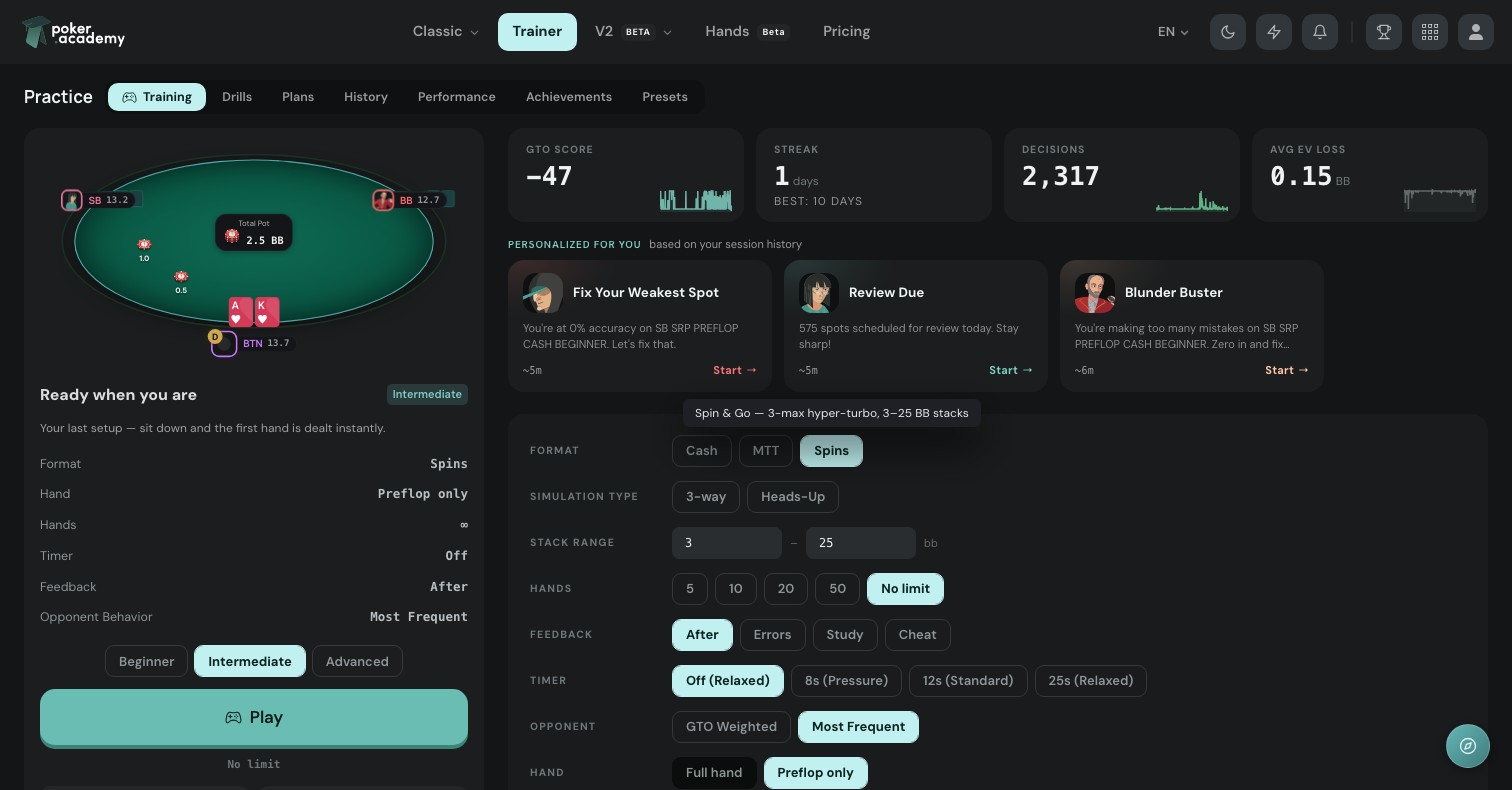 تُفتح اللوحة على آخر إعداد استخدمته، فتكون أول يد على بُعد ضغطة واحدة
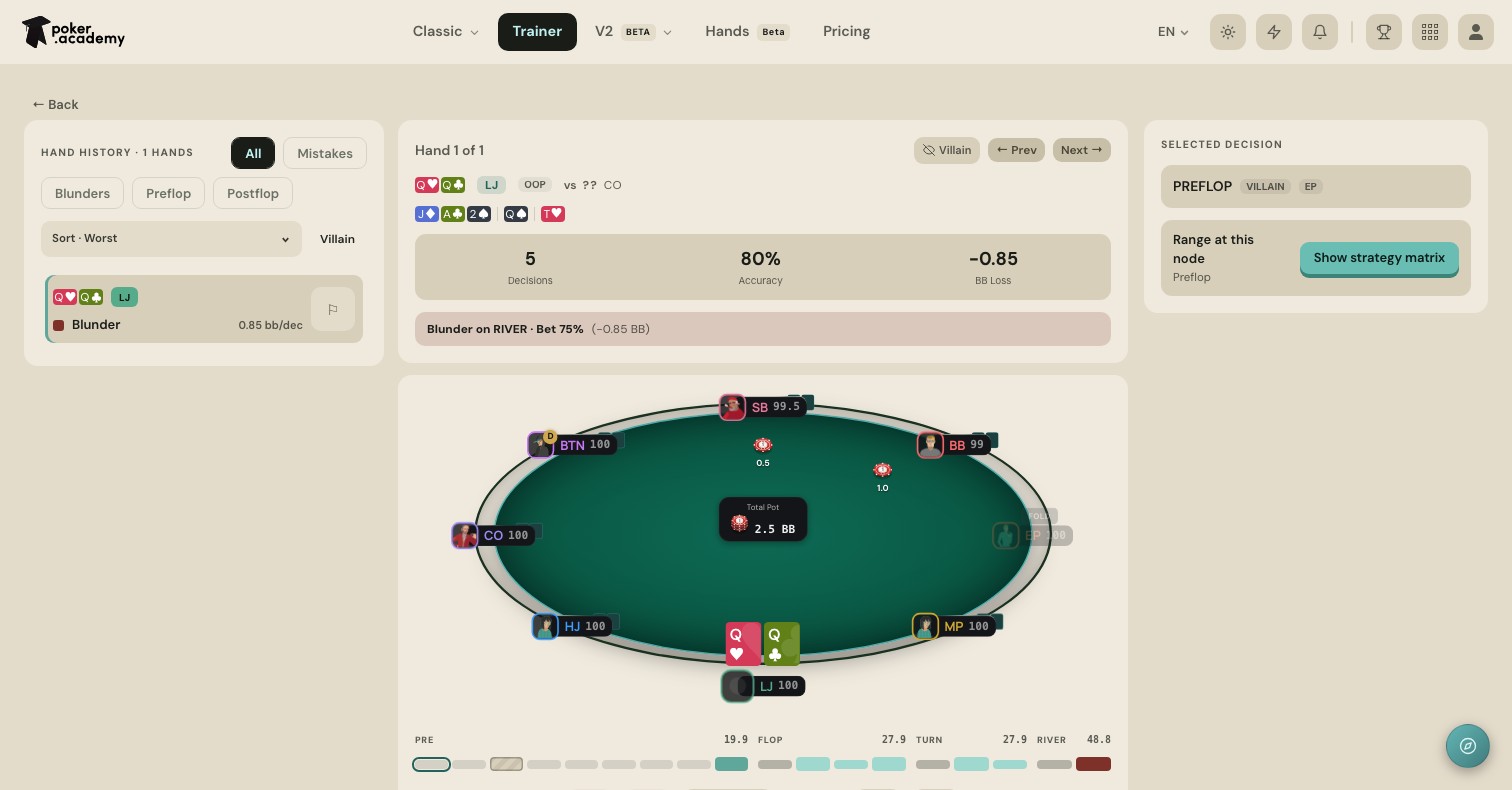 يد واحدة، قرارًا بقرار: تكرارات السولفر، وما فعلته، وما كلّفك
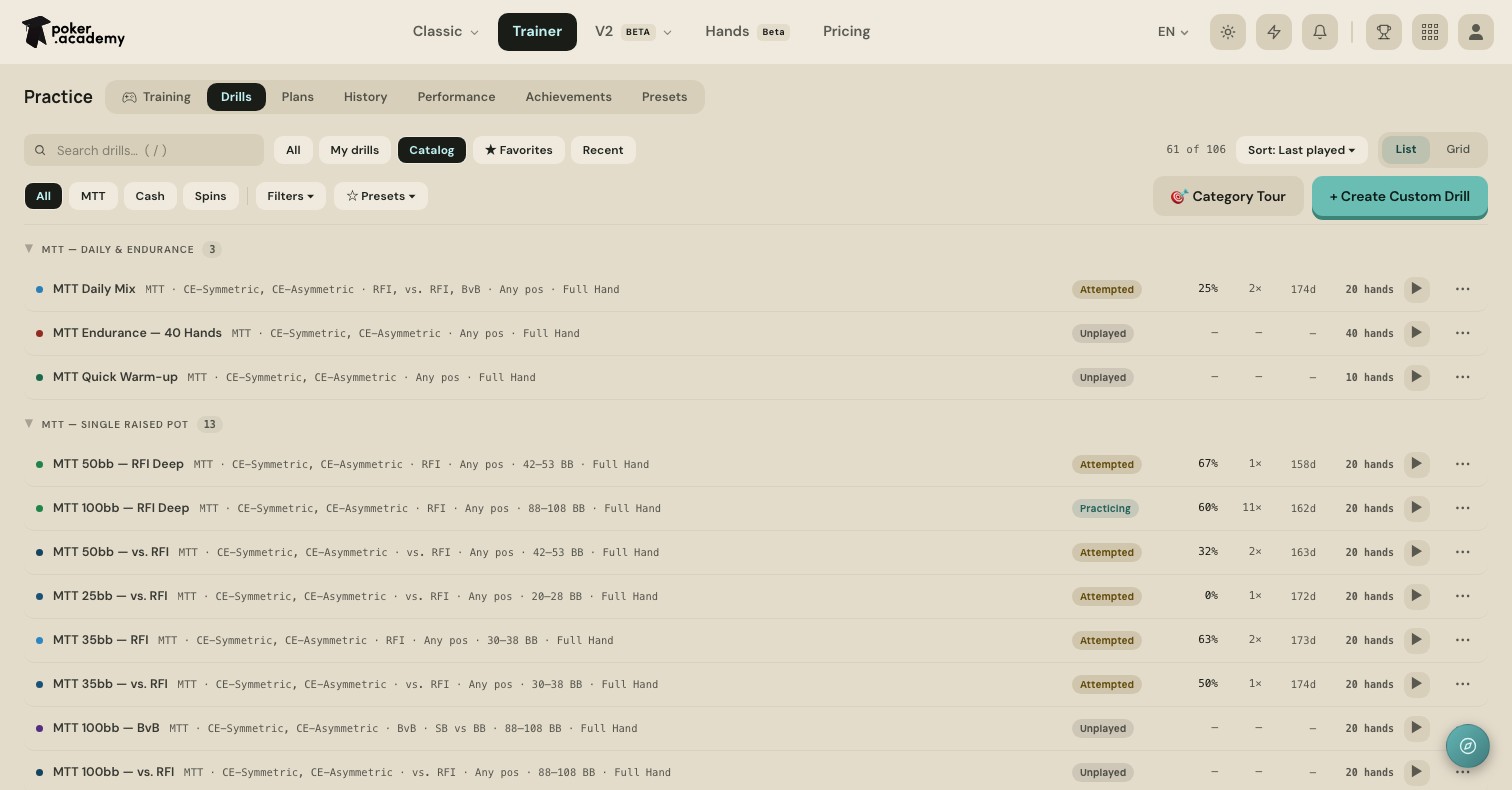 الكتالوج مجمّعًا حسب الموقف، وتمارينك الخاصة على بُعد زر واحد
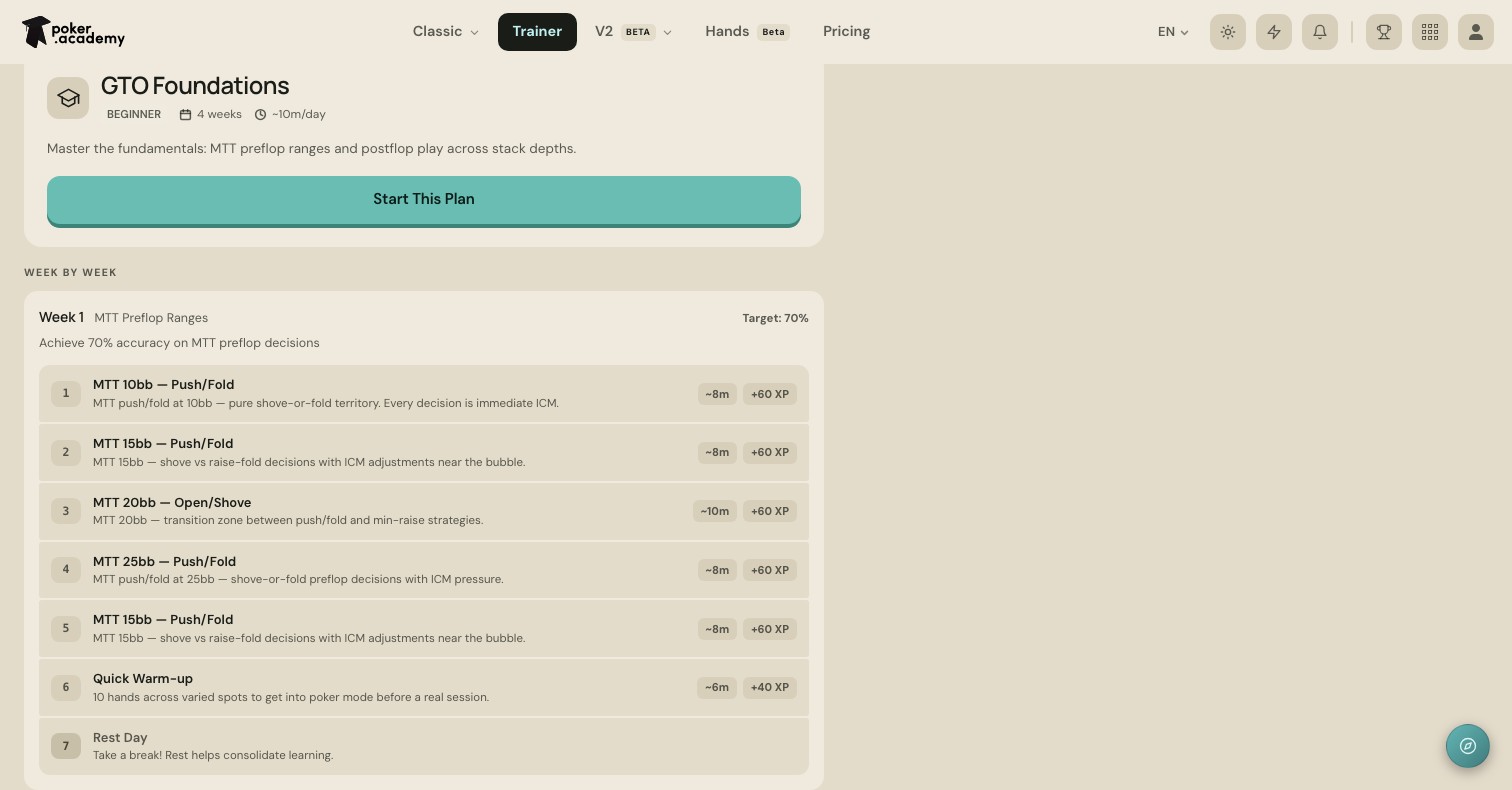 الأسبوع 1 من 4، وشريط الأيام، وهذا الأسبوع جلسةً جلسة
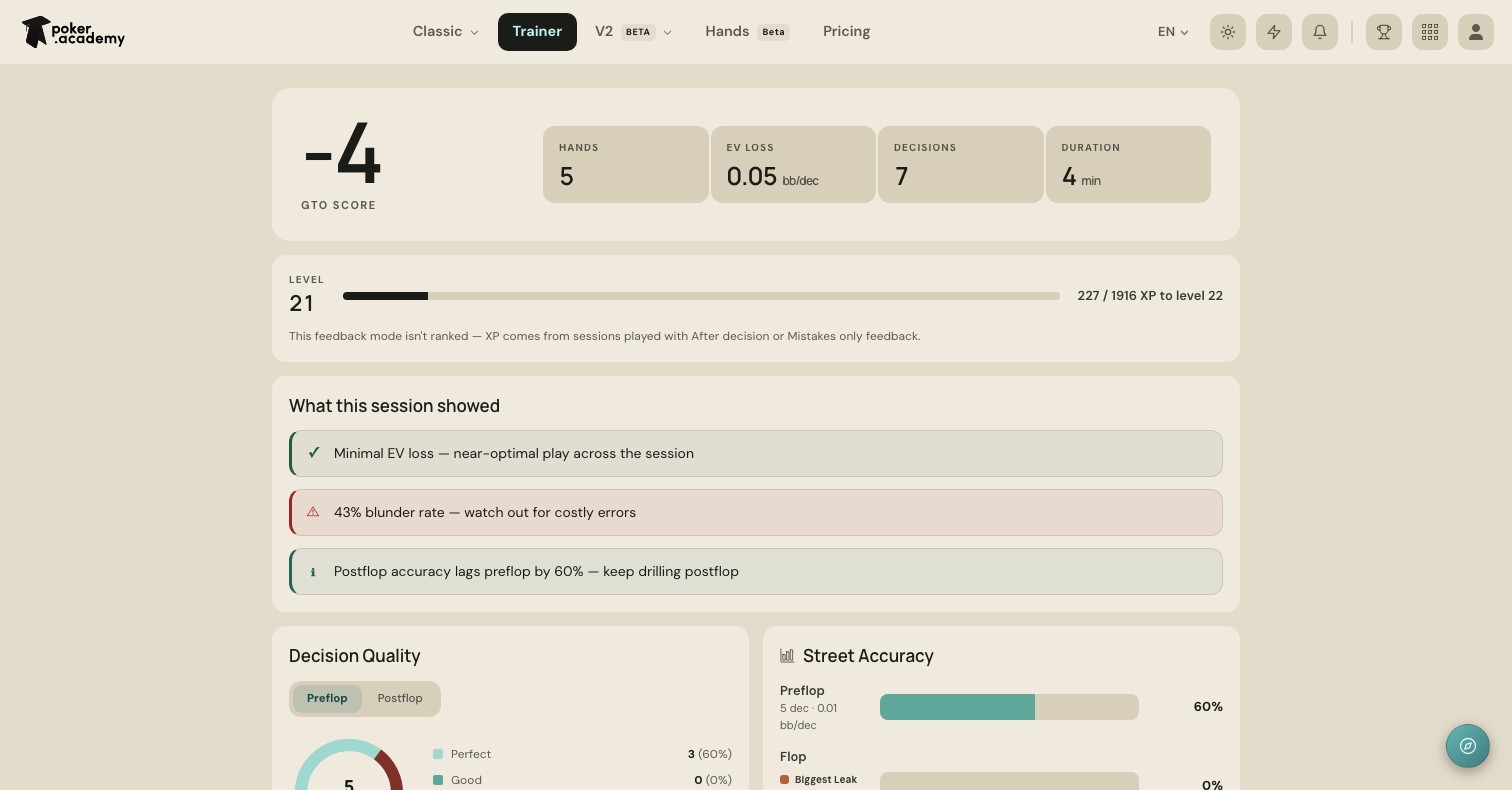 النتيجة، والأيدي، والـ bb لكل قرار، والتوزيع على الجولات
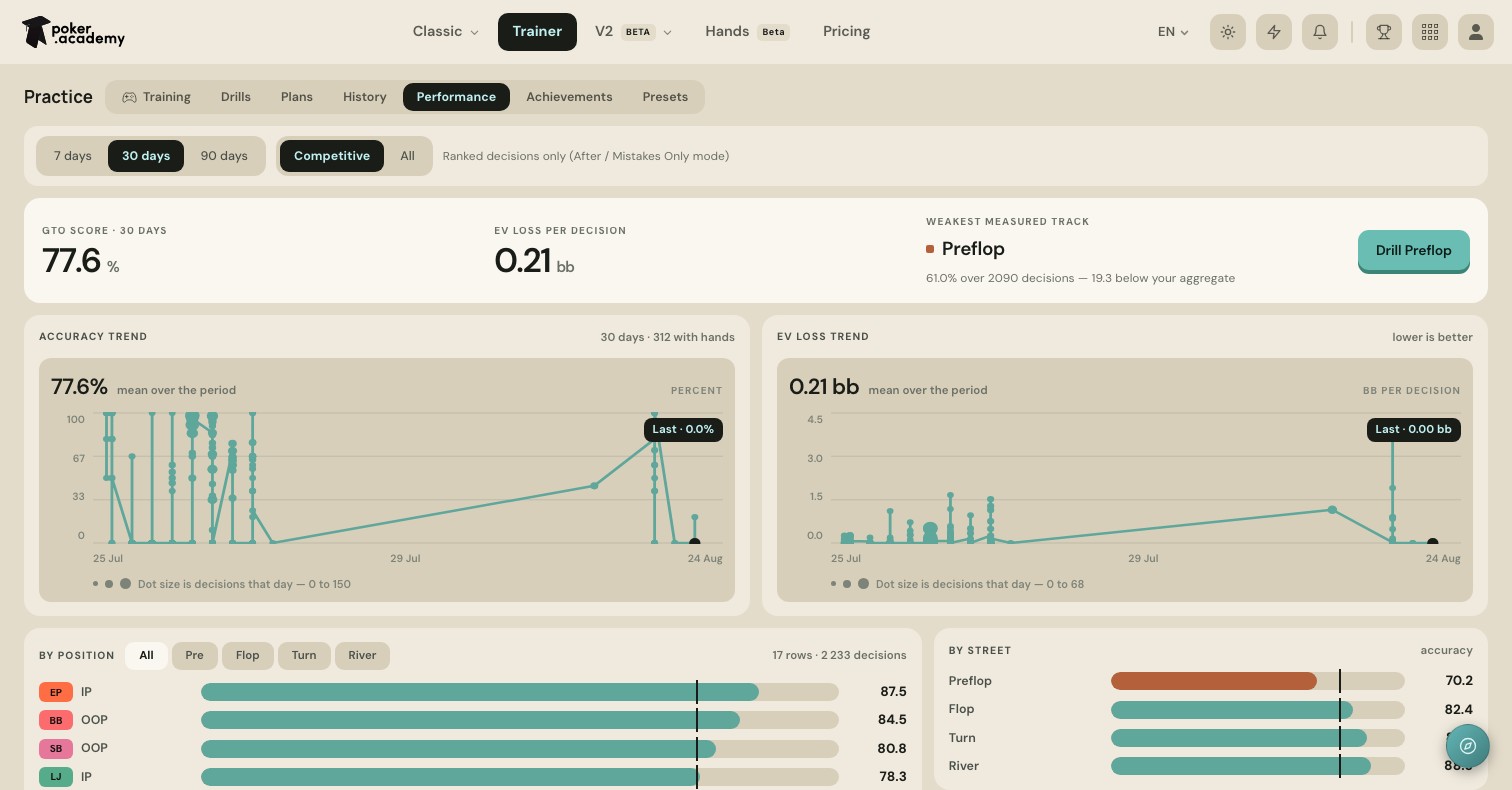 المنحنيات، والتفصيل حسب المركز، والدقة في كل جولة
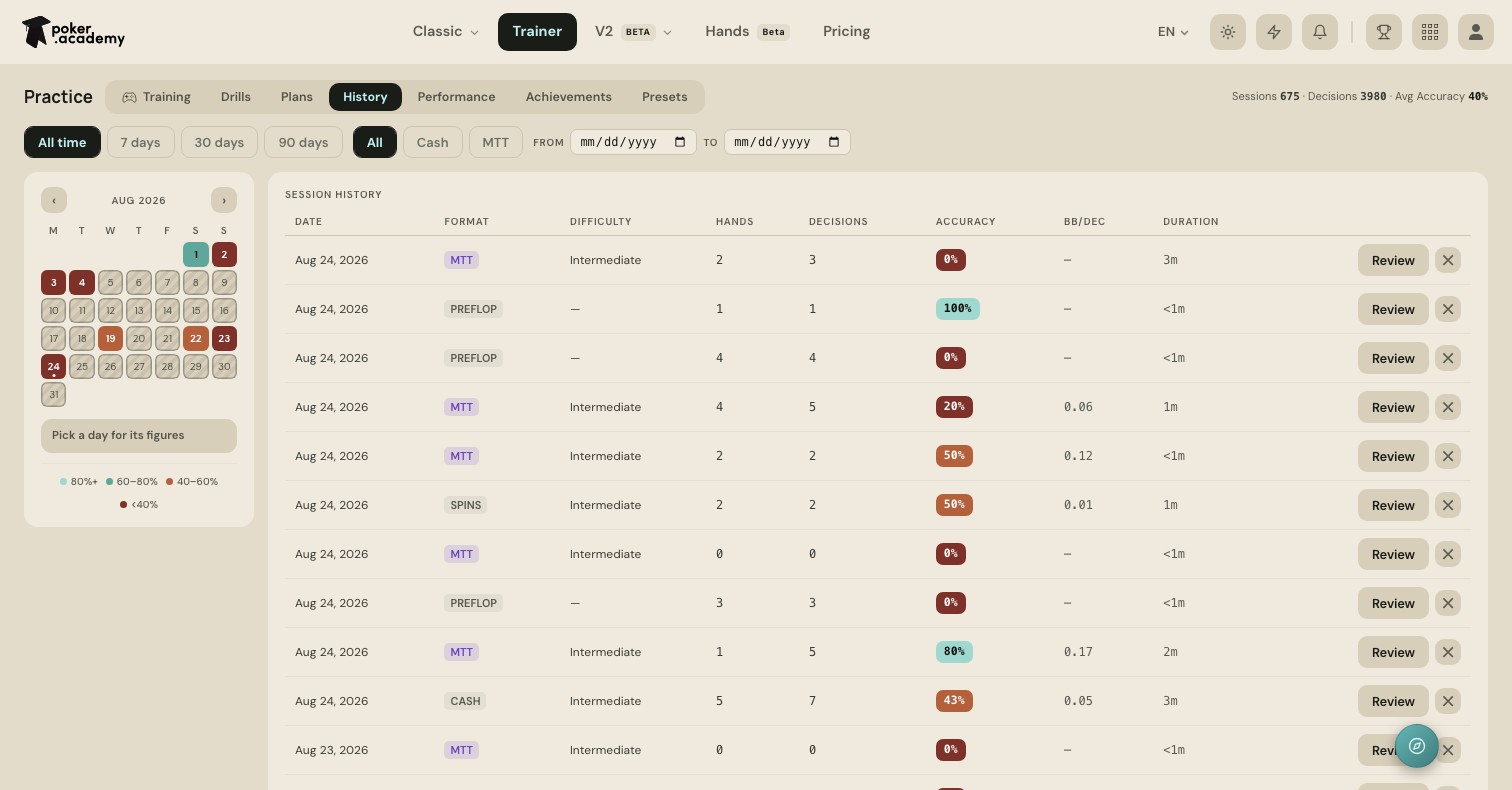 سجل الجلسات، بعمق آلاف الجلسات
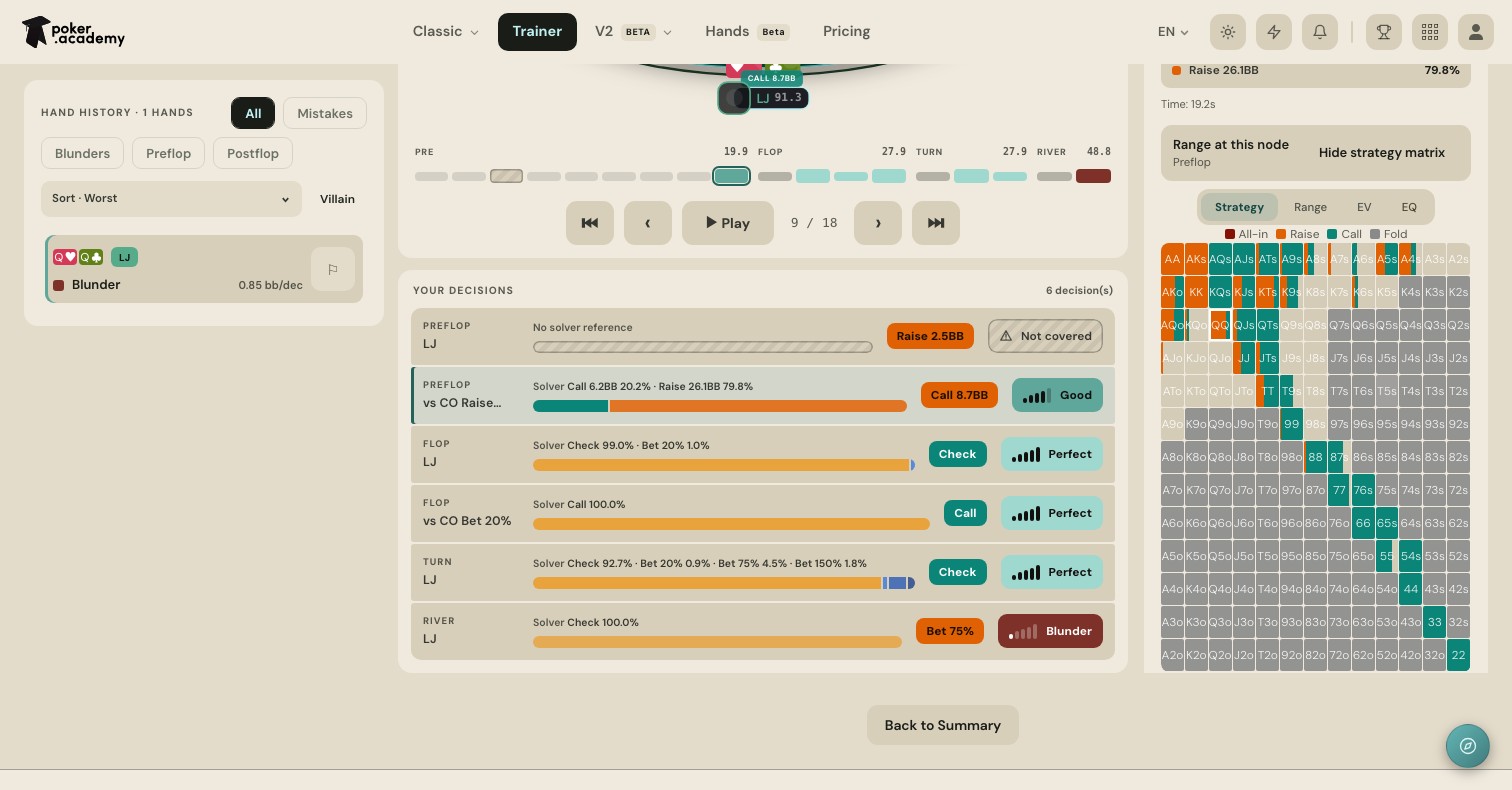 المصفوفة عند القرار المختار
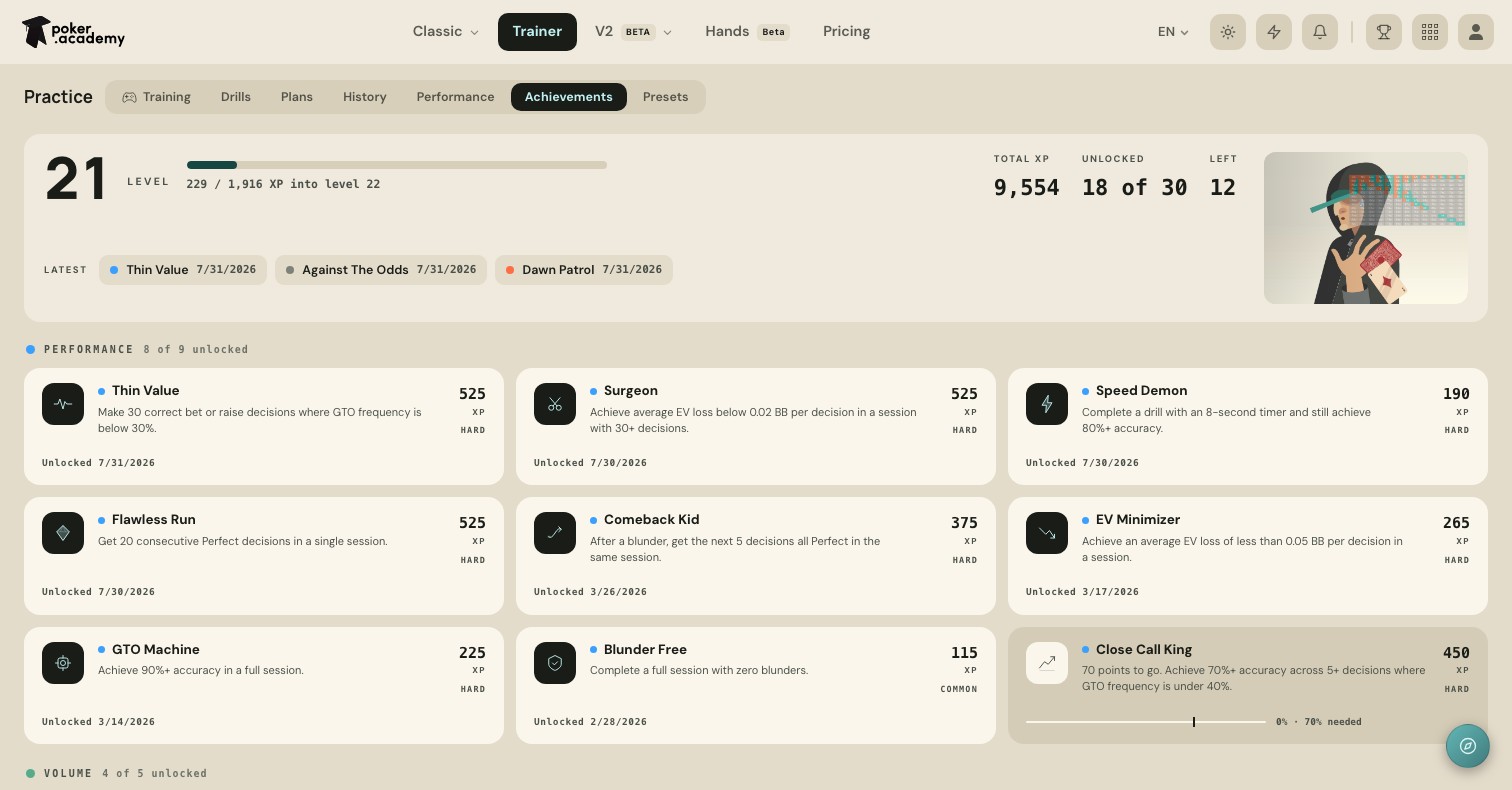 المستوى ونقاط الخبرة في الأعلى، وثلاثون إنجازًا في الأسفل، فُتح منها أربعة وعشرون في هذا الحساب
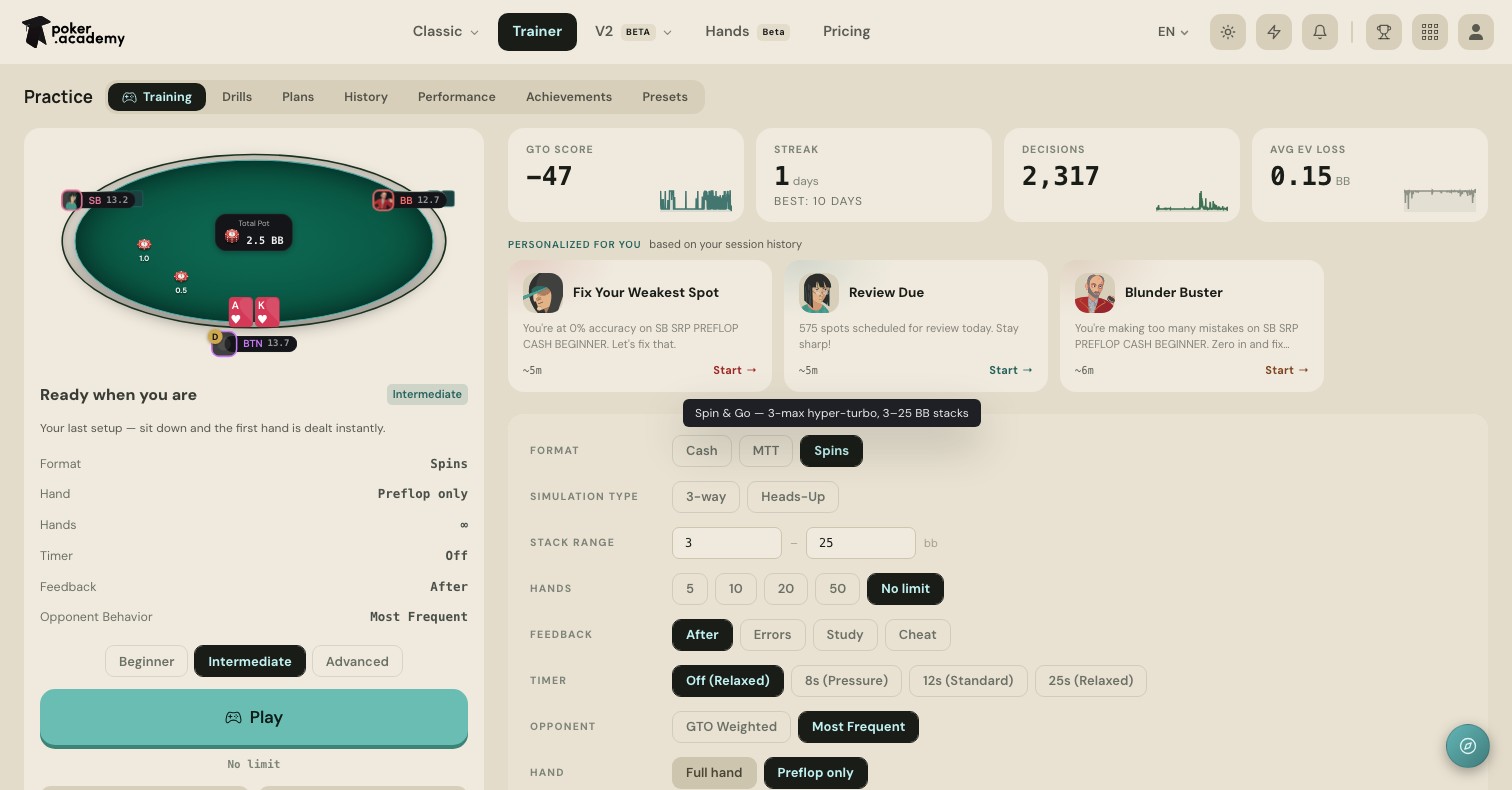 تُفتح اللوحة على آخر إعداد استخدمته، فتكون أول يد على بُعد ضغطة واحدة