
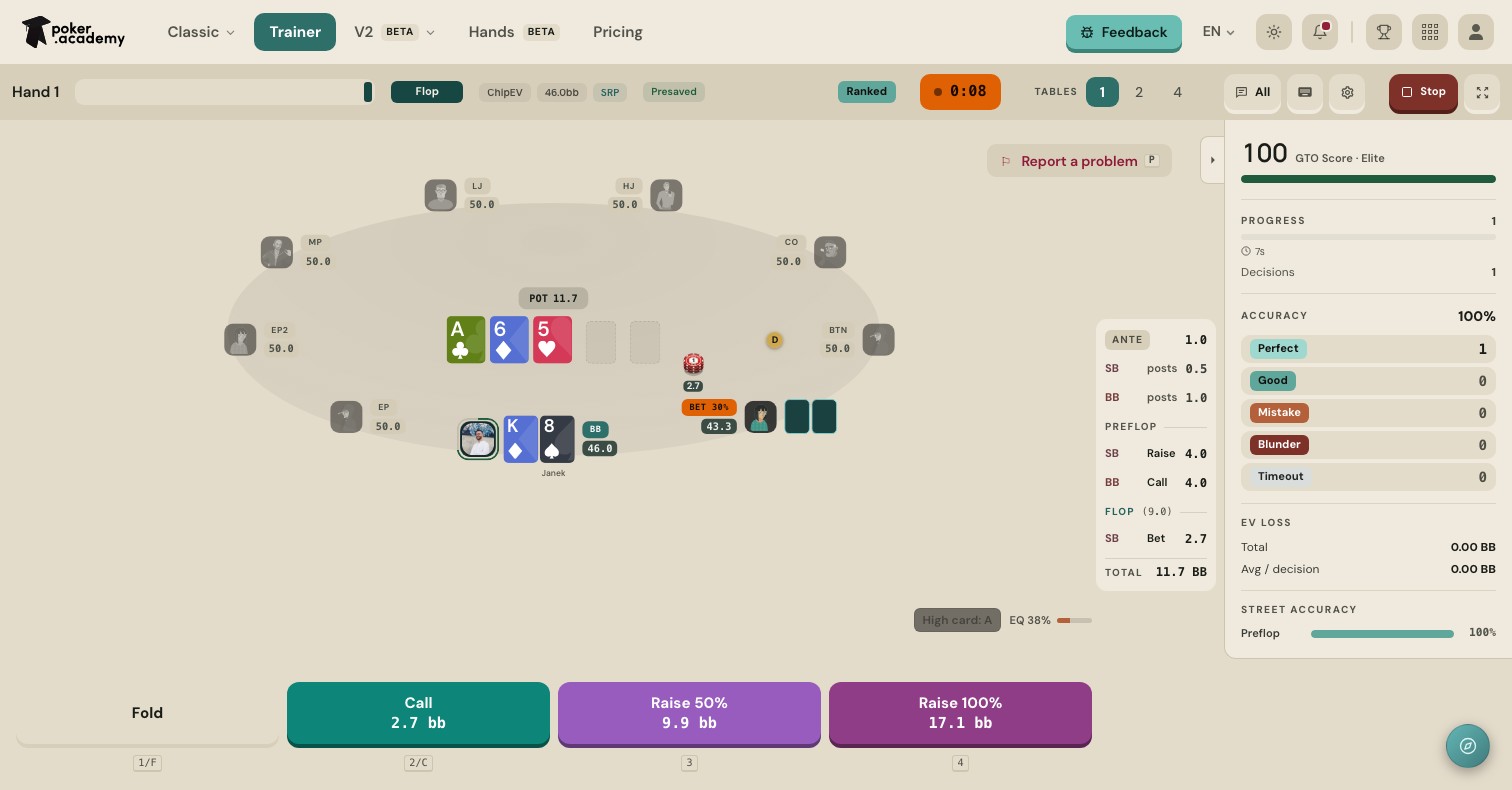
 Флопът е раздаден, опонентът е заложил, решението е на героя
Играхте по стратегията
Действието Ви е това, което solver-ът прави в този възел, и със същата честота.
Full Hand Trainer
Таблиците Ви дават отговора. Тренажорът Ви раздава ситуацията, изправя Ви срещу опонент, който играе стратегията на solver-а, и оценява всяко Ваше решение до края на ръката.
Екраните в кадъра са част от филма, а не реален изход на продукта. Какво наистина показва продуктът, виждате по-долу на скрийншотите.
Играете цялата ръка
Опонентът действа по стратегията на solver-а, така че ръката се развива като истинските ръце. След Вашия 3-бет виждате флоп в 3-бетнат пот и го играете с диапазона, който сте изградили на префлопа.
Всяка улица се изиграва докрай, а точно това таблицата не може да Ви научи: цената на един префлоп кол обикновено се плаща три улици по-късно и я усещате само ако все още сте в ръката, когато дойде.
Ако в момента работите само по префлоп, можете да ограничите сесиите до него.
Вие решавате кога се показват картите на опонента: в началото, в края или само на шоудаун. Така една и съща ситуация става различно упражнение.
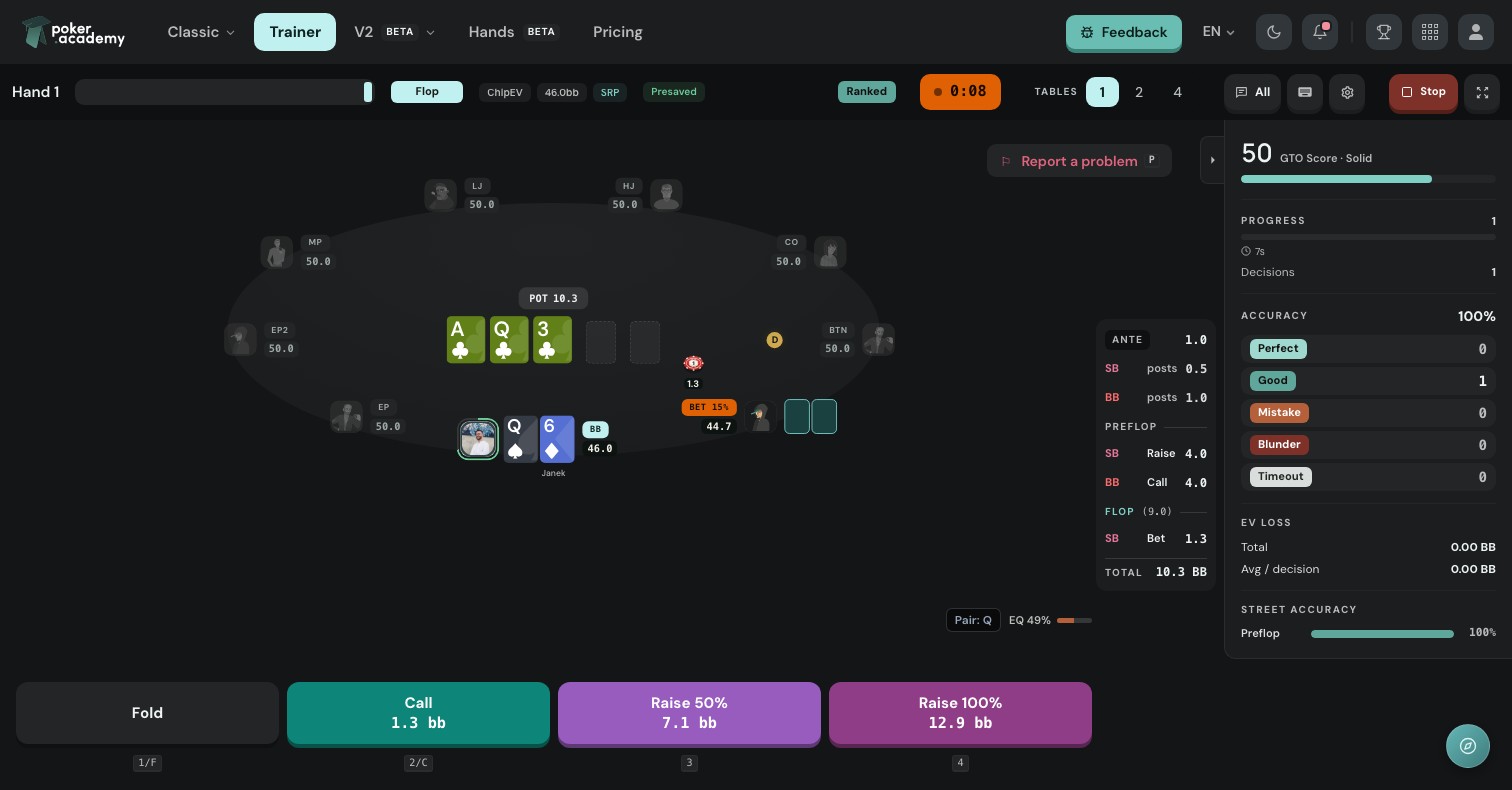 Флопът е раздаден, опонентът е заложил, решението е на героя
Тук е същността
Четири оценки. Внимавайте с двете в средата: решение, което е добро, но не най-доброто, всеки път струва малко, а тези малки загуби се трупат през сесията.
Действието Ви е това, което solver-ът прави в този възел, и със същата честота.
Част от микса, но не клонът с най-голям дял в него. Струва малко, но се трупа.
Извън стратегията. Цената в EV е изписана в bb, а не оставена да се подразбира.
Нарочно е отделена от грешките: едното е навик, другото е инцидент.
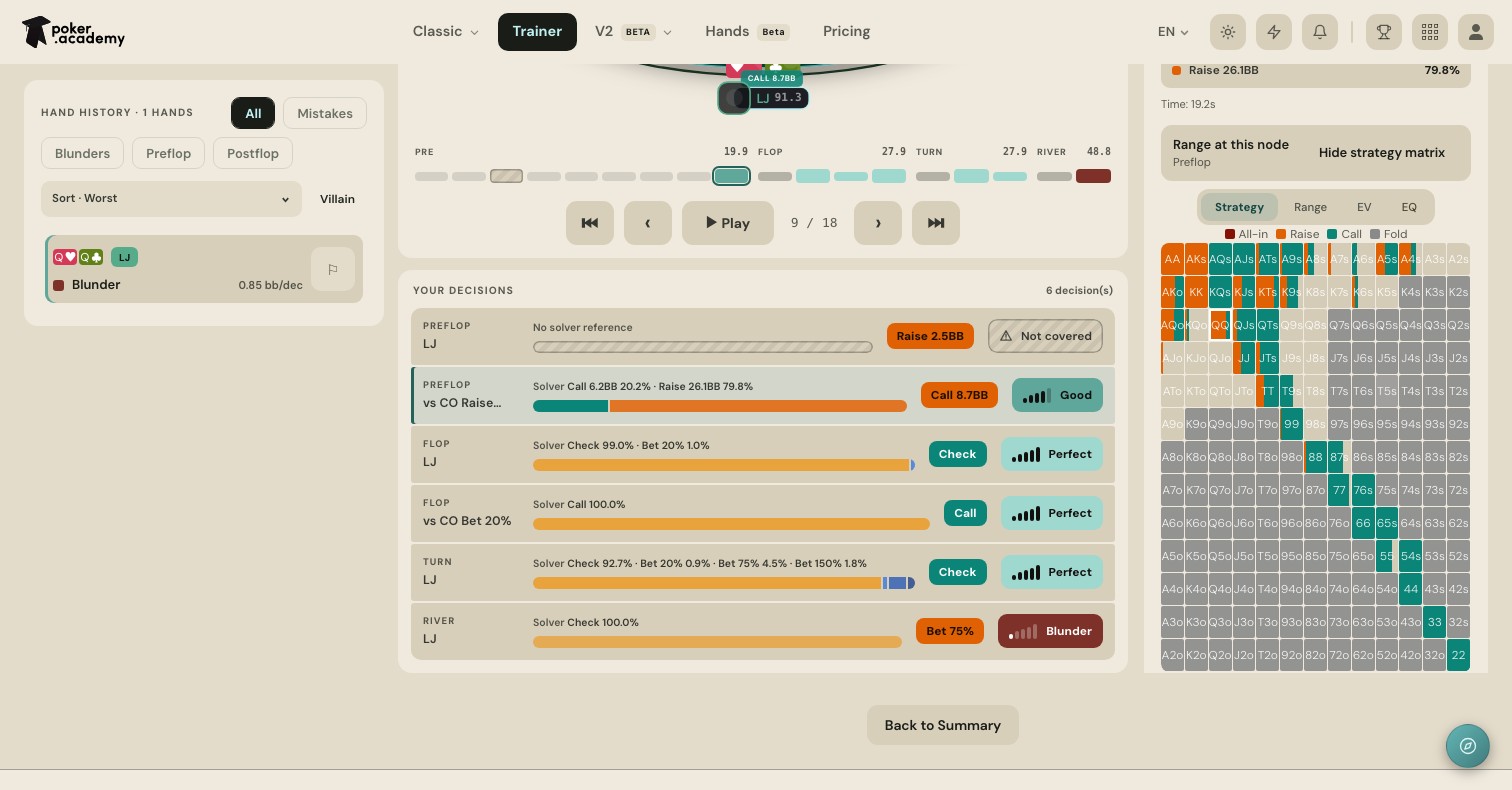
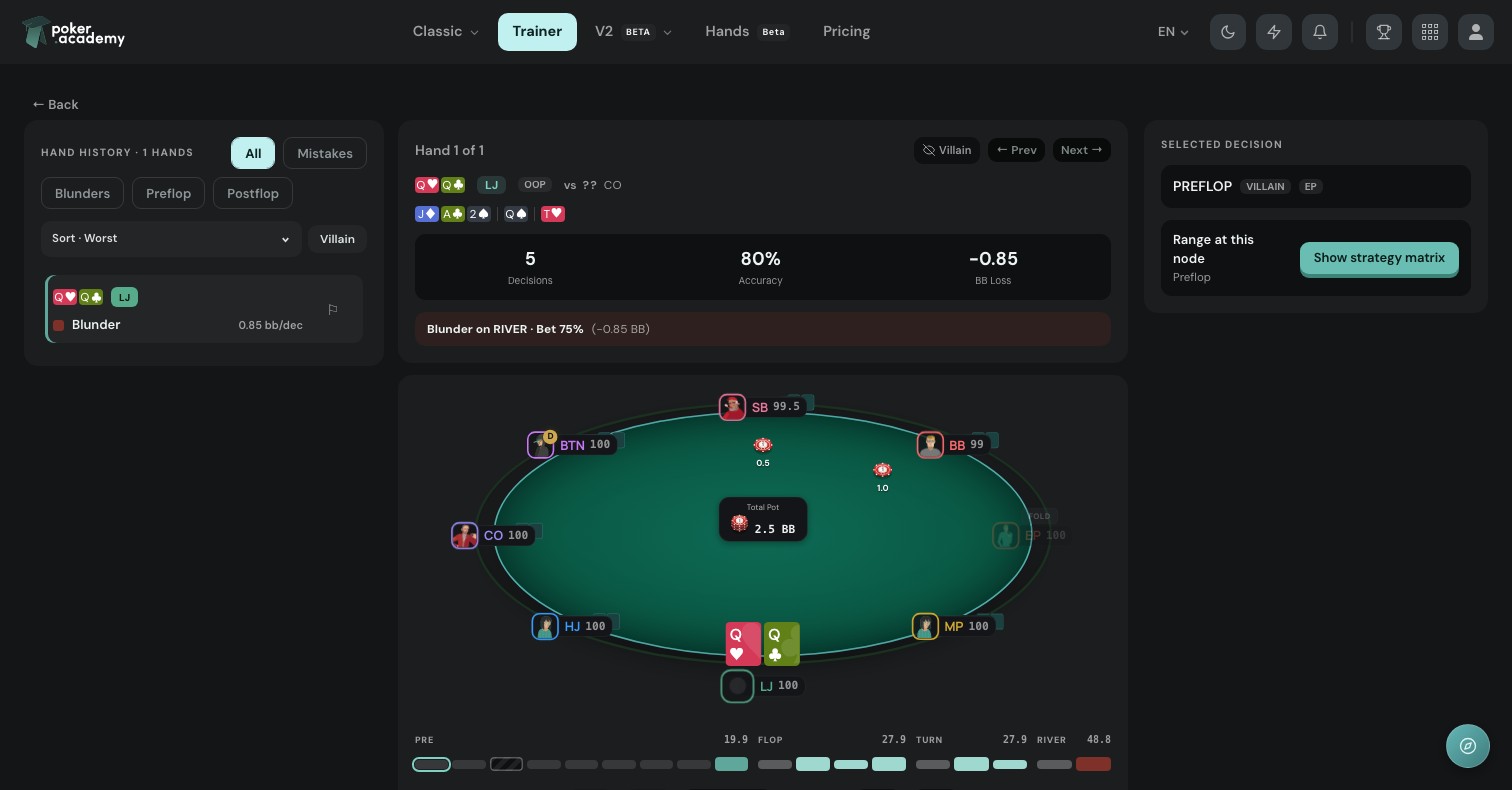 Една ръка, решение по решение: честотите на solver-а, какво направихте и колко струваше
Вие избирате ситуацията
Всичко за сесията се задава на един екран: форматът и дълбочината, срещу кого играете и колко и кога Ви подсказва тренажорът. Три от тези групи вършат по-голямата част от работата, затова панелът е подреден около тях, а не по азбучен ред на настройките.
Префлоп ситуацията, Вашето място и мястото на опонента се избират поотделно. Ако оставите някое празно, то се избира случайно. Категория, която избраният сценарий не може да раздаде, изчезва от списъка, а не се показва сива, а броячът над групата се променя заедно с нея.
Категория 3 от 11
Място на героя празно = случайно
Място на опонента празно = случайно
Списъкът не е еднакъв във всеки формат: в Cash няма Heads-Up и vs. ISO, а в Spins местата са само BTN, SB и BB, защото такава е играта.
Единствената настройка, която променя каква е сесията. По подразбиране е на След и това е нарочно. „Обучение“ показва отговора, преди да решите, така че ако започнете с него, първите Ви сесии стават преписване на отговори вместо тренировка.
Обр. връзка
Таймер за решение
Таймерът се изключва, докато обратната връзка е на „Обучение“. Да четете диапазон и да играете срещу часовника са две различни упражнения, затова панелът не позволява да ги съчетаете.
Първо форматът. Всичко под него се стеснява до това, което матриците на този формат наистина покриват.
Четири начина да решите какво да тренирате
Всяка конфигурация може да стане упражнение с име, което пускате отново. Така повечето хора си събират цял списък.
Осем вида, всички изградени от собствените Ви сесии, сред които най-слабата ситуация, за преговор, близки решения, срещу груби грешки, повторение на грешки и ежедневно предизвикателство.
Програма ден по ден. Решавате веднъж какво да учите, а планът се грижи за всяка следваща вечер.
Фиксиран набор от ситуации, възложен на Вас или отворен от линк, с класиране. Понеже ръцете са еднакви, това е единственото място в продукта, където резултатите Ви се сравняват пряко с тези на други играчи.
Всеки ред показва точност, опити, ръце и давност, така че веднага се вижда кое упражнение не сте пипали от месец. Неиграно упражнение показва тирета вместо резултат, защото още нищо не се е случило.
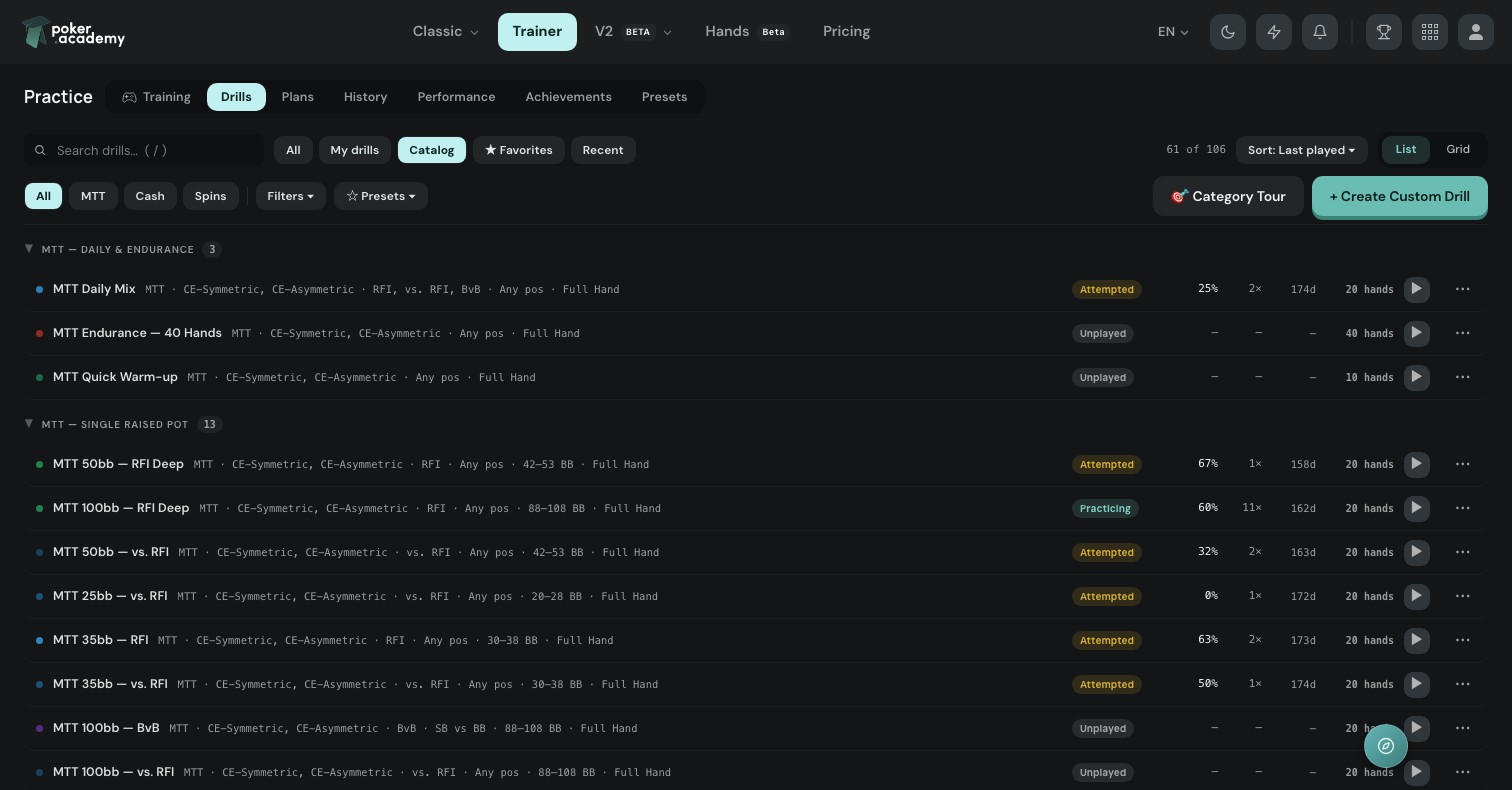 Каталогът е подреден по ситуации, а до Вашите упражнения стигате с един чип
Планът е поредица от упражнения с цел и календар. Този в акаунта е четириседмичен турнирен курс: шест сесии седмично и ден почивка в края на всяка седмица.
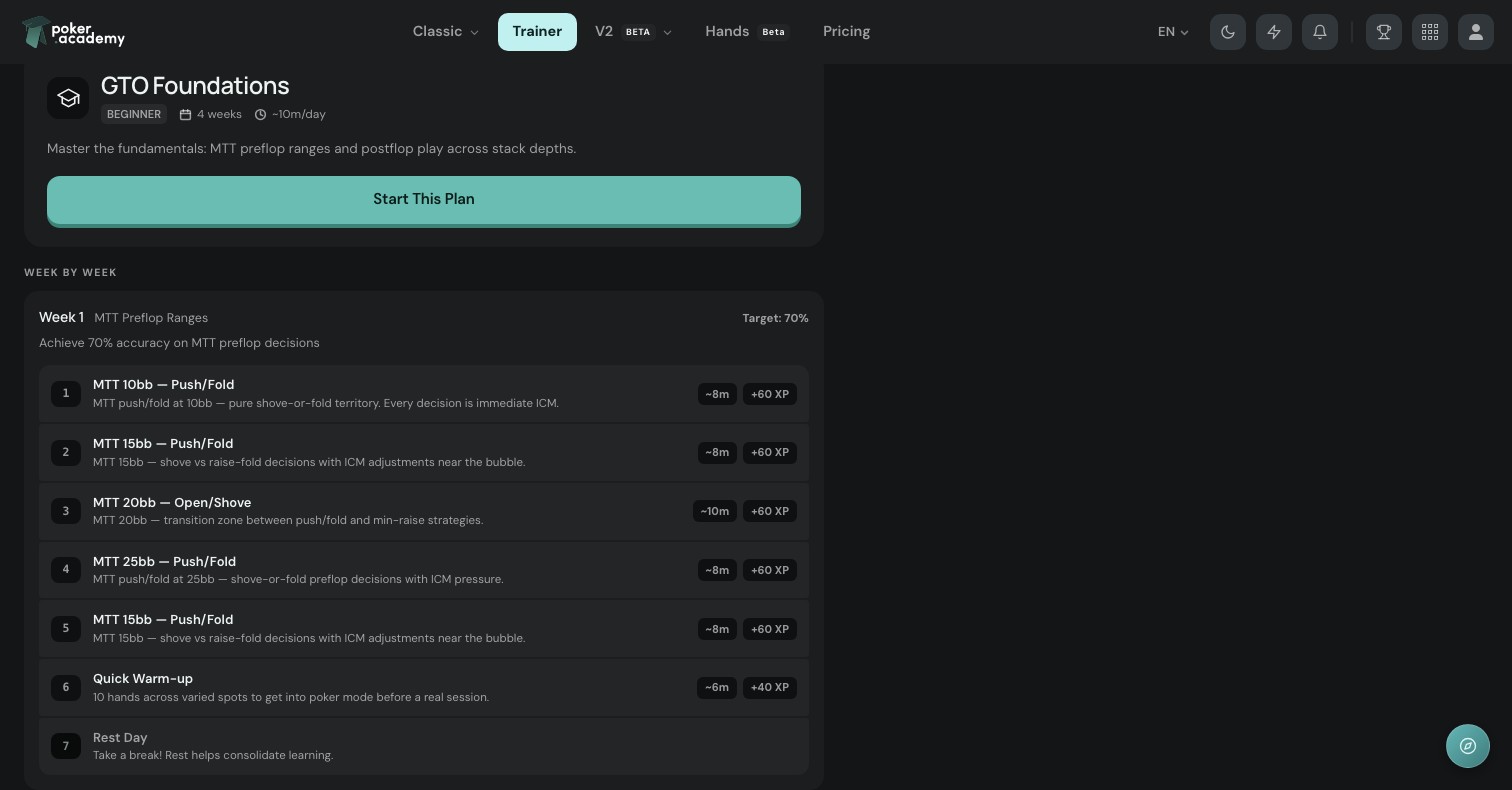 Седмица 1 от 4, лентата с дните и текущата седмица сесия по сесия
Тренажорът Ви измерва
Обобщението излиза веднага щом сесията свърши: резултатът, разбивката по качество на решенията, точността по улици и една писмена бележка за сесията. Всеки ред в него отваря ръката, от която идва.
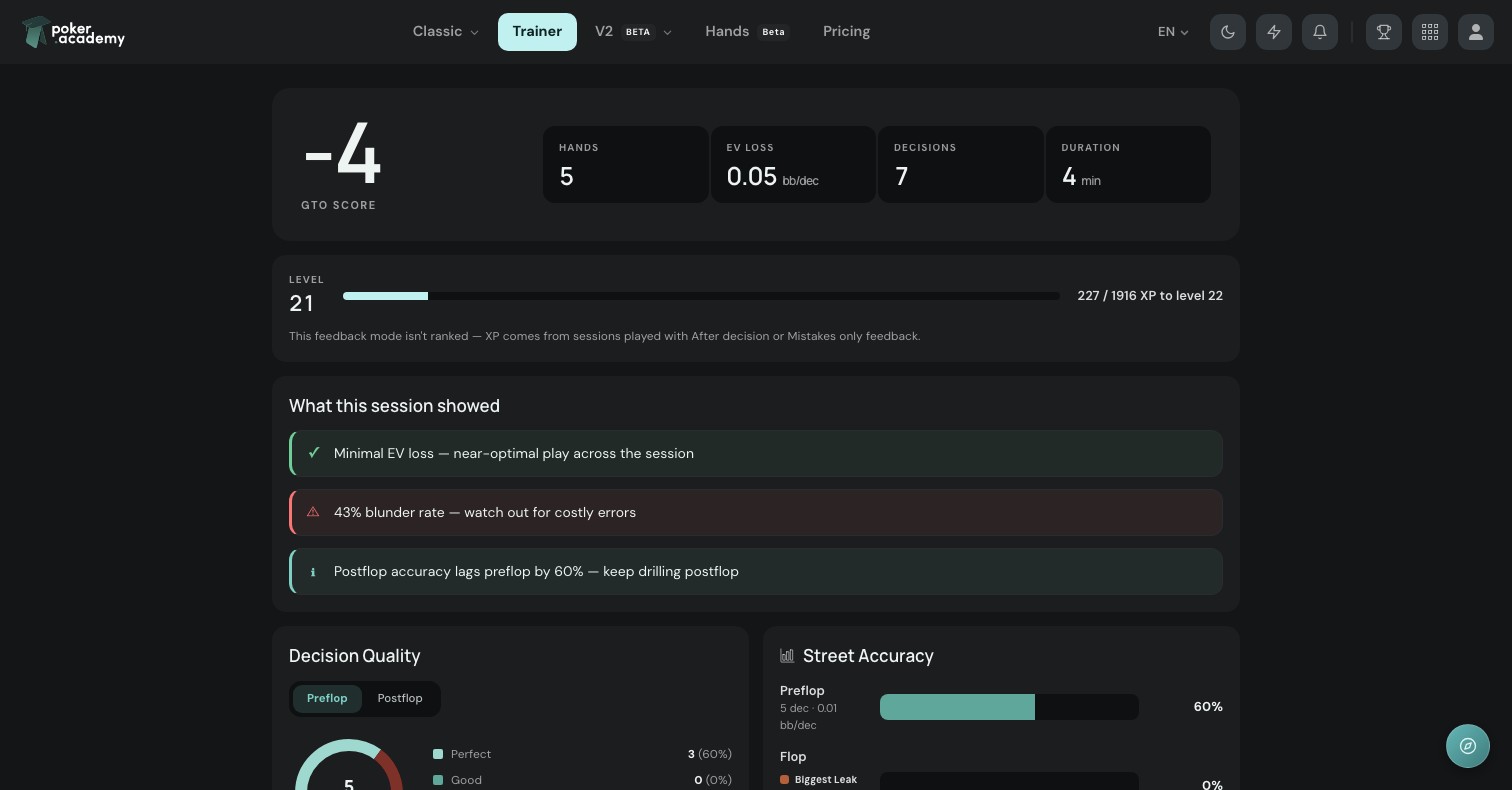 Резултат, ръце, bb на решение и разбивка по улици
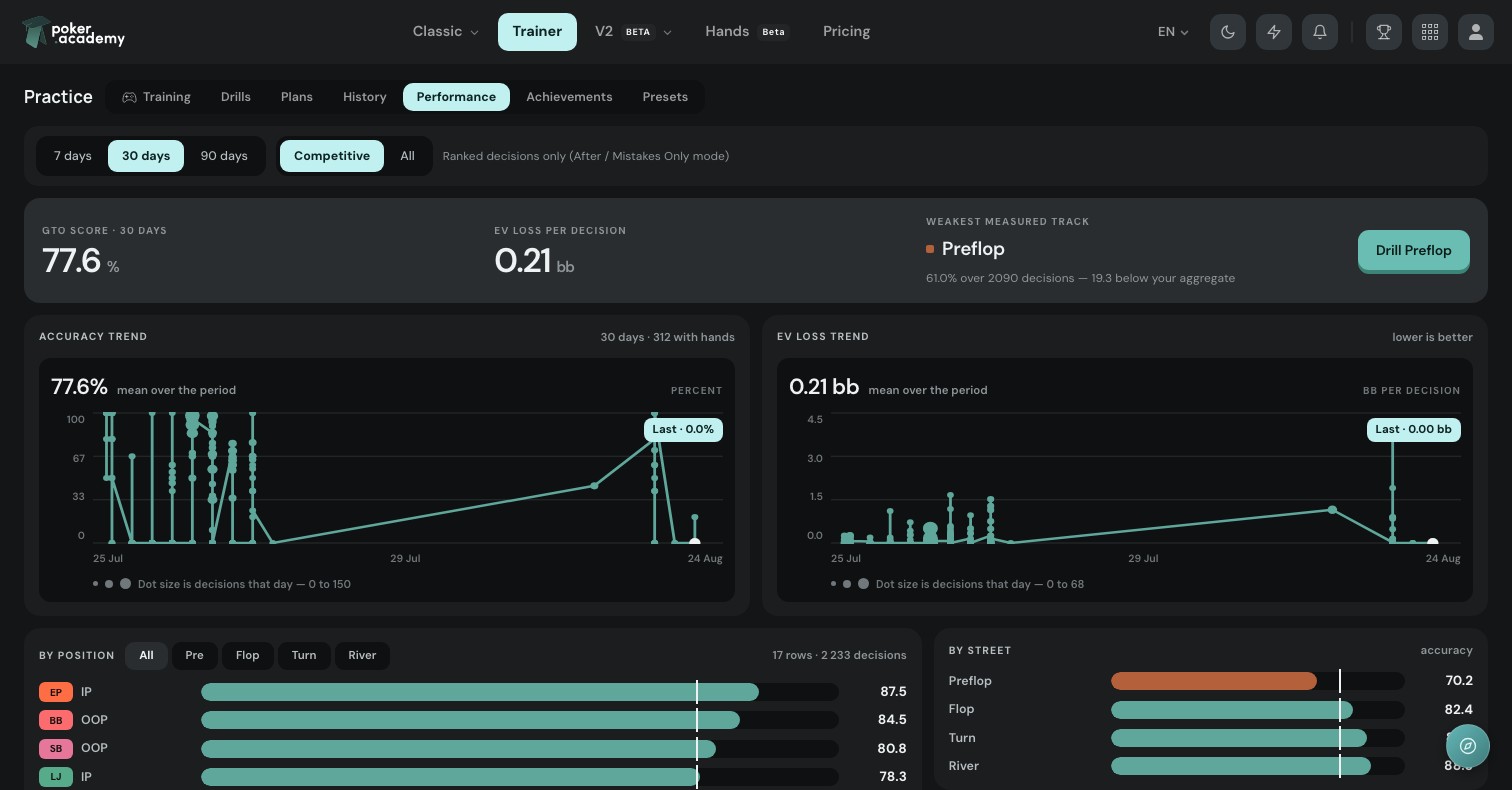 Тенденции, разбивка по позиции, точност по улици
Точност и загуба на EV във времето, а после същите числа по позиция, по улица и по качество на решенията. Този изглед Ви казва кое упражнение да създадете следващо, а генерираните упражнения се изграждат сами по същите тези числа.
Всяко число тук е изчислено от собствените Ви сесии. Тук няма прогнози и рейтинги.
Нищо не се изхвърля
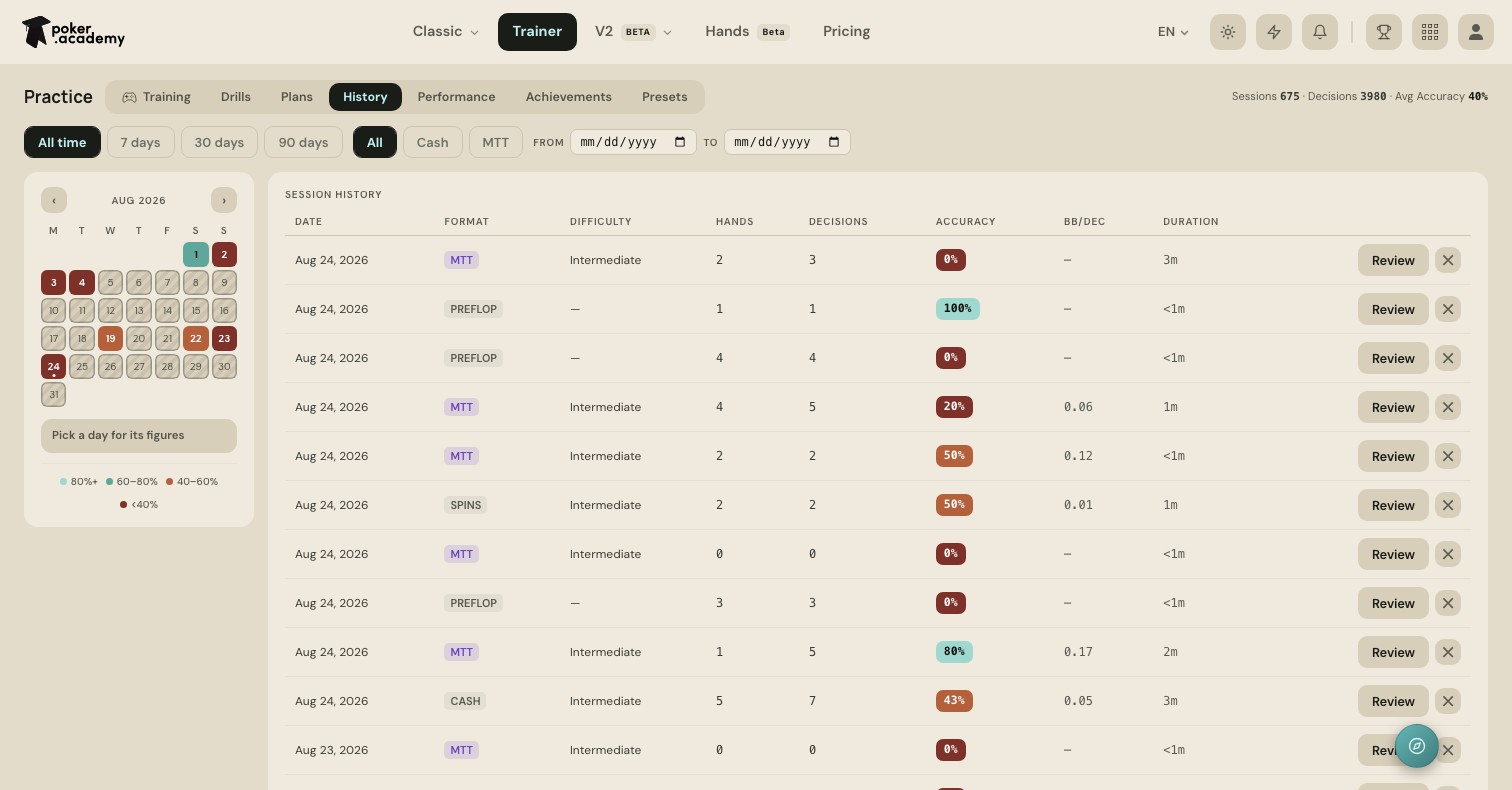
Сесиите не изтичат и не се свиват до обобщение. Отворете която и да е, изберете което и да е решение и диапазонът в този възел се отваря като пълна матрица. Това е същият резултат от solver-а, който чете и останалата част от продукта.
Точност, bb на решение и продължителност за всяка сесия, с календарна лента, която показва седмиците, в които наистина сте учили.
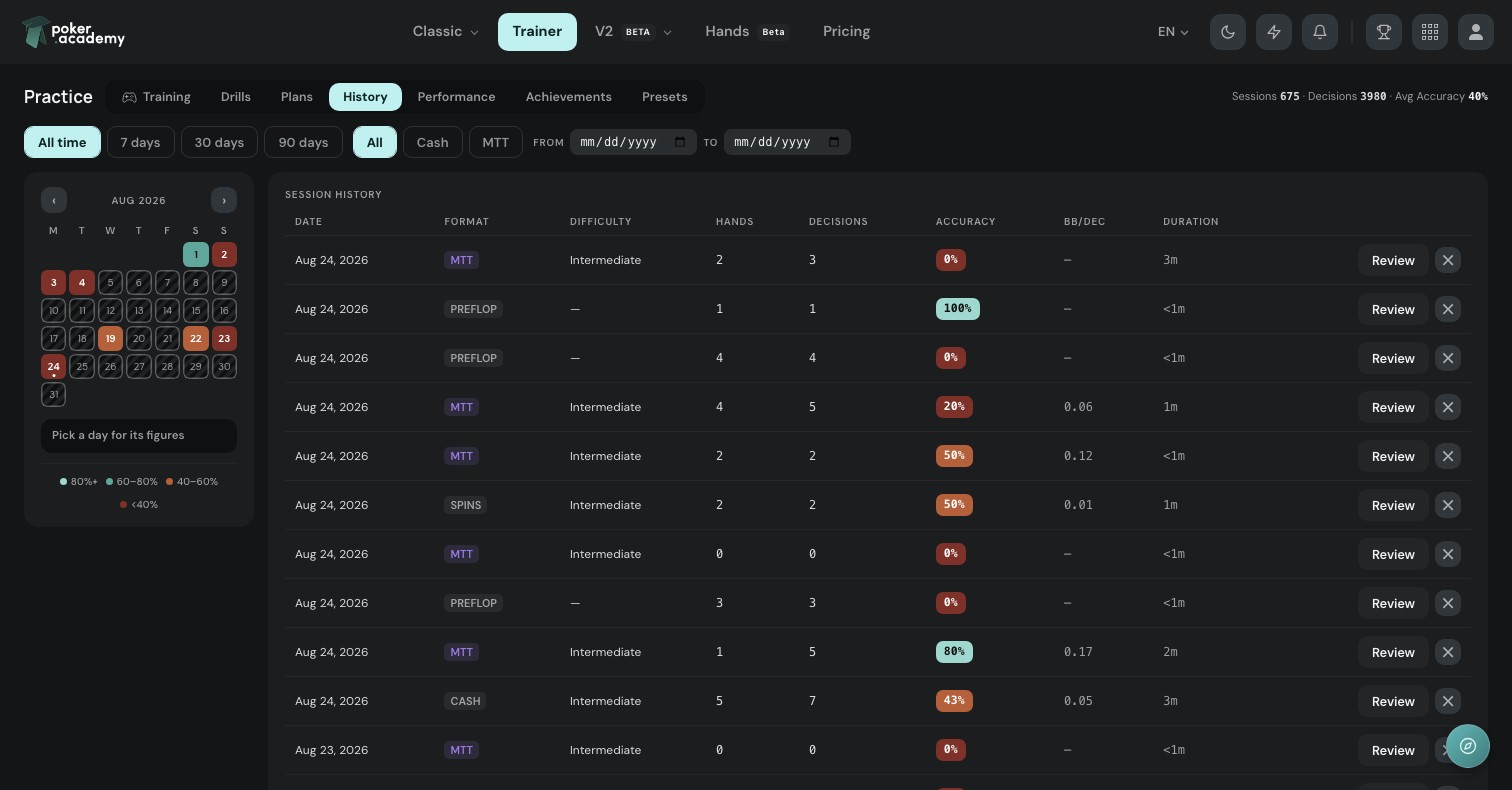 История на сесиите, хиляди сесии назад
Цялата матрица 13×13 с това, което solver-ът прави в този възел, всяка комбинация в диапазона, до решението, което взехте. Дори за ръка, която сте изиграли зле преди шест седмици, тя е на един клик.
 Матрицата при избраното решение
Напредък
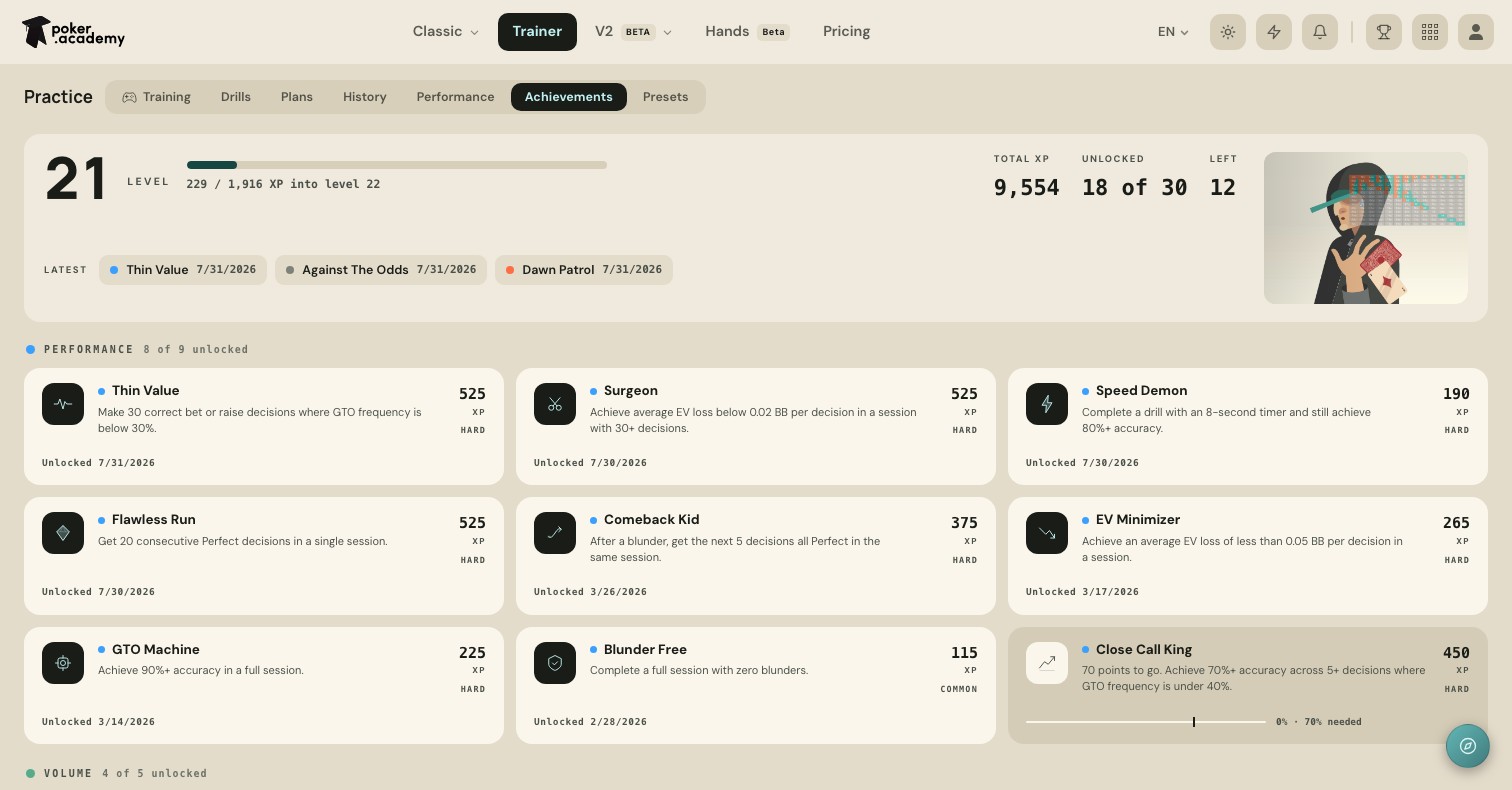
Сесиите носят XP, а трийсет постижения се отключват по пътя. Нищо от това не оценява колко добре играете. То отчита часовете, които влагате, а това е единствената част от покера, която изцяло контролирате.
Това е и частта от тренажора, която не е за една ръка, и причината хората да се връщат дори вечер, когато не им се учи.
От филма на марката, 2023.
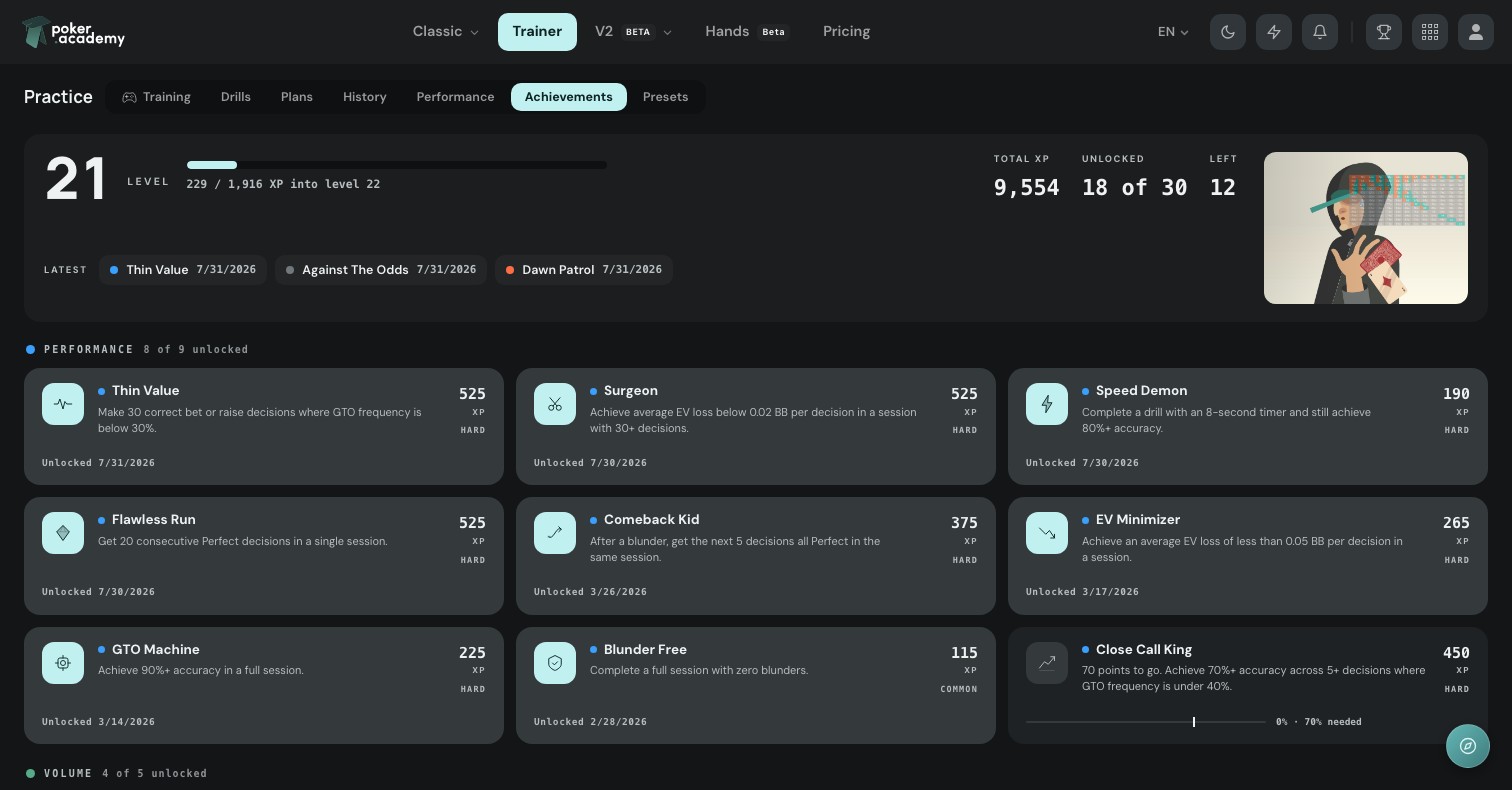 Отгоре ниво и XP, отдолу трийсет постижения, двайсет и четири от тях отключени в този акаунт
Full Hand Trainer
Изберете формат, задайте дълбочината, изиграйте ръцете и прочетете прегледа. Това е целият цикъл и отнема около петнайсет минути.
Опитайте безплатноОтказ с 2 клика, без такса.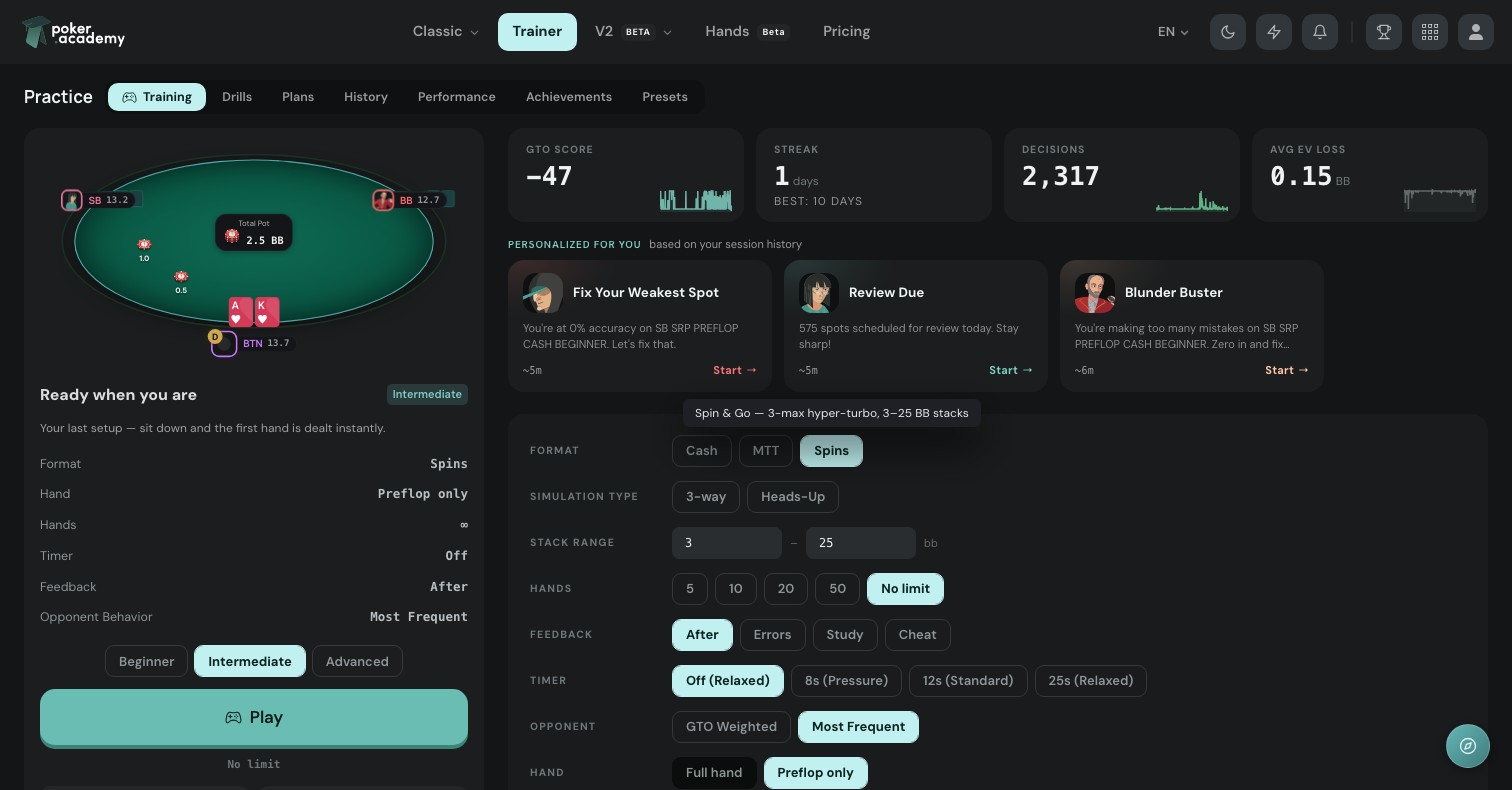 Кокпитът се отваря с последната Ви настройка, така че първата ръка е на един клик разстояние
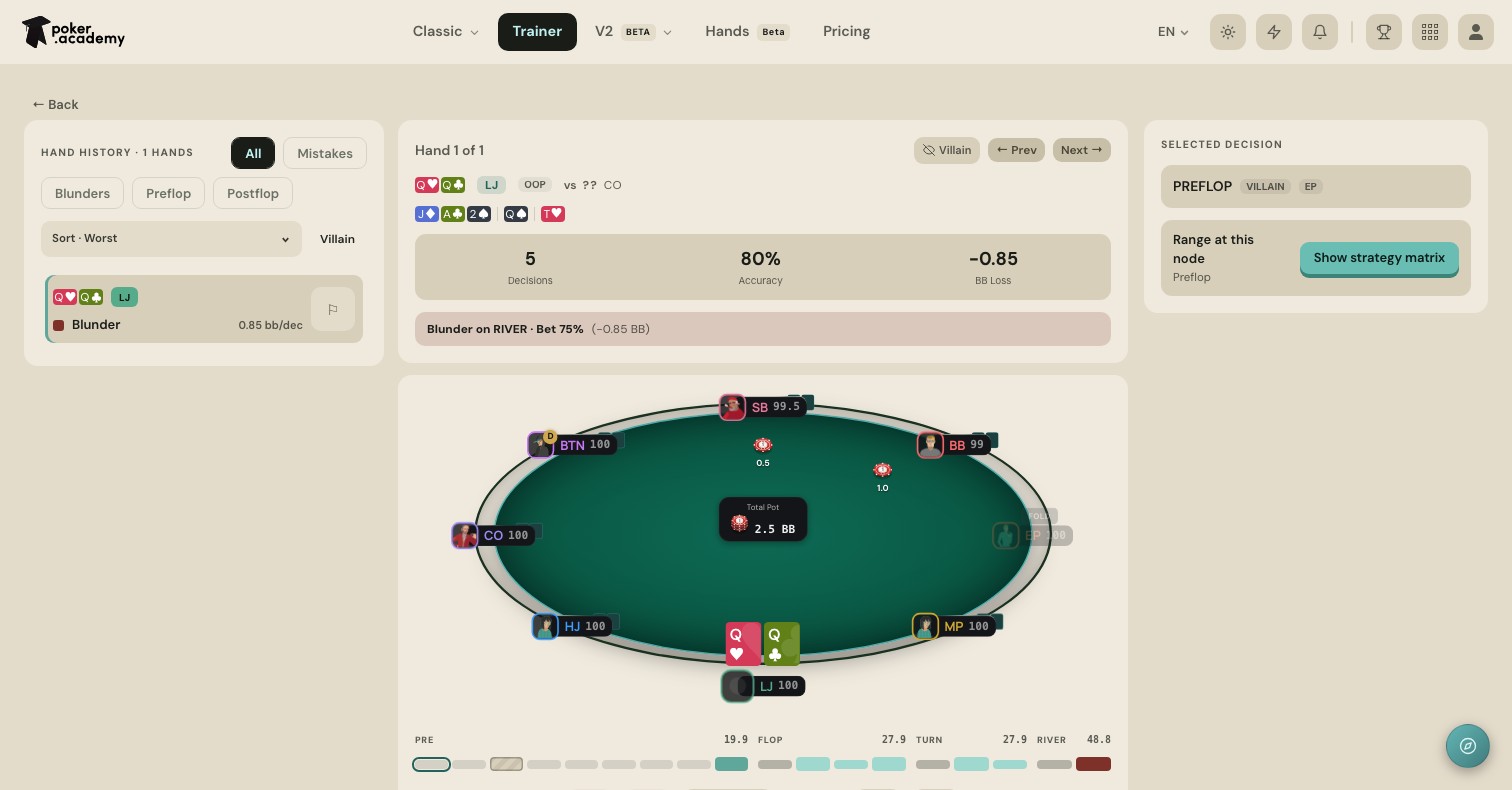 Една ръка, решение по решение: честотите на solver-а, какво направихте и колко струваше
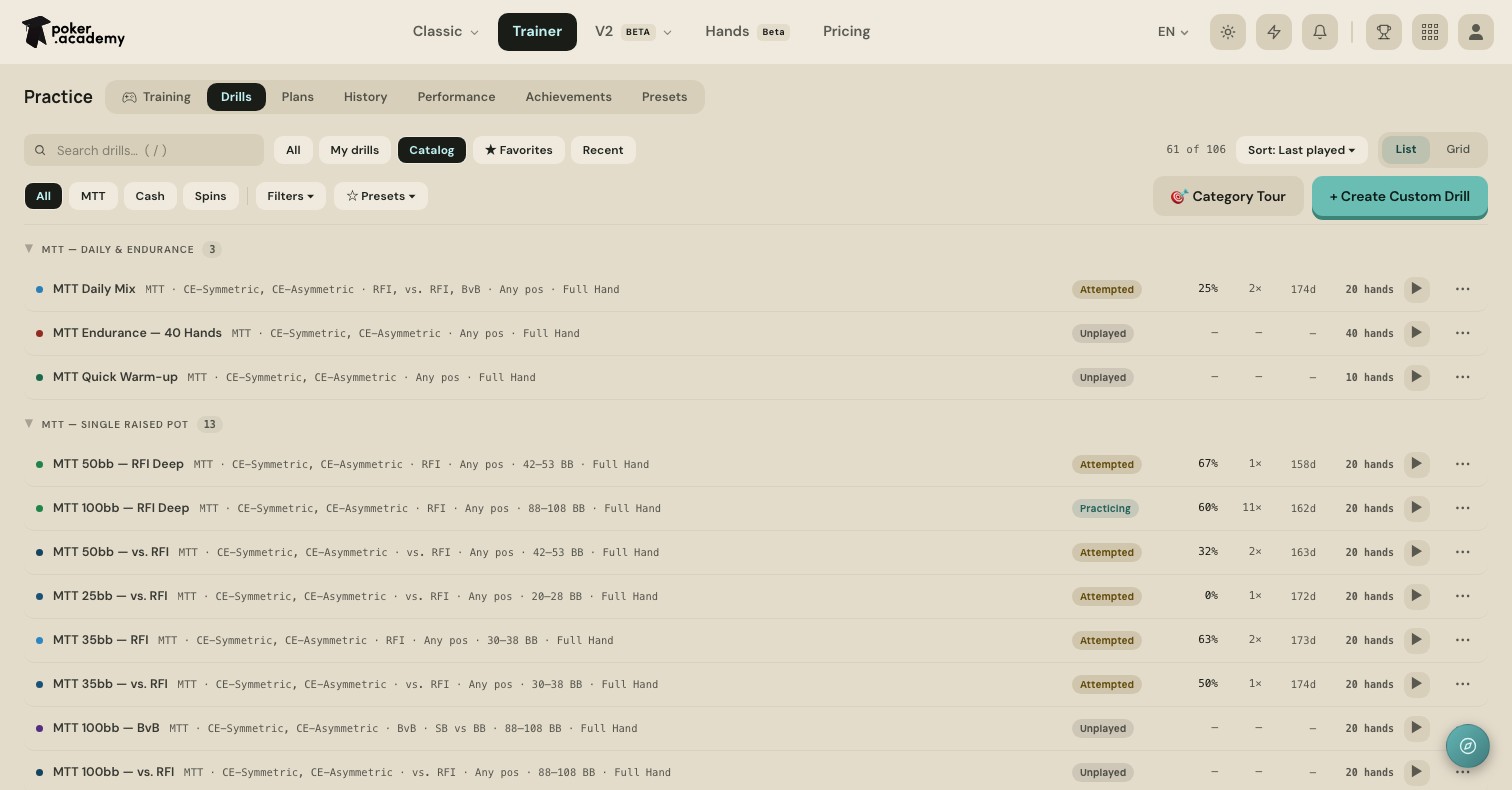 Каталогът е подреден по ситуации, а до Вашите упражнения стигате с един чип
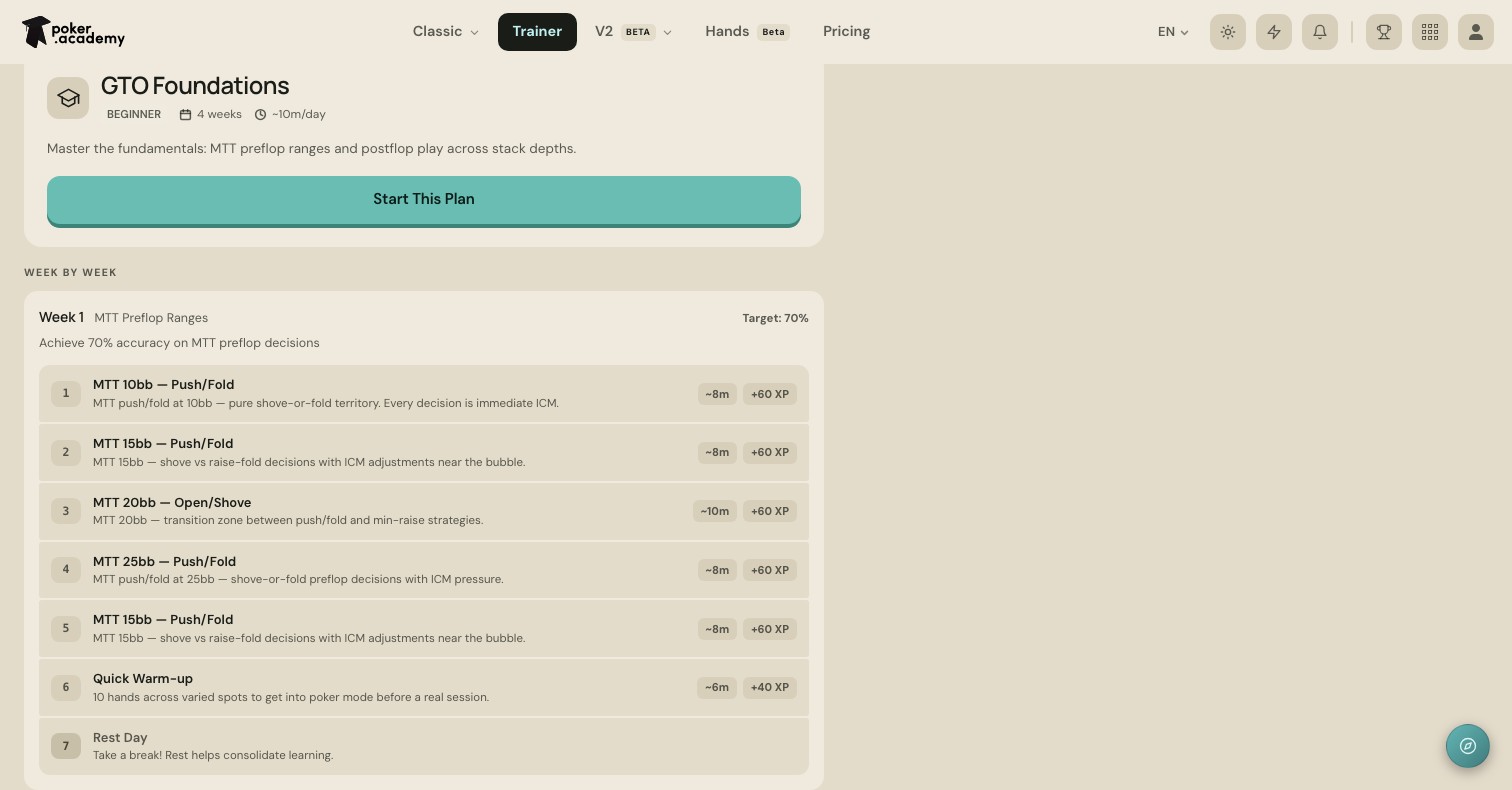 Седмица 1 от 4, лентата с дните и текущата седмица сесия по сесия
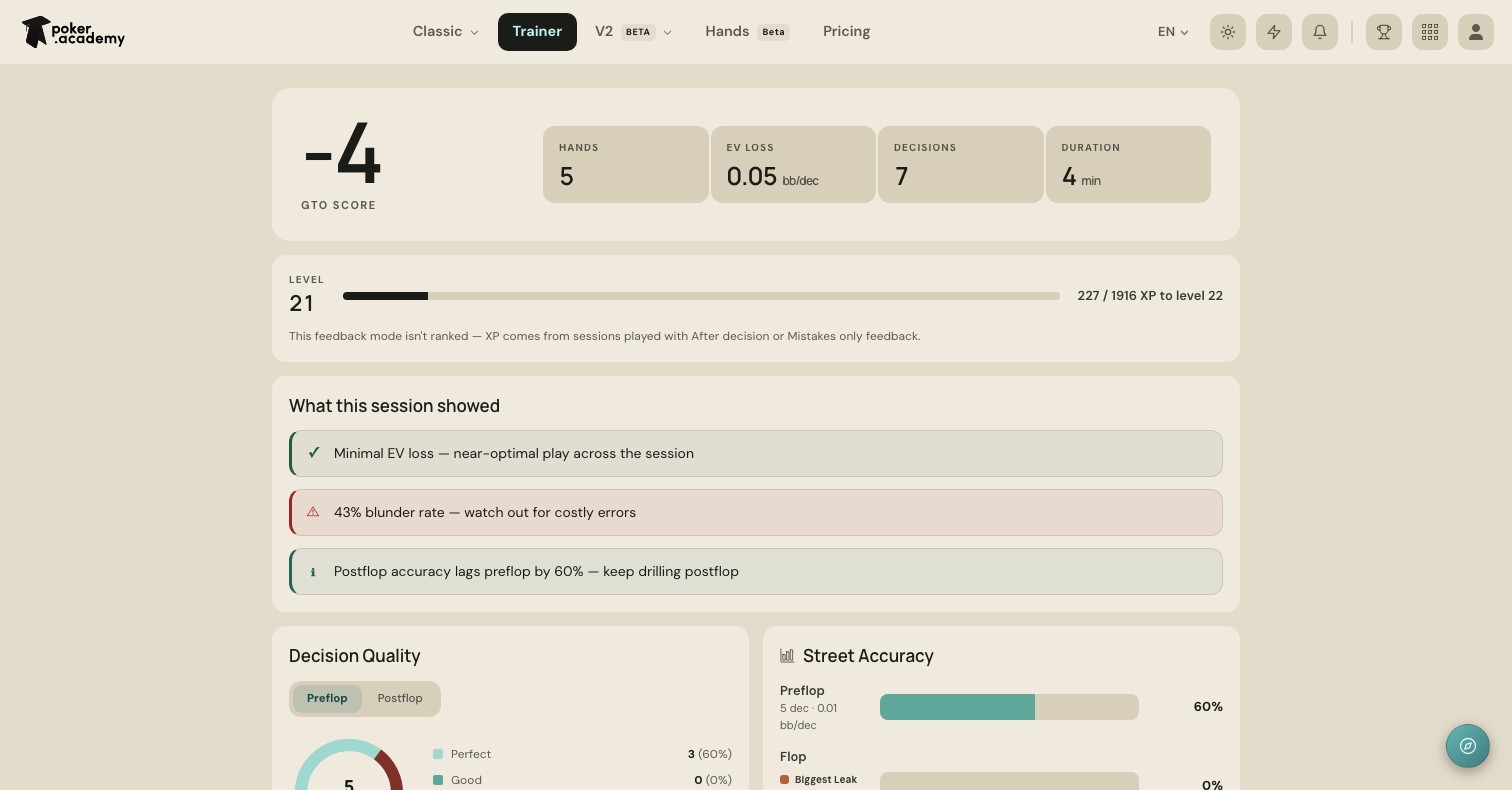 Резултат, ръце, bb на решение и разбивка по улици
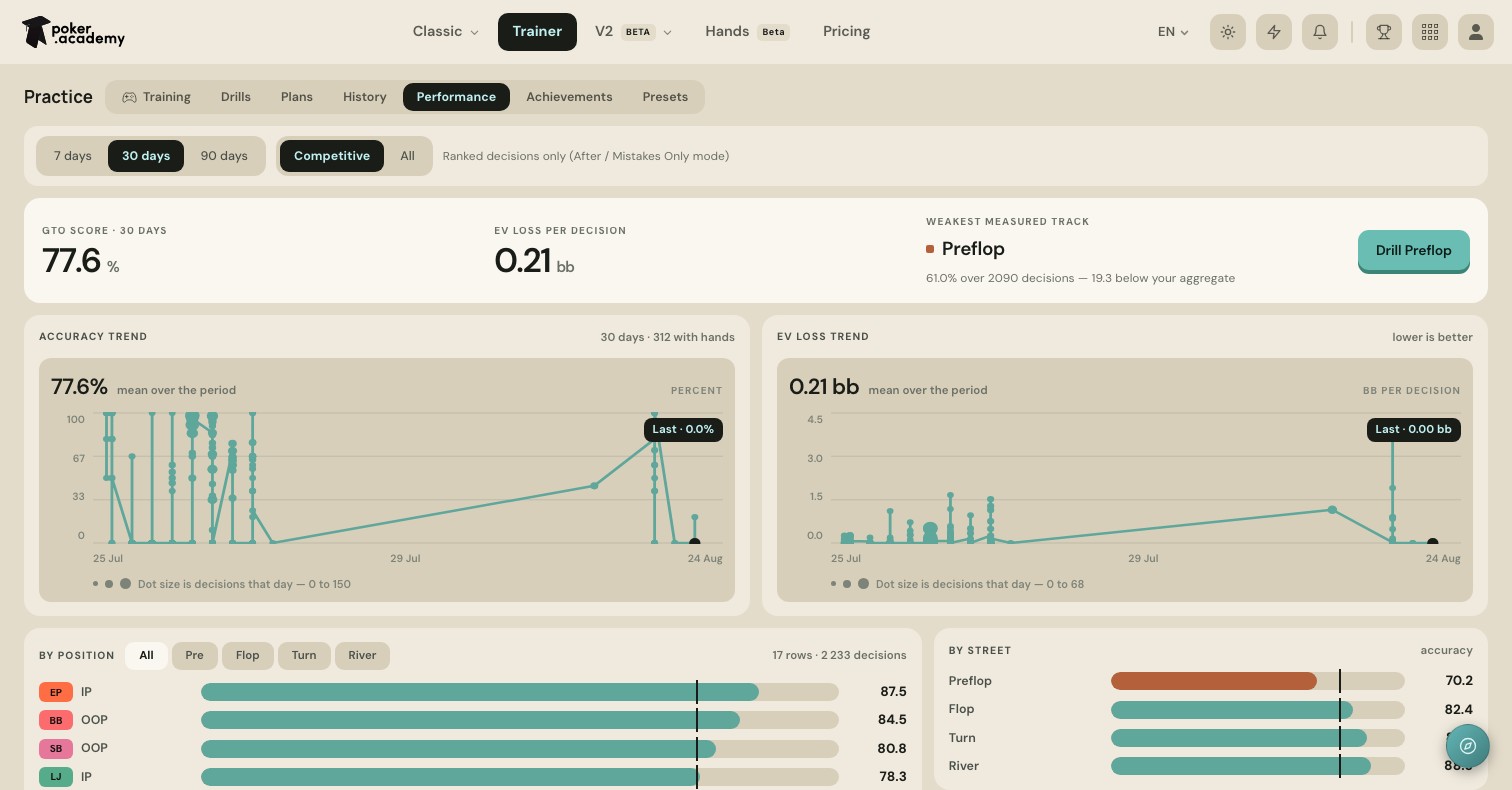 Тенденции, разбивка по позиции, точност по улици
 История на сесиите, хиляди сесии назад
 Матрицата при избраното решение
 Отгоре ниво и XP, отдолу трийсет постижения, двайсет и четири от тях отключени в този акаунт
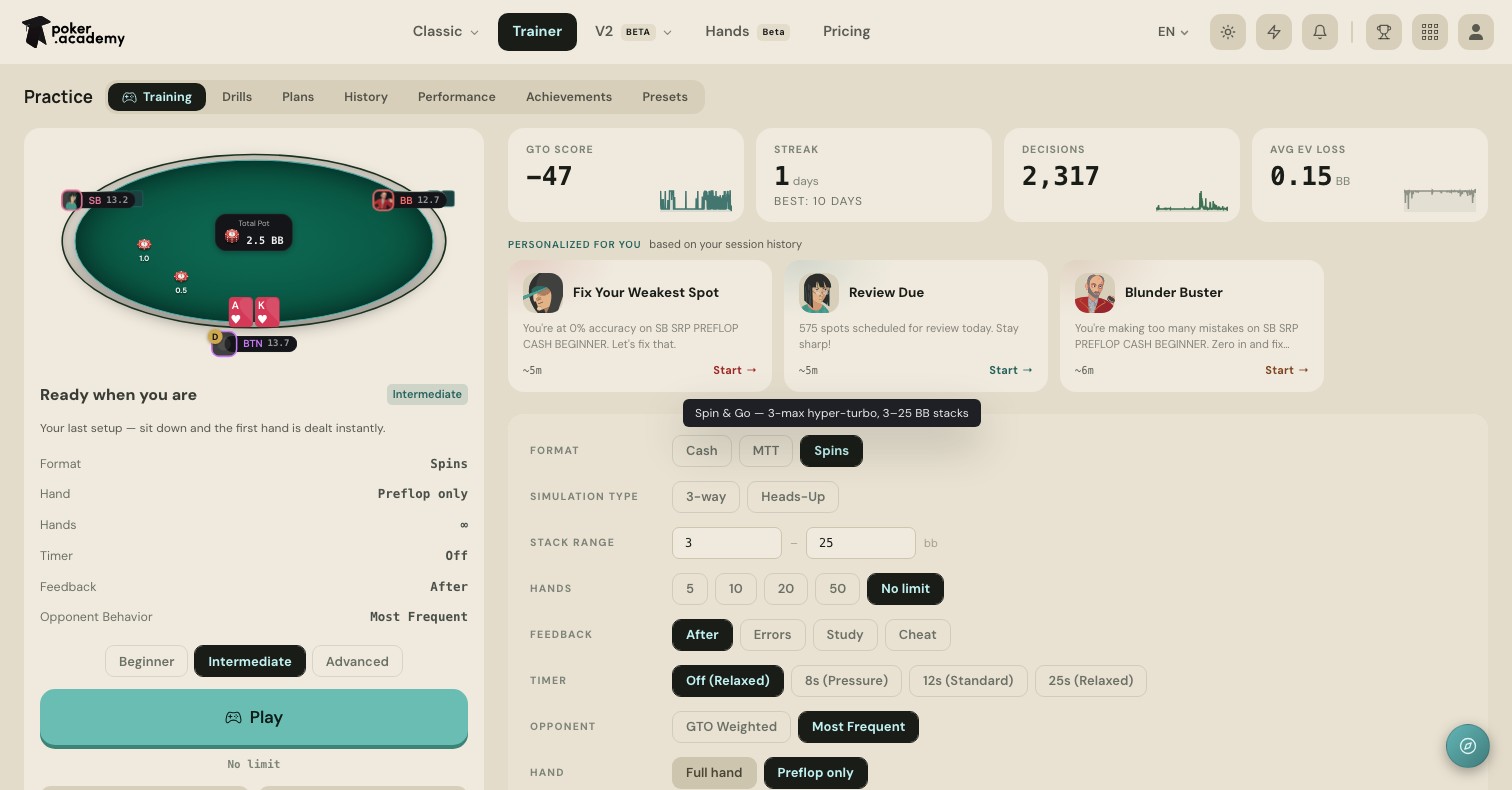 Кокпитът се отваря с последната Ви настройка, така че първата ръка е на един клик разстояние