
1 · Lock
Paint the assumption
Brush a strategy onto hand classes: Check 100% on BTN's weak offsuit hands here, 187 of 1,326 combos. The impact shows before you solve.
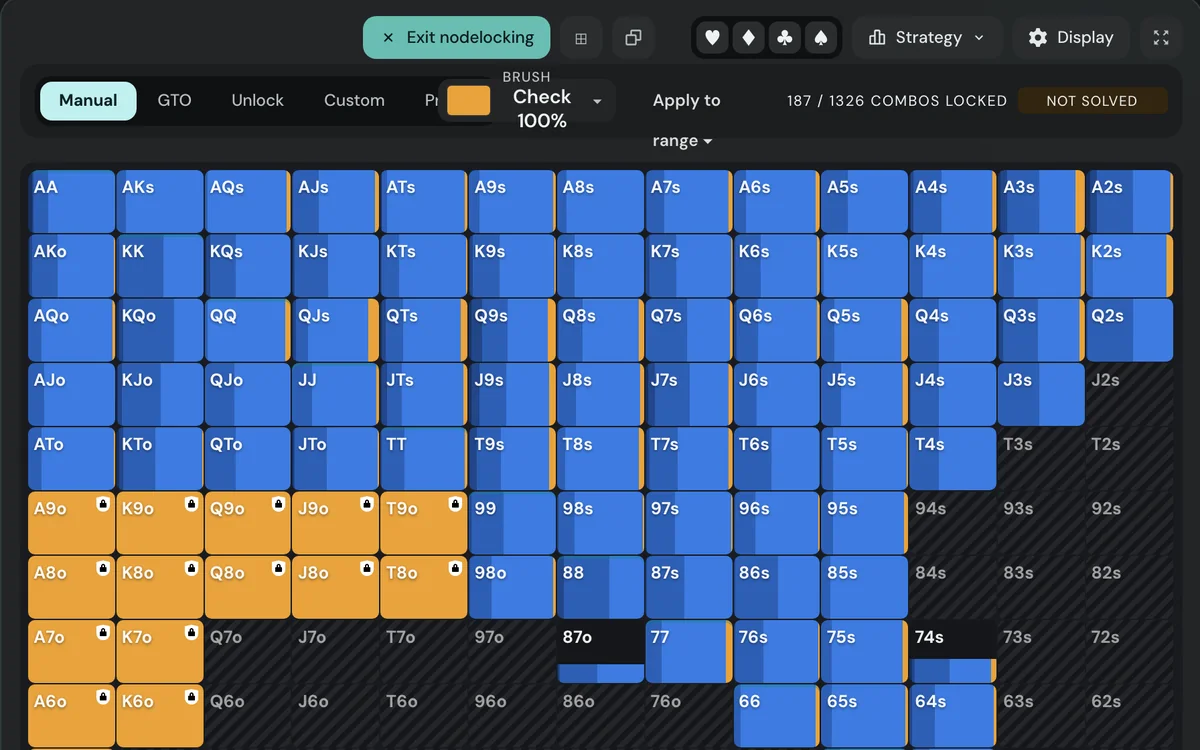 187 / 1,326 combos locked
GTO Postflop Solver
Most solvers make you rebuild a spot before they answer. Here the preflop line you just read already carries the ranges, the pot and the stacks. Press Solve Postflop, and the flop solves under the same matrix, next to the same table.
From the preflop line to the flop
Walk a line in Browse. Where it closes with two players, the trail offers Solve Postflop. The drawer opens with both ranges, the pot and the effective stack taken from the line, and bet sizes derived from the stack-to-pot ratio. Pick the flop and solve.
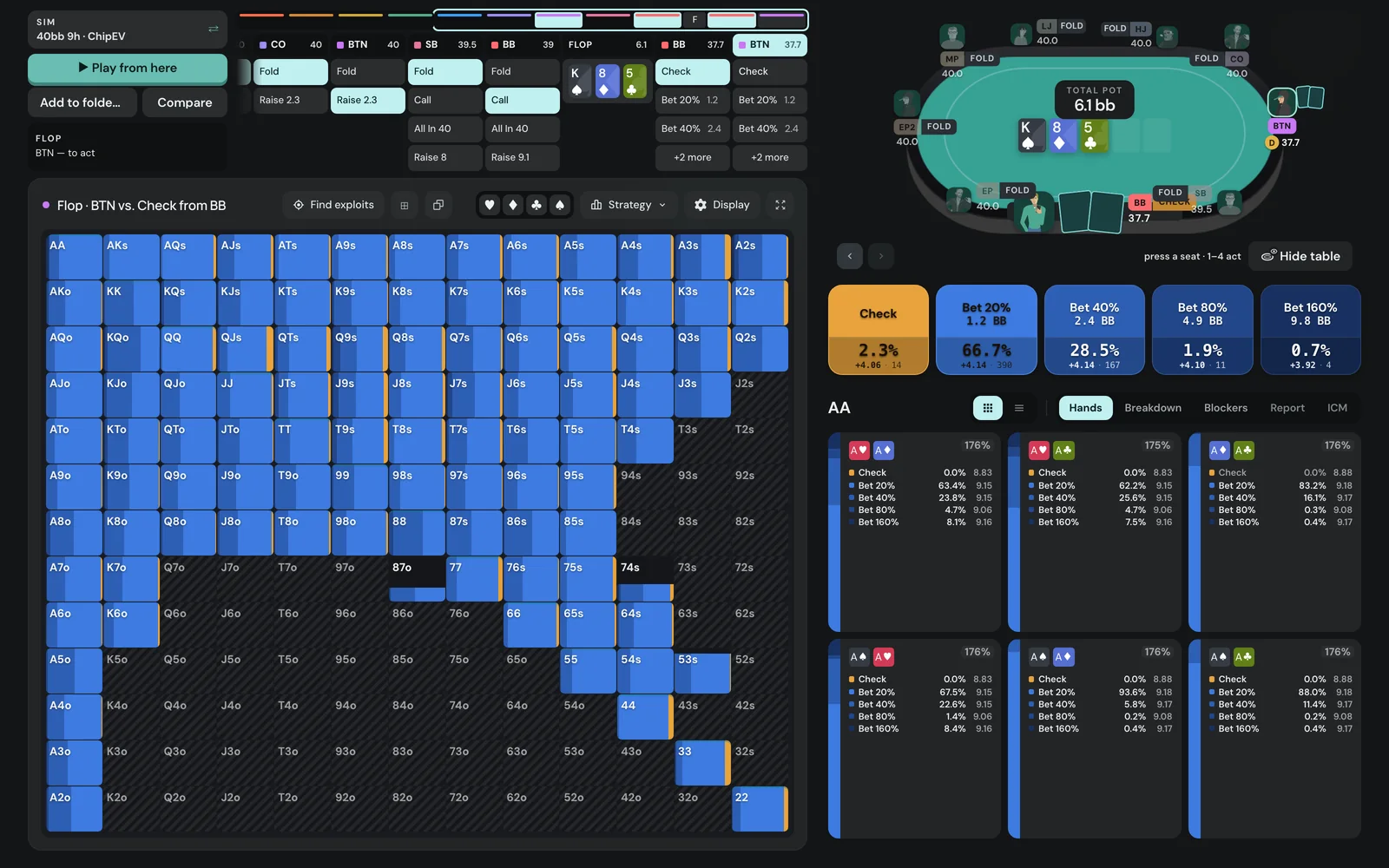 The solved flop under the line. MTT, 40 bb, BTN vs BB single-raised pot, K♠8♦5♣: BTN bets 20% of the pot 66.7% of the time at this node.
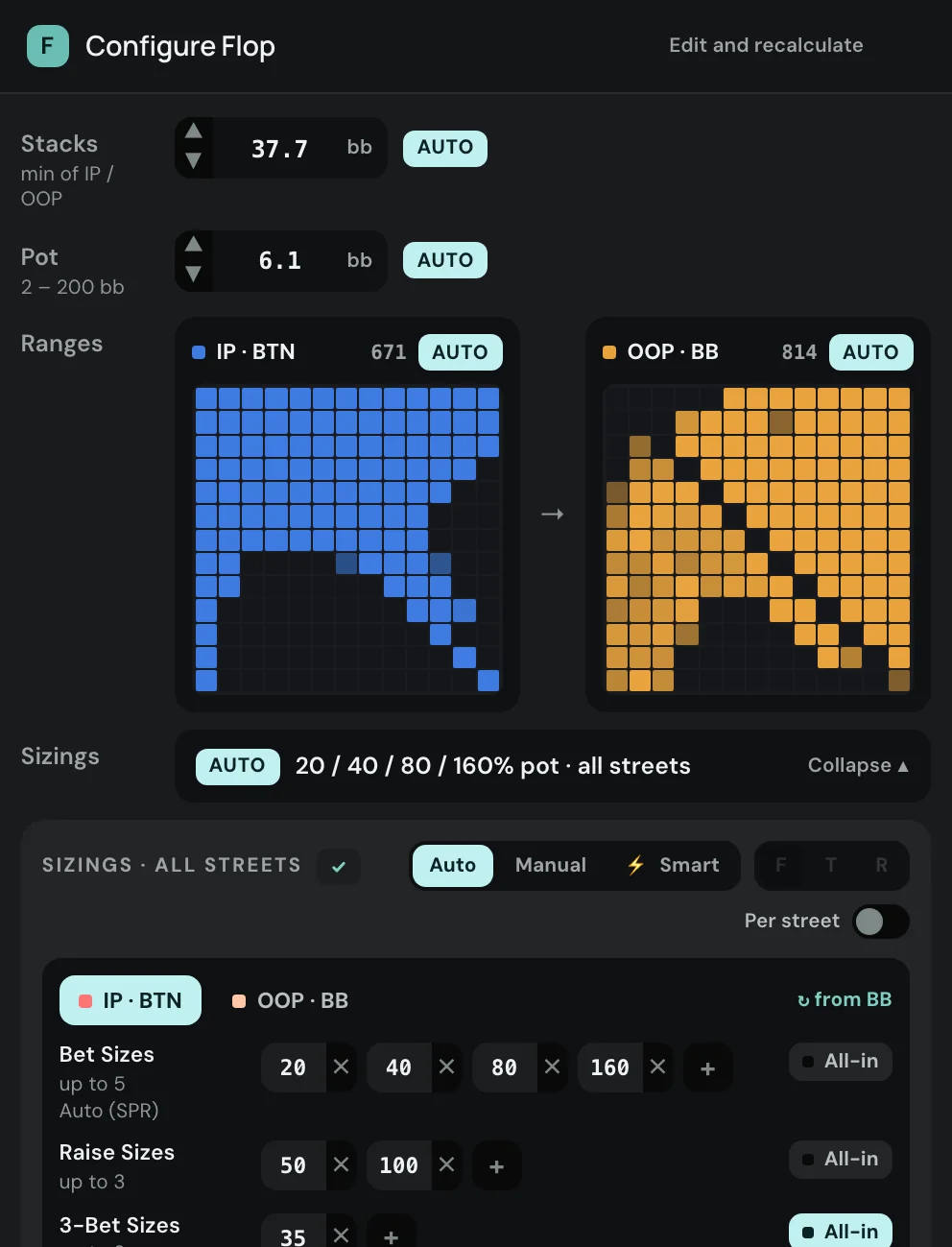 Configure Flop, filled from the line: stacks 37.7 bb, pot 6.1 bb, bet sizes 20 / 40 / 80 / 160% of the pot.
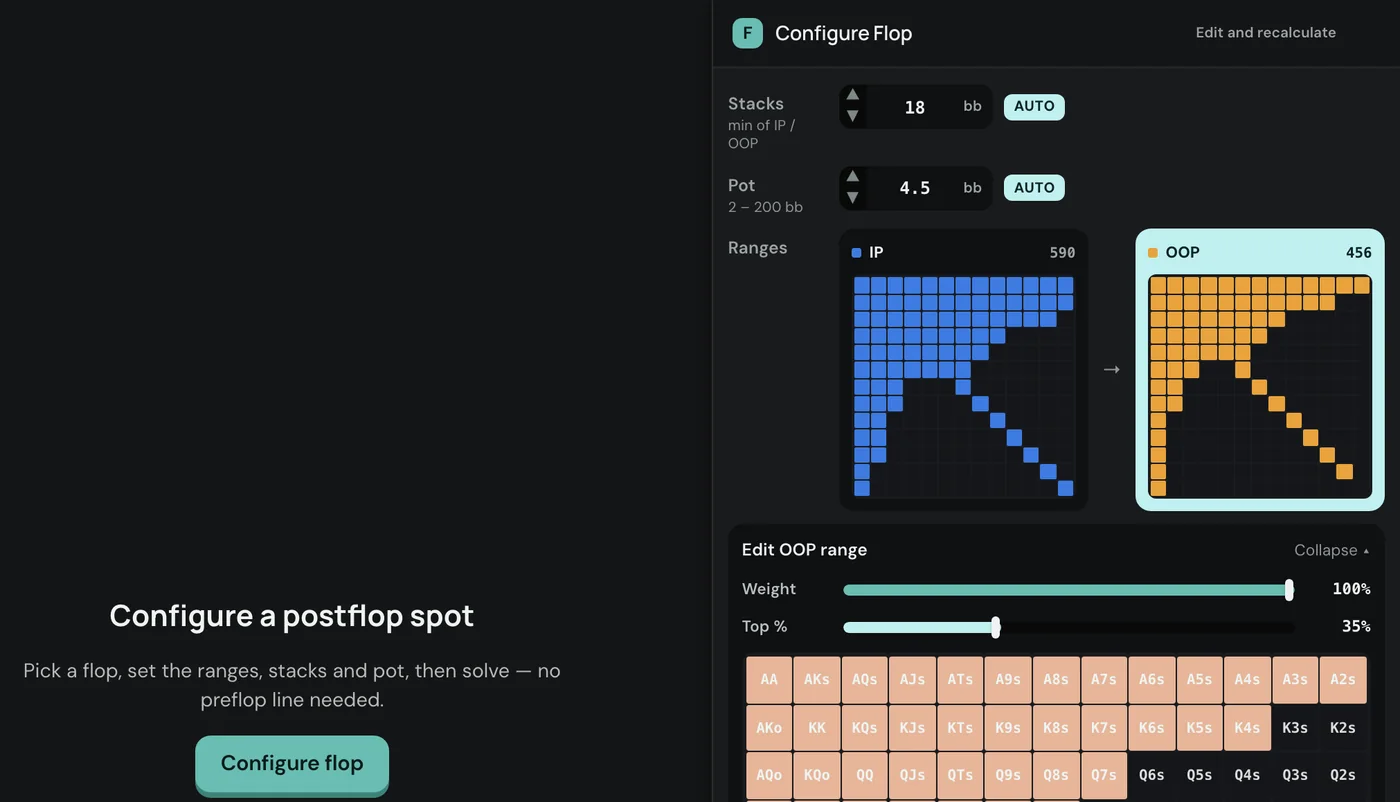 The standalone solver, no preflop line needed
Or set the spot by hand
Open the standalone solver and build the spot yourself. Pick three cards or a random flop. Set each range with a weight slider, a top-percent slider, the 13×13 grid, or paste it as text. Pot from 2 to 200 bb, effective stack up to 200 bb.
Sizes without building a tree
You never draw a game tree. Choose how the bet sizes are set, and the solver builds the tree from that.
Bet sizes follow the stack-to-pot ratio of each street, so a deep flop and a shallow river get different menus.
Enough to see which size the strategy prefers, few enough to keep the tree solvable.
Per decision
You set the spot and read the answer in your browser. The solve runs on our servers, so your computer does not need to be powerful.
Game
Read the answer
The 13×13 matrix shows strategy, EV, equity and EQR. Pin a hand and each combo lists its weight, EV, equity and equity realisation. Beside it, the hands rail breaks the range down by hand category, draws and blockers.
EQR is how much of its equity a hand actually turns into EV: (EV ÷ pot) ÷ equity. Figures from the frame: BTN at the flop, K♠8♦5♣, MTT 40 bb.
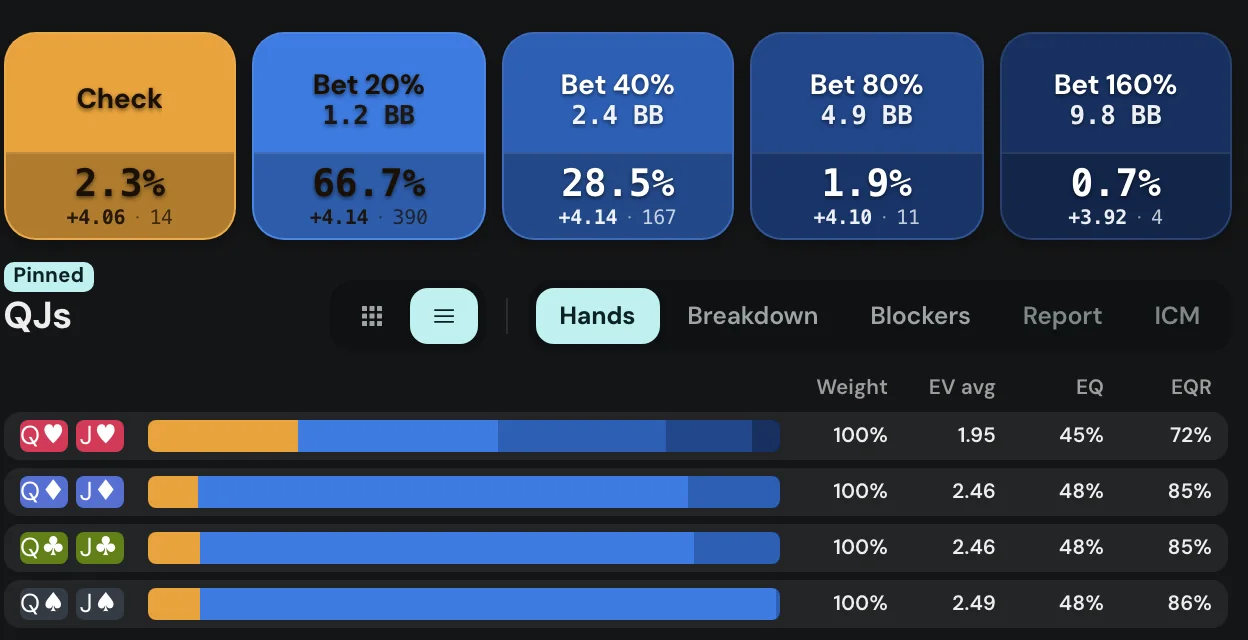 Strategy + EV, QJs pinned. Views: Strategy, EV, Equity, EQR, Range, Compare EV; graphs for matchups, equity distribution and runouts.
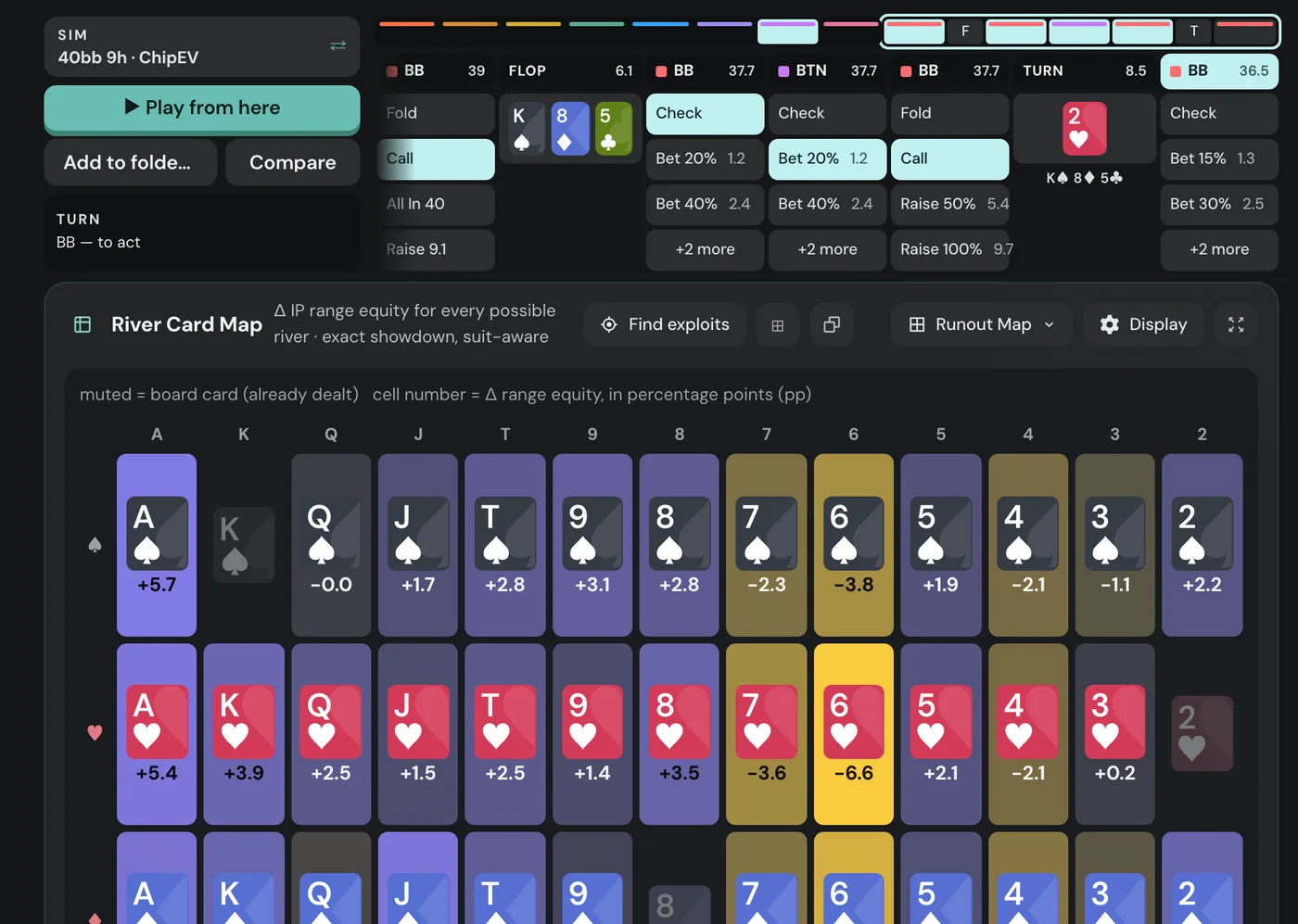 Turn 2♥ after a 20% bet and a call: pot 8.5 bb, turn sizes set again from SPR. The runout map is here for its layout; we do not quote its values.
Down to the river
From a solved flop, choose the next card and solve the next street. Each street solves on its own, with sizes set again from its stack-to-pot ratio. The runout map shows how every turn or river card changes the picture.
Find the exploit · Standard and Premium
Nodelocking starts from an assumption: at this node, this player checks too often, folds too much, or bets too wide. Lock that, re-solve the street, and the solver shows the best response to it and what it is worth.
Brush a strategy onto hand classes: Check 100% on BTN's weak offsuit hands here, 187 of 1,326 combos. The impact shows before you solve.
187 / 1,326 combos lockedCalculate Exploit re-solves the current street with your locks. The GTO solve is kept; toggle GTO and Exploit to compare.
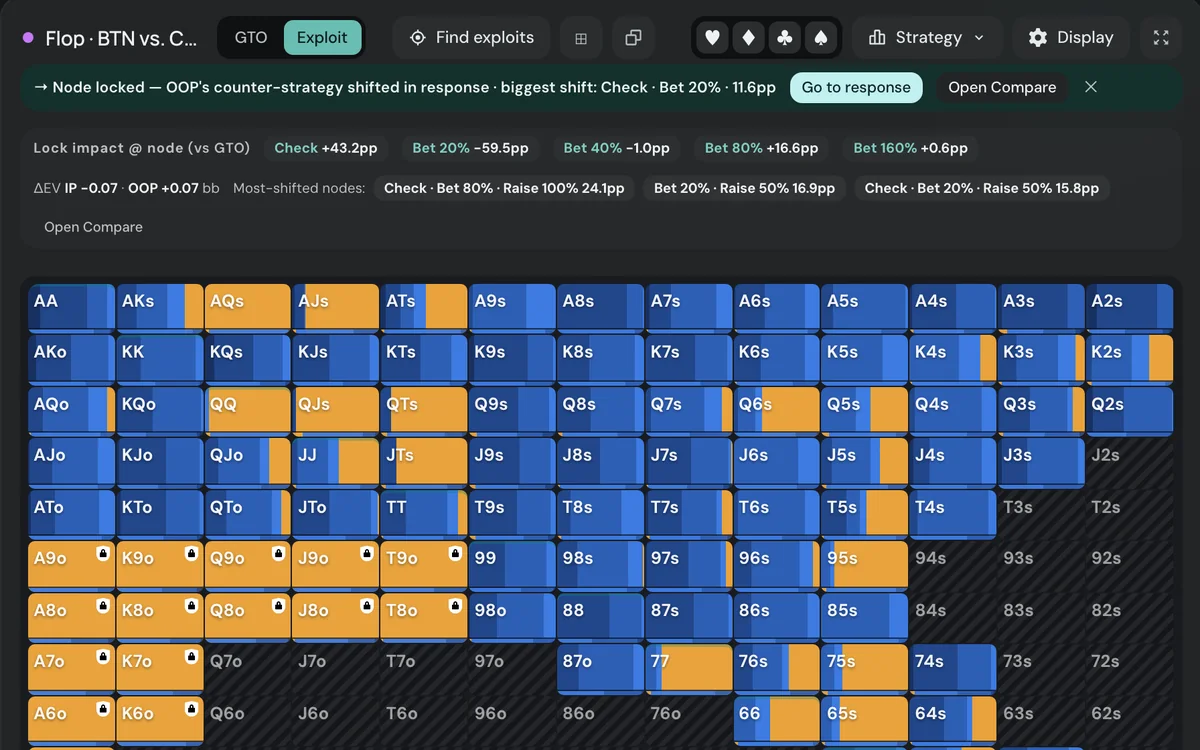 Biggest shift at this node: 11.6 pp
Compare lists the nodes that moved most and the EV difference for every hand, in one grid.
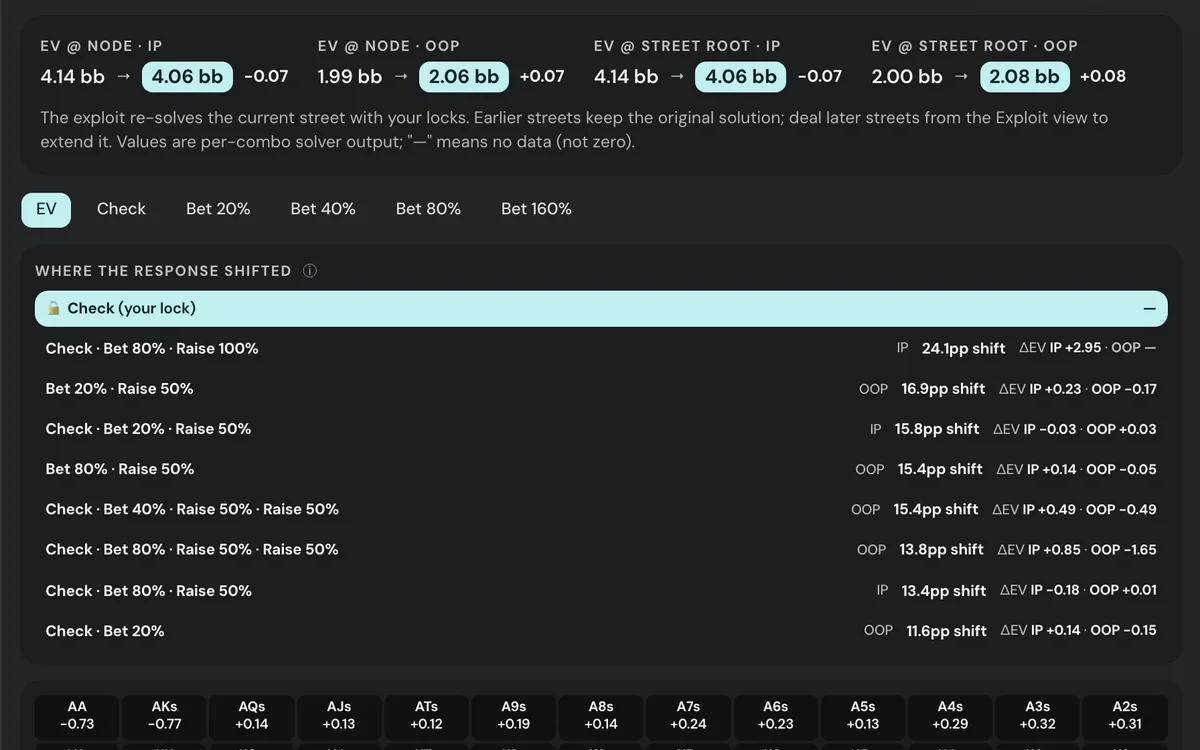 EV before and after, per player and per hand
An exploit answers one assumption. These 0.07 bb are what BTN's forced checks are worth to BB at this node, in this spot (MTT 40 bb, BTN vs BB, K♠8♦5♣), and nothing more general. Against a player who does not deviate that way, the exploit can lose EV. Nodelocking re-solves one street at a time; earlier streets keep the original solution.
Not sure what to paint? Pick a profile instead. It locks the player acting at the current node to a known leak, in three strengths from a light touch (S) to an extreme one (L), then you re-solve as usual.
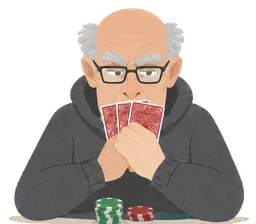
NIT
Plays mostly strong hands. Hands that are only just worth continuing get folded instead, on this player's first two decisions in a line.
Tests: how much you win by betting into someone who gives up too easily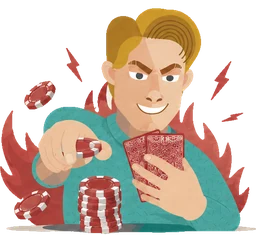
BULLY
Puts on pressure. Checks that were close to a bet become bets, on this player's first decision in a line.
Tests: how you should defend when someone bets too often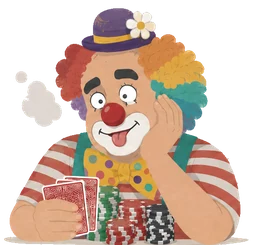
I ALWAYS CALL!
Does not like folding. Hands that should fold become calls instead, on this player's first two decisions in a line.
Tests: how much thinner you can value bet, and when to stop bluffingKeep it, report it, play it
Save the solve to your library with its spot data. From the same screen, build a report or play the spot.
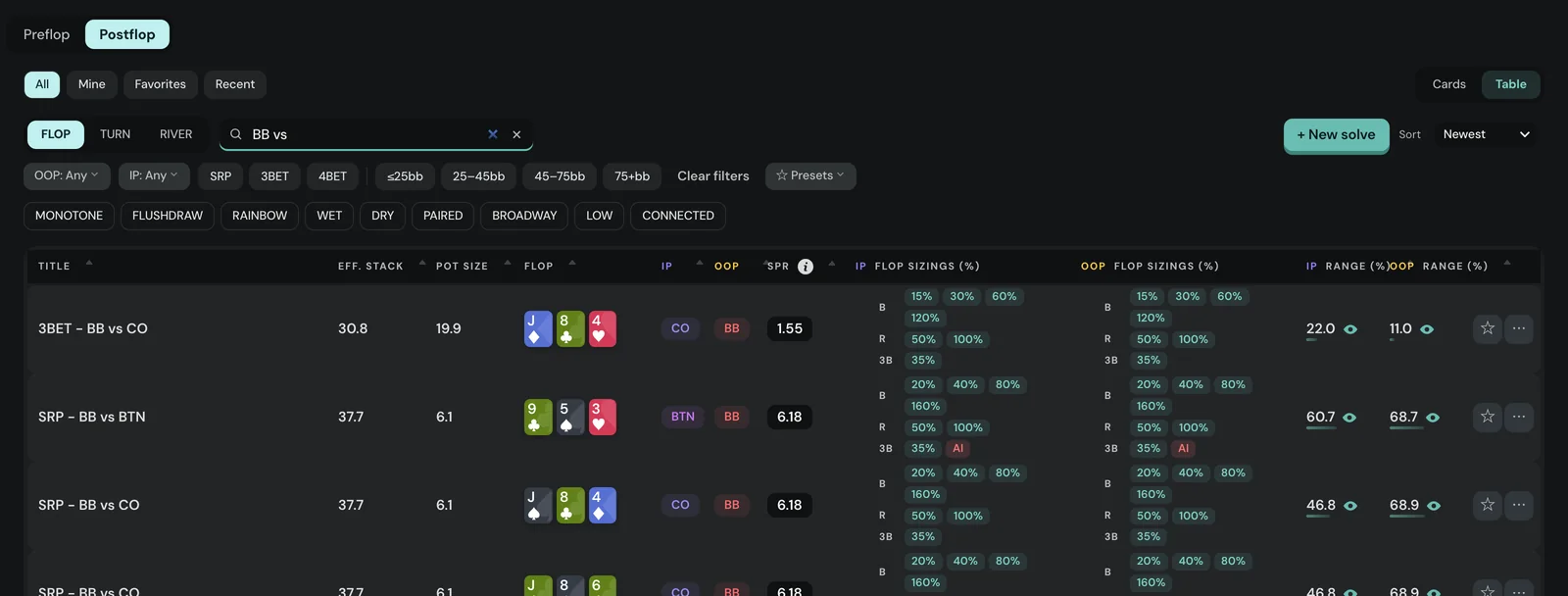 The postflop library, table view
What it does not do
Postflop is heads-up only
ICM is a preflop read
Who gets what
MTT Preflop Charts and the preflop trainer.
Custom scenarios, custom sizing and nodelocking.
The solver without a daily count, with custom scenarios, custom sizing and nodelocking.
Tiers follow the pricing catalog while plan access is being finalised. See pricing →
Questions
No. Auto sets the bet sizes from the stack-to-pot ratio of each street. If you want control, Manual sends your sizes exactly as you set them, and Dynamic lets the solver pick the best of your candidates.
Our engine reports on average 0.6% Nash Distance. A solve is an approximate equilibrium for the tree and sizes you gave it; other sizes give other answers.
Yes, street by street. Pick the next card and solve it. Each street solves on its own, and nodelocking works on one street at a time.
No. The solve runs on our servers and you read it in your browser.
No. Postflop solves are heads-up, and ICM is a preflop read.
GTO Postflop Solver
Open it from the preflop line in Browse, or set it up by hand. The flop comes back on the same screen.
Start Free TrialCancel anytime.